CHAPTER 4: THE WITNESS LANE
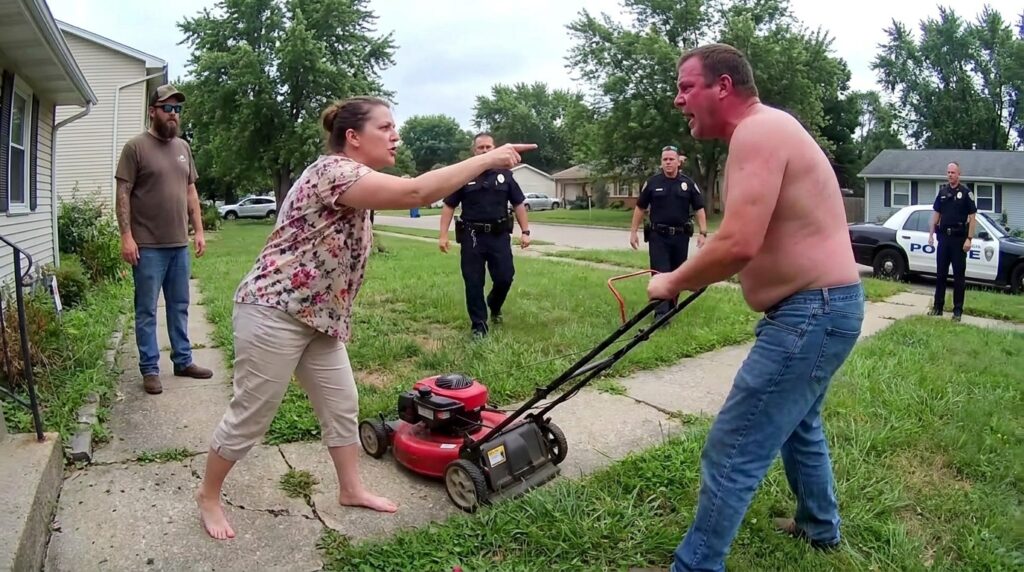
The concrete porch path felt like old iron under Sarah’s bare soles, radiating the stored heat of five hours of July sun. She didn’t retreat to the steps as Officer Davis had ordered. Instead, she shifted her weight laterally, her lateral visibility widening just enough to see past the black-and-white cruiser’s light bar. Across the asphalt, two more front doors had clicked open. Mrs. Gable was leaning over her porch railing, a pair of garden shears frozen in her gloved hand, while down the curb, two guys from the roofing crew working on number forty-two had stopped hammering altogether, their utility vests bright orange points against the pale gray shingles.
“The call history shows three previous disturbances at this address,” Officer Davis said, her thumb tracing the edge of her mobile terminal screen. The glass gave off a dull glare under the canopy of the silver maple. “All filed as civil property disputes. No enforcement actions taken.”
“Because nobody ever digs,” Gary said. His voice was lower now, raspy from the heat and the dust the cruiser had kicked up from the margin. He had finally taken both hands off the mower handle, but he hadn’t moved his boots from the scuffed earth over the rusted iron stake. His chest, streaked with oil and pale green clippings, rose and fell in short, transactional jerks. “The city doesn’t want to touch it. If they verify the ninety-six plat error, the whole utility easement for the eastern quadrant loses its anchor. Sarah knows it. Her old man was the one who signed off on the variance.”
“My father didn’t sign off on anything private,” Sarah said, her voice cutting through the dry drone of a distant cicada. She stepped off the path, her feet finding the gravelly margin where the driveway met the grass. The stones were sharp, biting into her heels, but she needed the leverage. “He followed the county code, Gary. If there was an issue with your grandfather’s land, he should have filed the discrepancy before the township took over the drainage infrastructure.”
“He tried,” Gary spat back, his eyes narrowing into two dark slits under his wet brow. “The records went missing from the basement vault the same week your father bought this house. You think that’s a coincidence?”
Officer Miller didn’t join the debate. He reached down with one gloved hand and grabbed the crossbar of the red push mower, pulling it three inches backward. The metal wheels gritted against the dry earth, the front edge of the steel deck scraping over the top of the buried iron stake with a sharp, metallic scree that made Sarah’s teeth ache. As the mower moved, the old oil cap vibrated loose, dropping a thick, yellow bead of lubricant onto the grass.
“Nobody’s digging anything today,” Miller said, his boots firmly planted between Gary and the tool. “Sir, I need you to step onto the asphalt. We’re blocking the lane until the supervisor checks the municipal code on this easement. If you touch this machine again before we have a disposition, it’s an active obstruction charge.”
Mark shifted his stance on the walkway behind Sarah. He hadn’t removed his sunglasses, but he reached down and pulled a pack of cigarettes from his gray T-shirt pocket, his movements slow, passive, and entirely focused on the way Gary’s boots were still twitching near the hidden marker. “He’s right, Gary,” Mark said, his voice flat, carrying no neighborly warmth. “The whole block’s watching you sweat out there. Just let the truck come out.”
Gary’s face went from sun-beaten red to a dark, mottled purple along the jawline. His fingers twitched against the seam of his blue jeans, leaving dark grease smudges on the denim. He looked at the orange vests on the roof down the street, then at Mrs. Gable’s frozen garden shears. The public authority he had tried to perform by dropping his engine into her yard was dissolving into a cheap curb-side exhibition.
“You think you’ve got it locked down, don’t you?” Gary said to Sarah, his voice dropping into a low, jagged whisper that barely reached past Officer Miller’s utility belt. He stepped backward, his sneakers finally leaving the disturbed dirt above the iron stake, hitting the hot, oil-stained asphalt of his own driveway with a dry slap. “Check the back of that brass tag on the engine housing, Sarah. If you’ve got the guts to pry it off. Look at the county inventory code. That wasn’t your father’s tool. It belonged to the estate my grandfather had to liquidate when the city ran the water main through our basement wall.”
Sarah felt the phone in her hand grow heavy, the plastic casing slick with the moisture of her own palm. She didn’t look at the tag. She kept her eyes on the small, square iron pin now fully exposed in the dirt between their lawns—a rusted tooth sticking out of the dry earth, waiting for someone to trip over the truth.