Chapter 8: The Meeting Patricia Could Not Control
The Briarwood Estates special meeting took place ten days after the championship.
The clubhouse was filled beyond its usual capacity.
Homeowners occupied every chair.
Several stood along the back wall.
A local attorney hired by the association board attended to explain the meeting procedures.
Patricia arrived fifteen minutes early.
She wore a tailored navy suit, pearl earrings, and an expression of practiced confidence.
She had spent the previous week preparing a statement.
She intended to explain that the stadium video had been taken out of context.
She would accuse critics of exaggeration.
She would remind residents of the improvements made during her presidency.
And she would argue that the community needed firm leadership.
But the meeting did not begin the way she expected.
The association secretary reviewed the agenda.
The first item concerned enforcement procedures.
The second involved disputed fines.
The third concerned access to financial records.
The final item was a vote on board leadership under the association’s bylaws.
Patricia objected to the agenda.
The attorney explained that the meeting had been properly requested and that the items were within the scope of the notice.
Patricia sat down.
Margaret Ellis was the first homeowner to speak.
She did not mention the stadium video.
Instead, she presented a timeline of fines and warnings issued to her household.
She showed photographs.
She referenced association rules.
She explained which notices she believed had been applied inconsistently.
Then she asked the board to establish a transparent review process.
Other homeowners followed.
The retired firefighter described his parking dispute.
The elderly couple discussed the wheelchair ramp.
A younger father explained that his children had become afraid to play outside because they worried about being reported.
Some residents also defended Patricia.
They appreciated the improved landscaping and stricter security.
They argued that rules were necessary to protect property values.
Margaret listened respectfully.
She agreed that rules mattered.
What she challenged was the idea that rules should depend on who was enforcing them.
As the meeting continued, the board reviewed several disputed penalties.
It became clear that some notices lacked the documentation required by the association’s own procedures.
Other fines had been approved without consistent opportunities for homeowners to appeal.
There was no evidence presented that Patricia had stolen association funds.
The financial records showed administrative weaknesses and questionable decisions, but not the dramatic corruption some online commenters had alleged.
That distinction mattered.
The attorney cautioned residents against making accusations they could not support.
The goal was to correct governance problems, not create new injustices.
Patricia finally stood.
She began with a statement about her years of service.
She listed landscaping improvements, gate repairs, and community events.
Some residents nodded.
Those accomplishments were real.
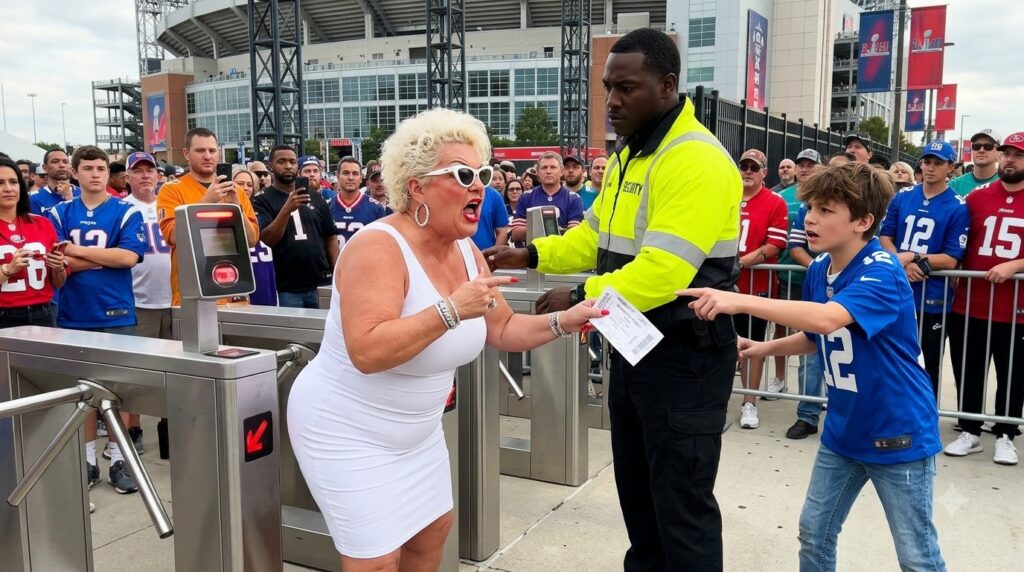
But then she turned to the stadium incident.
She described Tyler as an unsupervised child.
She suggested that his father had overreacted.
She claimed the ticket dispute had been a misunderstanding.
Margaret watched the room grow uncomfortable.
Patricia had an opportunity to acknowledge her mistake.
Instead, she was blaming the people she had hurt.
A homeowner near the front raised his hand.
He was a retired judge named Robert Hayes.
Robert had rarely spoken at association meetings.
Now he stood slowly.
He said he respected the work required to manage a community.
He also understood that leaders sometimes made mistakes.
But he believed the measure of leadership was not whether someone could avoid every error.
It was whether they could accept responsibility when they were wrong.
Patricia looked away.
Robert continued.
The stadium incident, he said, was not the reason the homeowners had gathered.
It was the event that had encouraged them to examine concerns they had ignored for too long.
The room became quiet.
Patricia returned to her seat.
The board proceeded with the vote.
Under the association’s governing documents, the directors had authority to choose their officers.
After a brief recess, they voted to remove Patricia as president and appoint an interim replacement.
She would remain a director temporarily, pending the separate membership process required for any further removal.
The decision was announced without applause.
Margaret had asked residents to treat the outcome seriously.
This was not a sporting event.
It was a neighborhood deciding how it wanted to govern itself.
Patricia sat motionless.
For years, she had controlled these meetings.
Now she had lost the office that gave her the greatest sense of importance.
She gathered her papers.
Her hands shook slightly.
Nobody blocked her path.
Nobody shouted insults.
Nobody demanded that she be humiliated.
The residents simply allowed her to leave.
And somehow, that quiet dignity hurt more than any angry confrontation could have.
Outside, Patricia sat in her car for several minutes.
She looked at the clubhouse doors.
Then she checked her phone.
A message from her attorney was waiting.
The stadium had completed its initial review.
Patricia was being offered a meeting to discuss a formal resolution of the ticket incident.
For the first time since championship Sunday, she did not immediately reach for the phone to argue.
She sat alone and wondered whether she had finally reached the limits of getting her own way.