CHAPTER 7: THE LINGERING COORDON
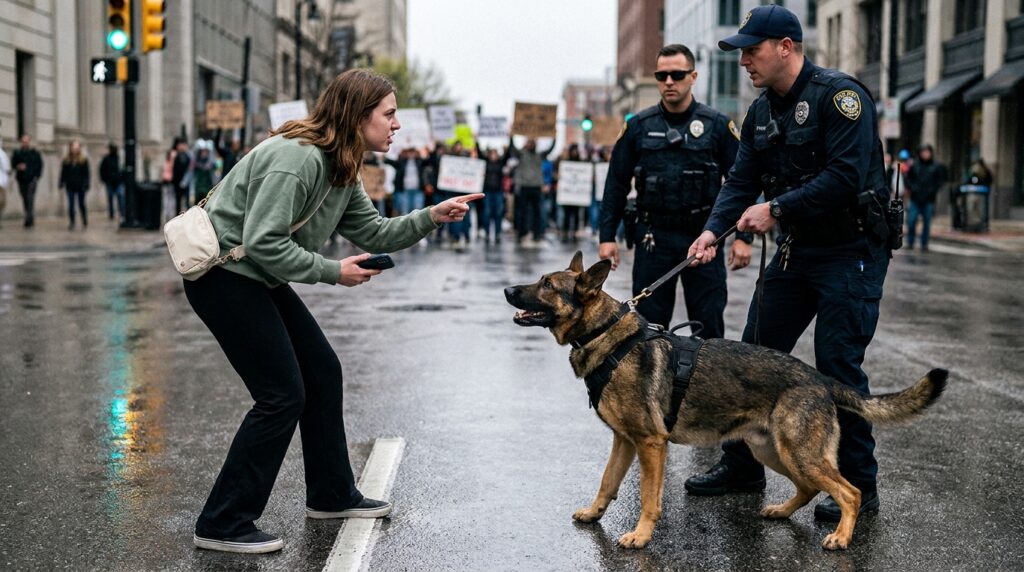
“You’re just the cleanup crew,” the marshal repeated, his voice dropping into the damp, desaturated space between them. The phone screen in his thick grip remained bright, its white light cutting a clean line across the yellow oilskin of his sleeve, casting a pale glare onto the cold asphalt strip.
Marcus did not give him an answer. He didn’t shift his boots by a single millimeter from the white paint, though the standing water surrounding his soles had begun to thicken, turning into a heavy, iridescent yellow sludge that resisted the natural slope of the concrete gutter. The sensory profile of the lane had changed completely; the sweet, almond-like scent of volatile organic compounds was no longer a faint trace rising through the radial slots of the utility plate. It was a dense, heavy layer that sat low to the ground, stinging the membranes of his nose and throat with a cold, chemical burn that his tactical mask filter was failing to catch.
Through his left glove, the digital interface on his wrist pulsed a slow, continuous violet—the maximum threshold alert for systemic toxicological exposure. The decoy secret Elena had pulled from the administrative database had done its work perfectly. The marshal and the remaining demonstrators huddled under the store awnings across the street were fully locked into their victory, convinced they had uncovered an illicit infrastructure decommissioning project. They were treating the line as a political boundary, an administrative barrier they could expose with a stolen logistics file. They didn’t understand that the line was the only thing keeping them alive.
Marcus pulled the braided nylon lead tighter against his thigh, feeling the tight, mechanical vibration of Rex’s breathing. The dog’s tan-black coat was flat with grease and rain, his muzzle lowered to within three inches of the utility cover’s edge. Rex wasn’t growling anymore; his ribcage was working in short, shallow strokes, his system processing the same chemical weight that was currently expanding through the perimeter’s sub-floor.
“Vance,” Miller’s voice came through the throat mic, dry, hollow, and laced with a slight, mechanical tremor from his own physical exhaustion. “The secondary seals on the containment vault just dropped pressure by another forty percent. The exhaust hoods on the roof are venting pure gas now. If that crowd moves five feet closer to the chain-link, they’ll catch the core plume.”
“Hold the line, Miller,” Marcus said. His voice was a flat, low-frequency hum that didn’t travel past the brim of his navy cap. He looked directly at the marshal in the yellow coat, his eyes cold and unblinking under the grey downpour. “The perimeter stays locked.”
The marshal took a step back, the phone screen flickering as a new wave of rain struck the glass. The authority he had felt when holding up the logistics document seemed to falter against the total, administrative silence of the uniform. He looked at Marcus’s broad, command stance, then down at the yellow rings spreading across the water between their feet, his jaw tightening as his internal calculation encountered a variable the file hadn’t predicted. The chemical film was eating through the edges of the white paint strip, the reflective flakes dissolving into a grey, oily froth.
“Something’s wrong with the drainage,” the marshal muttered, his voice losing its theatrical pitch, his eyes tracking a thick line of yellow scum that was bubbling out from the utility cover’s rusted hex bolts. He wiped a mix of rain and grease from his forehead with his glove, then looked at his fingers, noticing a dull, red rash already forming where the water had touched his skin.
Across the street, the demonstrators began to lower their placards entirely. The neon signs were heavy, waterlogged pieces of pulp that sagged toward the pavement. One by one, the people under the store awnings turned their backs on the municipal compound, their gray winter jackets disappearing into the desaturated fog of the outer neighborhood blocks. They had their story; they had the file. They were leaving the intersection because they believed the conflict had been resolved by the data on the screen.
The marshal hesitated for three seconds, his boots sloshing through the muddy margin of the curb, before he turned and followed them, the copper-plated phone staying dark in his hand as he retreated into the grey rain.
Marcus remained on the asphalt, his boots frozen on the dissolved edge of the white paint strip. The desaturated evening was closing in, stripping the street of what little color remained until the entire lane looked like a faded photograph. The facility behind the fence was silent, the windowless concrete walls bleeding black water down into the foundation, while the heavy plastic sheeting on the ventilation hoods billowed out one last time before deflating against the corrugated steel.
The county response unit hadn’t arrived. The line didn’t move. Marcus kept his hand locked on the short lead, his eyes fixed on the empty intersection where the rain was washing the last traces of the neighborhood’s footprints into the dark, toxic gut of the city.