
CHAPTER 4: THE PREEMPTIVE EMULSION
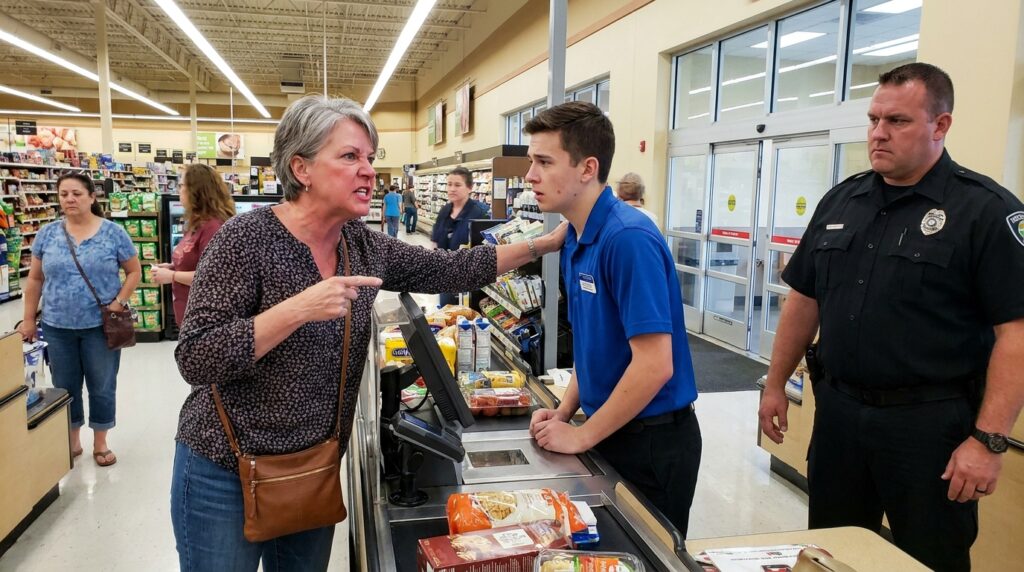
The high-pitched hum of automated conveyor belts had a way of embedding itself in the bone behind my ears after four continuous hours on the floor. The store was thick with the scent of cheap pine floor sealant and the heavy, damp air that blew in from the loading docks whenever the big rolling garage doors were left unsecured. It was five past four on a humid Tuesday afternoon, and my hands were slick from scanning plastic milk jugs covered in cold condensation, the skin of my thumbs raw where the coarse blue cotton of the uniform sleeves rubbed against my wrists.
I didn’t look at the clock on the wall, but I could feel the rhythm of the town shifting through the weight of the carts. The after-school rush was bleeding straight into the factory shift change, bringing a steady, unyielding line of tired faces toward Checkout Lane 4. I kept my boots planted flat on the ribbed rubber fatigue mat behind the counter, my spine locked upright. In my left pocket, the old brass ignition key pressed hard against my thigh—a heavy, cold reminder of the truck sitting in the gravel lot outside, its rusted bed filled with the four orange stakes I had yanked from our lawn before the sun had even cleared the rooflines.
“Next,” I said, my voice dry.
A plastic basket hit the belt with a heavy, hollow thud. I reached for the first item without looking up, my fingers finding the familiar cold glass of a commercial sauce jar. But the conveyor didn’t move forward. The light beam at the end of the scanner track was broken, blocked by the rigid corner of a grey plastic clipboard that had been jammed deliberately between the metal guide rails.
“You didn’t leave the stakes where they belonged, Leo,” Brenda said. Her voice wasn’t a yell yet, but it carried that sharp, high-pitched clip she used when she was reading code violations from the neighborhood handbook.
She had positioned her cart directly across the mouth of the lane, entirely blocking the passage for a woman behind her who was holding two small children by the hands. Brenda’s stocky build was shoved forward against the silver divider bar, her dark patterned blouse stretched tight across her shoulders. The brown leather cross-body bag hung low against her hip, the thick strap digging visible creases into her collar. She didn’t have groceries in her cart; she had three folders of identical grey cardstock, each one stamped with the blue embossed emblem of the Oakridge Homeowners Association.
“Ma’am, I am on the clock,” I said, my voice dropping into that flat, transactional stillness I had used two days ago. I kept my palms pressed flat against the stainless steel scanning table, the cold metal drawing the heat out of my skin. “I cannot discuss the subdivision here. If you aren’t purchasing items, I need you to clear the lane for the customers behind you.”
“The board doesn’t wait for your shift to end,” she said, her face flushing that dark, immediate crimson that always signalized her refusal to be managed by a service worker. She reached into her cross-body bag, her hand emerging with a fresh, crisp sheet of the yellow paper. She didn’t lay it down this time; she held it six inches from my face, her short, grey-haired head tilting down so her sunglasses slipped down the bridge of her nose. “This is a formal notice of non-compliance with the easement directive. Your mother refused service at noon, so it’s logged as a secondary evasion. The fine doubles at midnight.”
“Ma’am,” I repeated, the word coming out through my teeth like gravel grinding in a chute. “Clear the lane.”
“You think this store protects you?” Her voice rose, the pitch cracking against the high, open steel beams of the supermarket ceiling. The rhythmic clicking of the adjacent registers seemed to drop away all at once, replaced by the sudden, heavy silence of the customers in the next lane turning to look. “Your father built that driveway on common dirt, Leo. He knew it, and you know it. You sign this acknowledgment right now, or the county sheriff accompanies the grading crew on Monday morning.”
She reached across the metal bar, her stocky arm extending until the edge of the clipboard scraped against the plastic casing of my register terminal. She didn’t care about the corporate rules of the store; she was carrying the absolute weight of her neighborhood authority into the grid of my employment, confident that the uniform I wore made me small enough to break.
Behind her, a man in a delivery vest dropped his basket with a loud clatter of aluminum cans, his mouth opening to speak, but Brenda didn’t turn around. She leaned further over the conveyor belt, her stocky frame jostling the display of small battery packs near the register, her breath smelling faintly of black coffee and dry paper as she waited for the submission she believed she had already bought and paid for with thirty years of neighborhood code.








