CHAPTER 3: THE STRIP OF DISPUTED DIRT
The grease from the truck’s steering box had worked its way under my fingernails during the drive home, leaving ten dark crescents that wouldn’t scrub out with the rough orange soap by the sink. I stood on the small gravel strip between our porch and the chain-link boundary fence, the heels of my boots sinking into the loose stones my father had hauled from the quarry five summers ago. The ground here smelled of wet lime and iron-rich well water, a heavy, domestic scent that always settled in the low spots when the humidity rolled off the county drainage ditch.
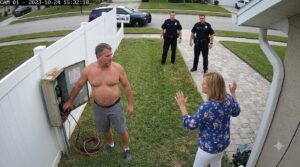
“They dropped these while you were at the terminal,” my mother said. She was kneeling by the edge of the old timber garden box, her calloused fingers turning over the loose black loam. She didn’t look up when the F-150’s manifold gave its long, ticking cool-down hiss. Beside her boots lay four wooden surveyor’s stakes, each one painted a sharp, violent orange at the tip, connected by a length of cheap nylon string that had already collected the grey dust of the road.
I walked down to the property marker, the leather of my work boots stiff against the weeds. The string was pulled tight, cutting straight through the middle of the wild blackberry bushes my father had planted to keep the road dust from hitting the porch windows. It didn’t follow the old iron pipe driven into the corner of the lot—the one the township surveyor had stamped back in ninety-four. It sat three feet inside our grass, a clean, mechanical division that claimed the gravel parking strip for the association’s utility easement.
“Brenda brought a man with a transit tool around noon,” my mother continued, her voice small against the rumble of a lawnmower three houses down. She stood up slowly, her hand resting on the small of her back where the labor always left a dull, constant ache. “He didn’t speak to me. He just wore an orange vest with the Oakridge logo on the pocket and hammered the stakes into the sod. When I asked him for the county permit, Brenda pulled a blue folder out of her shoulder bag and told me the township board had already vacated the right-of-way.”
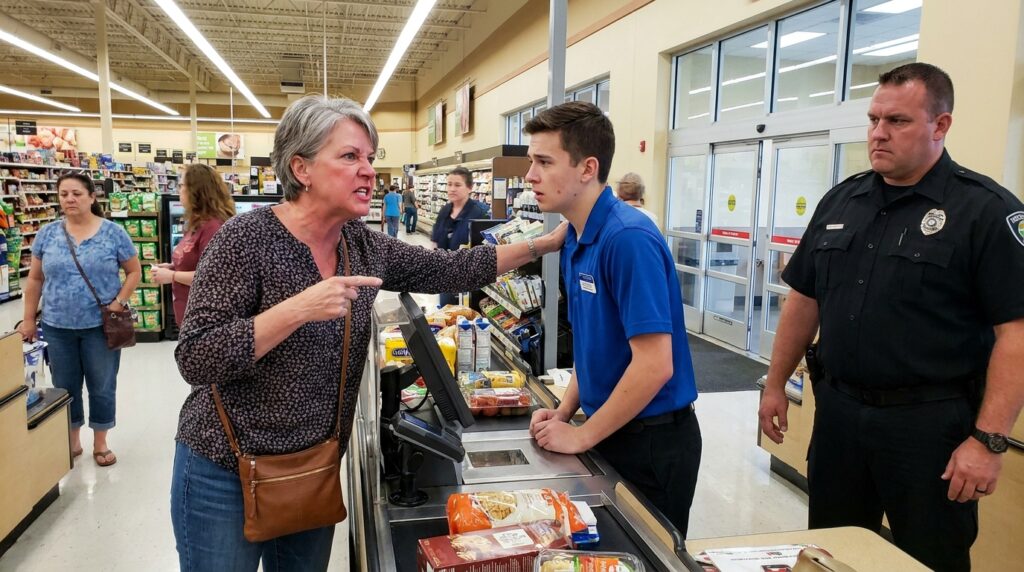
I reached down and picked up one of the spare stakes lying in the weeds. The pine was fresh, splintering against my calloused palm, the bright orange paint still clean enough to smell of petroleum solvent. On the flat side of the wood, the same dark purple aniline ink I had seen on the supermarket register notice was used to mark a sequence of grid numbers: E-104-DRAIN. The handwriting was small, sharp, and perfectly uniform, the ink biting deep into the grain of the soft wood.
“The township didn’t vacate anything,” I said, my thumb scraping against the rough edge of the pine. “The county road commission handles the culverts. I checked the public ledger on my break at the store. The county hasn’t updated the drainage maps since the subdivision loop was paved.”
“She has papers, Leo,” she whispered, her eyes tracking back to the silver sedan that had just turned the corner by the entry gate, its clean panels reflecting the low, desaturated orange of the setting sun. “She has the seal from the board. If we pull those stakes, the notice says it’s a five-hundred-dollar fine for willful destruction of community property. We don’t have the five hundred. The bank won’t wait if the escrow account drops again.”
I didn’t answer. I walked the length of the string, the nylon line humming slightly in the evening breeze like a wire under tension. Every house on our side of the loop had the same mandatory three-foot strip of red cedar mulch, but our lot was different—it was the only one that still had the old gravel driveway, the only one that hadn’t been dug up and re-graded to feed the concrete storm sewers that ran toward the main road.
Underneath the counter at the store, buried beneath the stacks of plastic bags and the logs of expired coupons, I had found an old, faded copy of the regional drainage blueprint left behind by the night maintenance crew. The blue ink was water-damaged, the paper smelling of damp basement concrete, but the red lines drawn across the Oakridge perimeter didn’t look like an infrastructure upgrade. They looked like a boundary shift. The drainage pipe Brenda was threatening to lay didn’t connect to the main township culvert; it stopped exactly at the edge of our foundation, turning our lower gravel lot into a catch-basin for the entire eastern tier of the development.
I stuck the orange stake back into the loose gravel at my feet, the stones grinding against the wood with a dry, heavy crunch. The silver sedan didn’t park. It crept past at five miles an hour, the window rolling down just enough for the dark frame of Brenda’s sunglasses to show against the shadow of the interior. She didn’t drop a notice this time. She just held a grey folder against the glass, her stocky arm steady against the door panel, her posture cutting the space between the road and our dirt like a fence.
“Get inside,” I told my mother, my hand closing around the brass key in my pocket until the metal left a deep, cold impression in my palm. “The wind is turning. The dust from the ditch is going to hit the porch.”