
CHAPTER 2: THE RECOGNITION OF LEVERAGE
The fluorescent tubes in the precinct basement hummed with a low, vibrating frequency that set the fillings in Thomas’s jaw aching. The air down here smelled of damp limestone, old water damage, and the chemical bite of industrial floor cleaner that never quite masked the scent of stale fear. Thomas sat on a green-painted iron chair, his hands resting flat on the scuffed linoleum table. The metal of the chair was cold, pitted with tiny rust craters where the primer had flaked away over decades of institutional neglect.
Across from him, Detective Miller didn’t look like a man who spent his nights reading case files. He looked like a machine designed to grind down small resistances. His sleeves were rolled up to the elbows, revealing forearms hairless and scarred by years of friction against desk edges and leather holsters. Between them lay the lean enforcer’s silver-plated tactical watch, its inverted three-dot insignia catching the harsh overhead glare like a dead eye.
“You have a very clean record, Thomas,” Miller said. His voice was a dry rattle, like gravel shifting in a chute. He flipped a page in a beige folder that looked thin enough to be a death warrant. “Too clean for a man who can break a transit officer’s orbital bone with a three-inch pivot. That’s not civilian muscle. That’s reflex.”
“They pressed into my space,” Thomas replied, his tone remaining within the narrow band of a flat, gray neutrality. “The sidewalk was narrow. They were armed.”
“They were Municipal Transit Police,” Miller corrected, tapping a blunt finger against the watch casing. The glass face of the watch was smudged with dry grease. “They have jurisdiction over the commercial plaza three blocks down. They claim they were tracking a vagrant vendor who owed administrative back-fees. You interfered with a municipal enforcement action.”
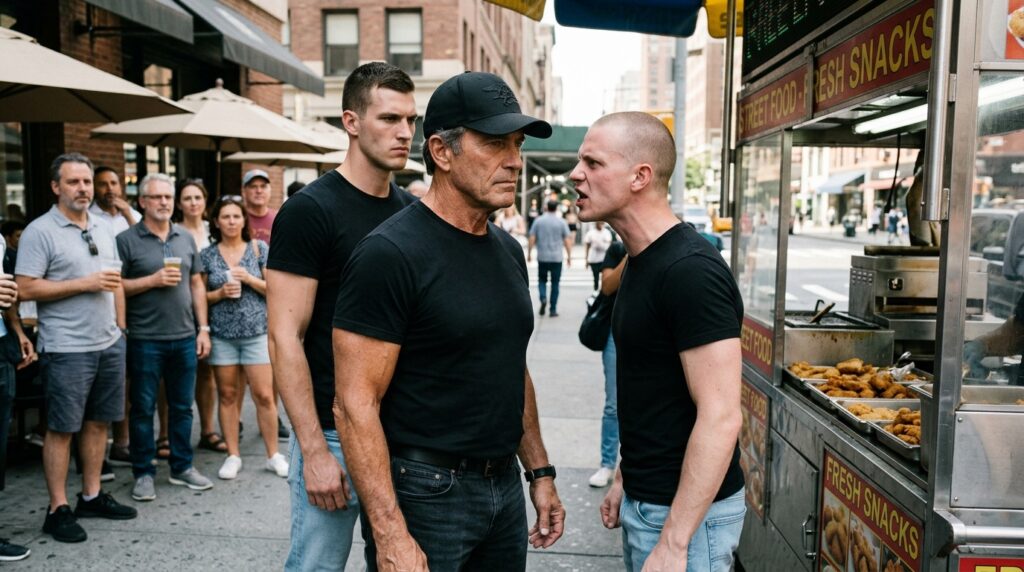
“They weren’t wearing patches,” Thomas said. He watched Miller’s eyes—the slight, two-millimeter contraction of the pupils that signaled a calculated lie. “They were wearing civilian leather and carrying unissued blackjack clubs. The insignia is on the back of the casing, Detective. If they were on the clock, they wouldn’t have hidden the marks.”
Miller leaned forward. The old wooden desk between them groaned, its joints dry and grinding. “Let’s speak plainly. In this district, the transit cops don’t just handle the trains. The city council privatized the security corridor two years ago under the Deputy Mayor’s infrastructure initiative. These boys work for the District Development Corporation. They are the law when it comes to clearing out the grease-carts that don’t pay the localized utility surcharge. You didn’t just fight two punks, Thomas. You broke two gears in a machine that keeps this entire five-block radius from burning down.”
The subtext was heavy, transactional, and sharp. Miller wasn’t looking for a confession; he was calculating the price of Thomas’s silence. The micro-mystery of the watch was unfolding into something larger—a systemic shakedown disguised as municipal policy.
“They were trying to force a fracture,” Thomas said, his mind tracking the predator-prey dynamics of the room. Miller’s holster was unsnapped—a deliberate display of dominance, or a sign that the detective viewed Thomas as a physical threat that might require immediate termination. “The vendor was target of convenience. They wanted the space cleared for the new commercial storefronts behind the plaza. I was an anomaly they didn’t budget for.”
“An anomaly that’s going to cost the precinct thirty hours of administrative cleanup,” Miller barked, slamming the folder shut with a sound like a small pistol shot. “The Deputy Mayor’s office already called down here twice. They don’t want a public assault trial showing that their ‘security specialists’ got dismantled by a sixty-year-old man with no taxable income. They want you gone, Thomas. Out of the district. By midnight.”
Thomas looked down at his own plastic watch. The frayed nylon strap felt damp against his skin. Tick. Tick. Tick. He had four hours before his landlord locked the iron gate at his boarding house. If he left now, he would be leaving the vendor behind—and leaving a trail that any mid-level analyst could follow back to his previous life.
“My rent is paid through the fifteenth,” Thomas said, his voice dropping into the quiet register that had once commanded logistics units in three separate sectors. “I don’t move well on short notice.”
Miller smiled, a thin, unshaded movement of the lips that didn’t reach his eyes. “You’ll move if the alternative is a felony obstruction charge that opens up your old Department of Defense service files to public record. I took a look at your discharge paper, Thomas. It’s mostly black ink. More sharpie than English. If the local press gets a hold of the man who cracked the city’s private security enforcers, they’re going to start digging into what you did in Colombia before the turn of the century. You want that kind of light on you?”
The threat was explicit. The antagonist was using environmental and bureaucratic leverage to squeeze him out, operating with the same cold pragmatism that Thomas used to survive. It was an equal intellect check—Miller knew exactly where the skin was thin.
“The watch,” Thomas said, pointing a single, scarred finger at the silver casing on the table. “The serial number on the back has been filed down, but the transit police don’t file their own property tags. That’s a black-market batch from the municipal depot. Your city enforcers are buying their gear out of the back of state surplus trucks.”
Miller didn’t blink. He reached out, took the watch, and dropped it into his trouser pocket. The sound of the metal sliding into the fabric was a sharp, final click. “The interview is over, Thomas. Sign the administrative release at the front desk. If I see your jacket within three blocks of that food cart after dark, I won’t call security. I’ll call the corporation’s night-shift.”
Thomas rose from the iron chair, his knees clicking with the dry, rusted sound of old machinery. He didn’t sign the papers at the desk; he simply walked through the double glass doors of the precinct into the gray twilight of the street. The air outside was cool, but it carried the distinct smell of ozone and wet soot from the railyards two miles west.
He needed to get back to his room. His civilian sanctuary—the single, windowless room above the dry-cleaner’s shop—was his only perimeter. But as he turned the corner onto his street, he noticed the small, triangular chalk mark on the rusted base of the telephone pole outside his alleyway. A fresh mark, drawn with dry construction chalk.
The security perimeter hadn’t just been breached; it was being monitored.








