
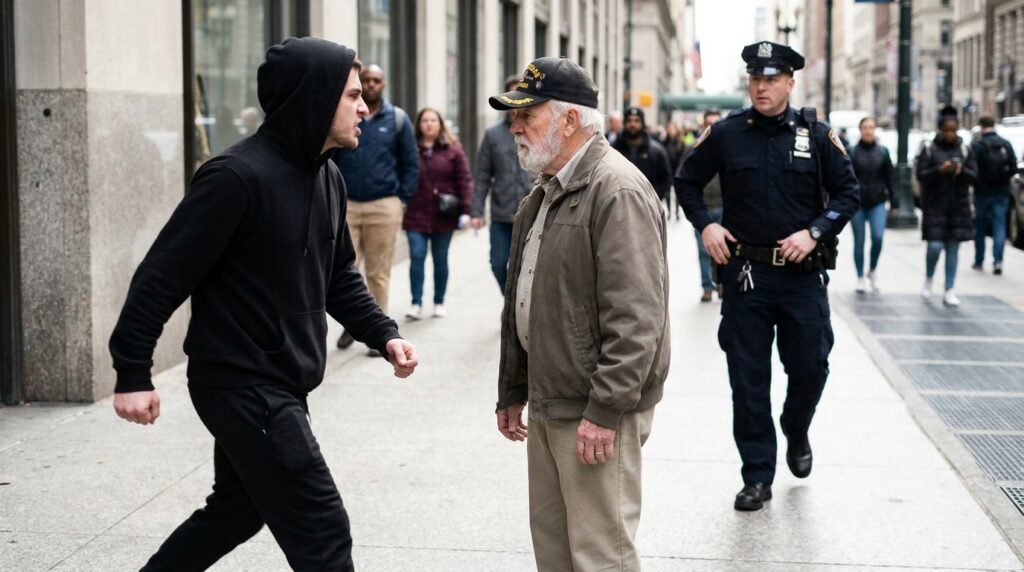
The Weight of Salt and Iron on a Crumbling Concrete Floor
CHAPTER 1: THE FAULT LINES OF INDIFFERENCE
The wool of the cap was coarse, smelling faintly of the mothballs and cedar chips where it spent twenty-nine days of every month. It sat low on his brow, the stitched gold lettering—faded to the color of wet straw—catching the harsh, unwashed glare of the afternoon sun bouncing off the plate-glass windows of the electronics repair shop. He didn’t look at the displays of refurbished screens or the flickering security monitors. He looked at the seam where the concrete met the brickwork of the city clinic, noticing how the salt from three winters ago had eaten a jagged white trench along the foundation line.
A man learns to watch the margins when the center becomes too loud. The city didn’t move in sequences anymore; it moved in a thick, greasy smear of exhaust, wet asphalt, and the collective, hurried weight of five thousand people who wouldn’t look up if the sky turned to iron. He kept his hands deep inside the pockets of his charcoal casual jacket, his right thumb tracing the rough, pitted edge of a heavy zinc washer he’d carried since the shipyard shut its slipways down in eighty-four. It was balanced. It was real.
Behind him, the pneumatic door of the clinic hissed shut with a wet, rubbery sigh. The air out here was different—it tasted of sulfur, burnt brake pads, and the cold, flat dampness coming off the river two blocks east. He took three steps, his worn leather soles making a dry, rhythmic click against the aggregate pavement. A rhythmic step was an old habit, a cadence that stayed in the marrow long after the knees started to fill with fluid every time the barometer dropped below thirty.
Then the cadence behind him broke.
It wasn’t a commuter’s stride. Commuters moved with a loose, swinging momentum, their heels striking first, their minds already three blocks ahead inside some fluorescent office cubicle. This sound was light, flat-footed, and fast—the distinct scuff of cheap rubber soles dragging along the concrete to mask the speed of an approach. The shadow came first, stretching long and distorted across the grease-stained curb, a dark silhouette with an oversized hood that swallowed the neck and shoulders.
The old man didn’t turn his head. He didn’t quicken his pace toward the safety of the crosswalk where a dozen people stood clustered like grey sheep under the yellow signal box. He simply shifted his center of gravity three inches to the left, planting his heels firmly into the deepest part of the trench where the concrete had fractured. He let his shoulders drop, his shoulder blades locking against the small of his back until his spine was a straight, unyielding line of old oak.
The hooded challenger didn’t pass. He pivoted, his hip catching the edge of an old woman’s shopping cart with a sharp metallic clatter that no one turned to acknowledge, and stepped directly into the veteran’s path. He was close enough for the old man to smell him—stale tobacco, cheap synthetic polyester, and the sharp, sour tang of adrenaline that always comes with an unearned rush of blood. The hood was pulled down past the bridge of a crooked, broken nose, leaving nothing visible but a pair of restless, wet eyes and a mouth pulled back into a thin, tight sneer.
The young man didn’t look at the old face or the white beard that looked like salt dried on a rock. His eyes fixed instantly on the gold lettering of the cap, his chest heaving twice as he closed the remaining gap until their jackets almost brushed.
“You think anyone here is going to stop me today?”
The words were spat out low, a small pocket of hot air meant to force a flinch, to make the old chin drop toward the chest. The crowd surged around them like water hitting a dead stump in a creek bed, widening the circle just enough to avoid the spray but keeping their eyes locked firmly on the grey concrete beneath their own feet.
The veteran didn’t look for a cop. He didn’t look at the crowd. He looked directly into the dark space beneath the hood, his pupils dilated and still, his face as flat and expressionless as a slate shingle on an old barn. The wind caught the edge of his jacket, revealing the silver buckle of his belt, dull and scratched from decades of utility. He felt the cold iron of the city through his shoes, and for three seconds, the sidewalk was entirely silent.
“Back off now,” the old man said, his voice a low, gravelly rasp that sounded like a shovel blade striking flint. “You’re finished causing trouble here.”
Before the young man’s jaw could snap shut on a reply, a heavy, black-gloved hand dropped onto the nylon shoulder of the hoodie, the crisp, unmistakable snap of a leather duty holster echoing against the brick wall.

CHAPTER 2: THE ANATOMY OF AN ARREST
“Don’t stiffen up on me,” the officer grunted, his voice flat and thin under the weight of his duty gear.
The sound of the arrest was mostly leather—the heavy, oiled creak of a utility belt shifting mass as the cop pivoted his weight. The hooded challenger didn’t fight the grip, but his body didn’t go loose either; he stayed knotted up like a cold length of wire rope, his shoulder blades grinding hard against the salt-pitted brick face of the clinic wall. A small shower of red dust and dried mortar flaked off the joints, settling into the black synthetic weave of his hood.
The veteran didn’t look at the kid’s face anymore. He was looking at the officer’s right hand, where the skin across the knuckles was white from the force of the leverage. It was an old hold—the kind they taught at the academy back when the cars still had carburetors and the radios used crystals. The cop’s thumb was pressed deep into the nerve cluster behind the collarbone, a pragmatic bit of leverage that kept the kid’s heels off the pavement without requiring a single blow.
“Watch the feet, Miller,” the cop said into his shoulder mic, his breath coming in short, rhythmic puffs that smelled of cold chicory coffee and winter mints. He didn’t look at the old man yet. His focus remained entirely on the three square inches of space between the kid’s shoulder blades where his fingers had gathered a fistful of loose black polyester.
The crowd didn’t stop to cheer. If anything, the circle widened further, the grey current of the sidewalk moving faster now that the danger had been codified into an official state action. People adjusted their bags, tucked their chins into their wool scarves, and slipped past the interaction lane with their eyes fixed on the greasy reflection of the cross-town bus idling twenty feet away. In a city built on thirty-year mortgage cycles and six-minute transit delays, an arrest was just an obstruction—a temporary narrowing of the pipe.
The old man reached down to adjust the hem of his casual jacket, his fingers brushing against the stiff, charcoal wool. His hand felt cold, the skin across his knuckles looking like dry river bed mud under the yellow glare of the streetlamp. He took a single, short breath through his nose, tasting the diesel exhaust and the sharp, sour tang of the kid’s sweat that still hung in the air between them.
That was when his thumb found the void.
The right pocket of his jacket was supposed to have a weight in it. Not the zinc washer—that was in the left, heavy and flat against his thigh—but the small, notched iron key that belonged to the old tool chest at the shipyard. The key wasn’t brass; it was hand-filed iron, four inches long, with three distinct square teeth that had been worn smooth by thirty years of grease and saltwater. It wasn’t there. The bottom of the pocket was just loose flannel lining, the fabric turned inside out like a dead tongue.
His heart didn’t jump. A heart that has spent eleven months in the mud near Da Nang doesn’t change its rhythm for a missing piece of metal, but his eyes narrowed until the white beard along his jawline went rigid. He looked back down at the concrete between his boots. Nothing. Just an empty potato chip bag and three squashed cigarette filters turning grey in the gutter water.
“You alright, sir?” the officer asked. He had the kid’s wrists locked in the steel teeth of the cuffs now, the double-click of the locking mechanism sounding sharp and metallic against the dull rumble of the midday traffic.
The veteran looked up, his face remaining a flat, slate shingle under the brim of his service cap. He didn’t mention the pocket. He didn’t mention the iron. In the dusty gray of the city, you don’t tell a man with a badge what you’re missing until you know exactly who took it and why they wanted the weight of it in their hand.
“The wind’s coming around from the east,” the old man said, his voice dropping into that low, gravelly rasp that sounded like iron filings being shifted with a spade. “It’s going to rain before the shift changes.”
The cop paused, his hand pausing on the kid’s elbow as he began the turn toward the curb where a white-and-blue transport unit was already nosing through the gridlock. He looked at the old man’s cap—at the faded gold thread that spelled out the name of a destroyer that had been broken up for scrap in a Taiwanese shipyard before the kid in the cuffs was even a thought in his father’s mind. The cop’s eyes stayed on the lettering for two seconds, his posture shifting just enough for his shoulders to drop out of their defensive hunch.
“My old man was on the Oriskany,” the officer said, his voice losing its administrative edge for the space of three words. “Seventy-two. He had the same look in his eyes when the boilers went out.”
The kid in the cuffs spat onto the concrete, a thick, dark blob that landed an inch from the cop’s polished leather boot. He didn’t say anything, but his wet eyes were fixed entirely on the veteran’s empty right pocket, his thin mouth curling into a dry, split smile that showed the gray edge of a dead tooth. He knew.
The old man didn’t move. He kept his left hand on the zinc washer in his remaining pocket, feeling the cold circle of the metal against his palm while the transport unit’s brakes squealed against the curb, the air line blowing a dry hiss of moisture across the wet aggregate pavement. The street was narrowing. The fault lines were opening, and the key was already moving three blocks west toward the river.
CHAPTER 3: THE ANCHOR INCIDENT ON THE CONCRETE
The blue-and-white transport unit left an oily plume of unburnt diesel hovering three inches above the wet aggregate. It settled into the wool of the old man’s collar, heavy and sour, mixing with the scent of dried river salt that never really washed out of the charcoal jacket. He stood exactly where his heels had notched into the concrete trench, his right hand remaining flat against the empty flannel lining of his pocket.
The weight was gone. The hand-filed iron key with its three square teeth had left an imprint against his thigh that still throbbed with a faint, phantom pressure, but the pocket itself was a hollow draft.
He turned his head six degrees to the east. The city commuters were already reclaiming the sidewalk corridor, their shoes scuffing through the grease-stained gutter water with the frantic, short-stroked efficiency of an engine with a loose flywheel. They didn’t look at the old man. They didn’t look at the brickwork where the hooded kid’s shoulders had scraped away the dried mortar. They simply narrowed their eyes against the first thin needles of rain that were beginning to slant down from the harbor, the water turning the grey concrete into a dark, reflective mirror that smelled of zinc and sulfur.
A man who survives thirty winters on a drydock doesn’t chase a shadow through an unmapped crowd. He calculates the leverage. The kid hadn’t been working alone; a three-tooth shipyard key was useless to a street-level shakedown artist unless someone had paid him to find the specific notch it made in the world.
He walked. His stride remained low and unhurried, his worn leather soles striking the pavement with the deliberate, heavy thud of an old piston. He cleared the intersection at Eleventh, his eyes tracking the baseline of the storefronts rather than the faces. At the corner of the commercial block, where the old iron-front buildings began to give way to the chain-link perimeters of the industrial canal, a black sedan sat idling beside a rusted fire hydrant. Its wipers were off, the glass coated in a greasy film of river mist that obscured the driver’s silhouette, but the exhaust pipe was clear—emitting a steady, clean hiss of white vapor that didn’t match the ragged rumble of the city buses.
The veteran stopped before the curb, his fingers tightening around the zinc washer in his left pocket. He let his thumb feel the rough stamp on the metal—the small, non-regulation cross-hatch that someone had filed into the rim fifty years ago when the shipments from the chemical depot were still arriving by rail.
A figure stepped out from the shadow of the brick partition behind the sedan. It wasn’t the kid. This man was broader, his shoulders stiff under a heavy tan oilcloth coat that had the stiff, greasy look of old warehouse stock. He didn’t have a hood, but his cap was pulled low, a flat wool brim that cast a grey wedge of shadow across a jawline that looked like it had been broken and set wrong in a county clinic. He didn’t approach the old man. He simply stood by the rear fender of the car, his hands buried deep in his pockets, his eyes fixed on the gold lettering of the veteran’s cap with the flat, unblinking assessment of an inspector measuring a rusted cable for rot.
“You’re a long way from the slipways, Vance,” the man said. The voice didn’t carry across the street; it dropped straight into the concrete between them, low and heavy with the dry, transactional rattle of a foreman closing a logbook.
The old man didn’t change his stance. He kept his feet planted twenty inches apart, his knees slightly bent to take the weight of his frame off his lower back—the old command-post posture that keeps a man steady when the deck begins to roll under an incoming sea.
“The slipways closed when the ground went sour,” the veteran said, his rasp cutting through the hiss of the sedan’s exhaust. “The iron’s still there. It just doesn’t belong to the company anymore.”
The man in the oilcloth coat didn’t flinch. He reached into his pocket and pulled his right hand out, his fingers holding a small, dull square of tarnished metal by a thin loop of copper wire. It wasn’t the shipyard key. It was a stamped transit token from nineteen-seventy-two, the surface scratched down to the dull orange copper beneath the chrome plating. He let it dangle for a fraction of a second, the metal clicking against the heavy brass button of his cuff with a sound that was too bright, too clean for the street.
“Your old logistics manifest had a gap in the third quarter,” the man said, his eyes shifting down to the veteran’s empty right pocket. “The kid didn’t know what he was pulling. He just knew it was old. But the people who own the property down by the canal—they remember the tracking tags. They remember who signed the bills of lading when the drums went into the limestone vaults.”
The veteran’s left hand grew perfectly still against the zinc washer. The token wasn’t a standard transit piece; the scratch across the face was a deliberate cancellation mark used by the third transport detachment out of Fort Meade—the ones who ran the unmarked tank cars into the siding behind the old shipyard before the state EPA even had an office in the county.
“The vaults were sealed with six feet of grout,” the old man said softly. “The records were burned in the fire at the administrative annex.”
“Some records don’t burn,” the man in the oilcloth coat replied, his mouth flattening into a hard, humorless line as he dropped the token back into his pocket. “They just get misplaced in old toolboxes. The precinct’s got three different warrants for administrative inspection on the riverfront lockers starting tomorrow morning. If the iron doesn’t match the lock, they break the hinge.”
He didn’t wait for a reply. He pivoted with a heavy, deliberate swing of his hip and stepped back into the passenger side of the sedan. The door shut with a solid, well-greased thud that spoke of reinforced panels and heavy latching mechanisms. The car didn’t screech its tires; it pulled away from the curb with a smooth, silent surge of power that left the old man standing alone at the margin of the canal, the rain finally beginning to pool in the deep white fractures of the concrete sidewalk.
The veteran looked down at his left hand. He pulled it from his pocket, exposing the zinc washer to the grey light. The cross-hatch was still there, but under the wet sheen of the rain, he could see what his thumb had missed in the dark—the faint, stamped letters U.S.A.T.C. beneath the grime. The decoy secret of the shipyard locker was already peeling away, and the cold iron beneath it was starting to taste like salt and old bone.
CHAPTER 4: THE SHIFT ON THE FRONT LINES
The padlock hanging from the secondary chain-link gate of the terminal didn’t have a brass body. It was a massive block of laminated steel, its plates bound together by rusted iron rivets that had turned the color of dried liver under fifty years of salt mist. When the old man dropped his left forearm against the horizontal pipe of the frame, the metal didn’t rattle; it gave a dull, dead thud that belonged to something anchored deep into ten inches of poured dock concrete.
The rain was no longer slanting. It fell straight down now, a heavy, unhurried drumming that flattened the coal-colored surface of the canal and turned the fine limestone dust on the tracking road into a thick, gritty paste. Vance didn’t pull his hands from his coat. He stood under the overhang of an old corrugated-iron pump house, his veteran cap tilted forward just enough to channel the runoff away from his collar.
He wasn’t looking at the lock anymore. He was watching the reflection of the streetlamp in a wide puddle of oil-slicked runoff twenty yards inside the perimeter.
A car was parked down behind the rusted skeleton of the old gantry crane—not the black sedan from Eleventh Street, but a standard city cruiser, its white door panels smeared with a baseline of brown river silt from the unpaved tracking lanes. The engine was dead, the roof-mounted light bar dark and encrusted with salt crust, but the tires weren’t flat. They sat high on the aggregate, their treads clean of the lime mud that coated every other square inch of the yard.
Someone had driven it in from the western approach within the hour.
The old man felt the zinc washer against his left palm, his skin registering the sharp, hand-filed notches along the rim with the cold clarity of an inspector checking a tolerance. The man in the oilcloth coat had known the schedule too well. In the old logistics matrix, a precinct inspection didn’t begin at the desk; it began with a quiet spotter car parked behind an obsolete asset to see if anyone came down with an iron key before the main detail arrived with the torches and the bolt cutters.
A door latch clicked fifty yards down the lane, the sound muffled by the heavy hiss of the river.
It wasn’t a tactical movement. It was the heavy, unhurried step of a man whose boots were broken in for administrative shifts on concrete floors. A middle-aged patrol officer stepped out from the shadow of the gantry supports, his yellow slicker dripping water onto his utility belt with a faint, rhythmic slap. He didn’t have his hand on his holster, but his thumbs were tucked neatly into the top of his load-bearing vest—a natural bit of leverage that kept his shoulders broad against the gray line of the fence.
Vance recognized the set of the jaw before the man reached the gate. It was Miller, the officer from the sidewalk confrontation outside the clinic, his clean-cut face looking slightly grey under the yellow wash of the perimeter security light.
“The gate’s locked for a reason, sir,” Miller said. He didn’t use his professional command tone; his voice was flat, carrying the dry, unhurried rasp of an investigator who has already spent four hours writing up a custody report on a kid with a black hoodie. “The city port authority pulled the access permits for this sector three hours ago.”
The old man didn’t take his weight off his heels. He kept his spine straight, his beard catching the moisture from the fog rolling off the shipping channel.
“The port authority didn’t lay the concrete under these posts,” Vance said, his voice dropping into that low, gravelly rasp. “The company paid for the lime and the aggregate in sixty-nine. I signed the delivery logs.”
Miller stopped five feet from the inside face of the wire mesh. He looked at the old man’s cap—at the gold lettering that spelled out the name of the destroyer that no longer existed in any navy registry. Then he reached inside his slicker and pulled out a small, flat manila envelope, the paper dark and swollen with the humidity of the harbor. Through the translucent oil-cloth pocket of his vest, the old man could see the shape of the iron key—the three square teeth showing through the paper like old teeth in a skull.
“The kid had this in his sock when we processed him at the precinct,” Miller said softly, his eyes tracking a line of grease on the fence pipe. “He didn’t give a statement, but the desk sergeant didn’t even log it into the property locker. He put it straight into a blue folder that belongs to the city development board.”
The veteran didn’t reach through the wire. He knew the rule of the line: once an item enters an administrative folder, it doesn’t come back out across a fence unless the price is paid in blood or state scrip.
“The desk sergeant has a brother who works the logistics desk at the regional rail yard,” the old man said. It wasn’t a question.
“He’s got a cousin on the zoning commission too,” Miller replied, his mouth tightening until the skin across his cheekbones looked like dry parchment. “They’re not looking for old tools, Vance. They’re looking for the tracking logs for the limestone vaults under the machine shop. The state EPA wants to clear the site for a deep-water container terminal, but the developers won’t sign the insurance waivers until they know exactly what’s down in the third tier.”
The old man turned his head toward the dark mass of the machine shop three hundred yards inside the fence. The corrugated iron roof had mostly collapsed under the winter snows of ninety-eight, but the concrete foundations were twelve feet thick—built to hold the weight of turbine casings and heavy naval ordnance during the long years before the contracts dried up.
“There are no logs,” Vance said, his voice steady as a plumb line. “The logs were in the annex when the furnace leaked.”
“The blue folder has a duplicate manifest from seventy-three,” Miller said, his hand tightening on the envelope until the paper crinkled. “It has your name on the clearance stamps, sir. Every tank car that came through the Fort Meade siding had a cross-hatch filed into the primary valve washer. They’re matching the stamps on the old zinc washers to find out which unit ran the chemical transport before the records were closed.”
The old man’s left hand grew perfectly cold against the washer in his pocket. The trap wasn’t a street mugging; the kid in the black hoodie had just been a cheap probe deployed to see if the last living supervisor of the third transport detachment still carried the physical proof of the tracking system on his body.
“You should go back to the clinic, sir,” Miller said, his voice dropping into a quiet, transactional whisper that barely cleared the mesh of the gate. “The state inspectors will be here at dawn with the heavy tools. If you’re still within the port boundaries when the warrants are unsealed, the precinct won’t be checking service caps.”
He turned before the old man could answer, his yellow slicker disappearing back into the shadow of the gantry crane like a piece of old canvas caught in a draft. The old man stood alone at the gate, the rain running off the brim of his cap in a steady, unbroken stream that tasted of old iron and the salt of a completely different era.
CHAPTER 5: THE REMNANTS IN THE LOCKER
The hinge didn’t snap cleanly. It groaned—a dry, high-pitched screech of over-stressed metal that cut through the low hum of the nearby transformer station. Vance kept his weight centered over the pry-tool, a rusted steel pin he had salvaged from the crane tracks. His leather shoe soles slipped twice on the wet aggregate floor of the abandoned foreman’s shack, but his shoulders remained locked. With a final, wet crunch of decaying pine, the door of the small shipyard locker splintered open, revealing a dark cavity lined with sixty years of river silt and dried grease.
The brass key Miller had shown him through the manila envelope was still sitting inside a file folder at the precinct, but Vance didn’t need the genuine article to clear a rusted latch. A man who spent three decades rebuilding cargo booms knows exactly how much tolerance a generic industrial padlock has before the internal brass pins shear under straight leverage.
He dropped the steel pin. It hit the concrete floor with a heavy, flat clatter that vibrated through the damp soles of his boots. He reached into the dark opening of the locker, his bare fingers brushing against a cold layer of oilcloth that felt thick and slippery, like a dead eel pulled from a net.
There was no ledger inside. The space where the regional development board expected to find the three-quarter logistics manifest was completely empty except for a single, heavy canvas pouch tied with dry hemp twine.
The old man didn’t pull the pouch out into the grey afternoon light immediately. He stood within the narrow frame of the shack’s broken doorway, his ears tracking the rhythmic slap of the river against the rotting timber pilings thirty feet below. The wind had shifted again, bringing the chemical smell of the industrial canal closer, a sharp, metallic tang that tasted like battery acid and wet copper on the back of his tongue.
He untied the twine using his left hand, his thumb working the stiff, salt-encrusted knot until the fiber parted with a dry snap. He tipped the contents into his open palm.
It wasn’t a logbook. It was a collection of heavy, circular steel discs—sixteen of them—strung onto a thick loop of copper telephone wire. They weren’t standard transit tokens from seventy-two. When he held them up to the yellow light leaking from the gantry perimeter, he could see the deep, non-regulation stamping on the metal. Each disc was marked with a three-digit sequence followed by a single, clean cross-hatch—the exact same cross-hatch that was filed into the rim of the zinc washer in his left pocket.
The decoy secret of the shipyard ledger was dead. There had never been a paper manifest left behind in the shipyard archives; the company had cleared the shelves long before the insurance waivers were ever drawn up. These tags were the actual operational markers from the Fort Meade transport detail, the physical receipts used to track the volume of the chemical drums before they were dropped into the deep limestone vaults beneath the turbine shop.
A low creak from the tracking road made him freeze.
It wasn’t the sound of Miller’s boots. This was a slow, heavy compression—the distinct groan of old timber stringers yielding beneath the tires of a heavy vehicle. Vance didn’t slide his hand back into his pocket. He kept his fingers closed around the wire loop of tokens, his head turning four degrees to the left to watch the narrow space between the pump house and the security gate.
A black utility truck had backed up against the wire mesh, its engine idling with a muffled, rhythmic throb that didn’t sound like a standard precinct cruiser. The rear doors were already open, and two figures in dark, heavy oilcloth coats were stepping out onto the aggregate road. They didn’t have flashlights, and they weren’t carrying the standard iron tools of a city inspection team. One of them had a short, heavy bolt cutter tucked under his arm; the other was holding a grey plastic folder that had the distinctive bright blue seal of the state development board stamped across the corner.
They weren’t waiting for the warrants to be unsealed at dawn.
The old man didn’t move toward the back window of the shack. The window was gone, replaced by a sheet of corrugated tin that had been welded into the frame during the strike of eighty-one, leaving no exit path that didn’t involve three feet of rusted iron teeth. He stood completely still in the dark core of the room, his white beard pressed flat against the collar of his casual jacket, his pupils dilated until the dark shapes on the tracking road were as clear as the gold thread on his cap.
“Check the locker row first,” a voice called out from the fence line. It wasn’t the man with the broken jaw from Eleventh Street. This voice was thinner, younger, carrying the flat, administrative cadence of an insurance adjuster or a structural clerk. “Vance hasn’t cleared the clinic gate yet. We have twenty minutes before the evening patrol detail loops back through the canal sector.”
The veteran felt the steel tokens cold against his knuckles. The setup had been complete from the moment the kid in the black hoodie had cut through the pedestrian crowd outside the clinic. The precinct hadn’t taken the iron key to preserve the evidence for a city inspection; they had moved it to the development board’s folder so the private contractors could clear the physical tags before the official EPA survey team could log the contamination site.
He let his right thumb press against the sharp edge of the first disc on the loop. The number stamped into the metal was 403—the designation for the primary storage vault directly beneath the main foundation line of the turbine room. If they took the loop, the limestone vaults would remain just an unmapped empty space on a city registry, an insurance liability that could be paved over with two feet of fresh aggregate and forgotten for another fifty years.
The footsteps were on the gravel path now, the short, sharp scuff of rubber boots cutting through the heavy sound of the rain. Vance didn’t drop his chin. He reached into his left pocket and pulled out the old zinc washer, his thumb tracing the U.S.A.T.C. stamp one last time before he dropped it into the canvas pouch where the tokens had spent thirty winters. He didn’t have a weapon, and his knees were stiff from the dampness of the river, but his spine remained perfectly straight under the weight of his cap.
The man with the bolt cutters reached the door frame, his shadow blocking out the yellow glare of the perimeter security light. He didn’t see the old man standing behind the broken locker door until his left boot struck the steel pin on the floor, the metal clattering against the concrete with a sound that froze both men in the dark.
CHAPTER 6: THE SILENT WATCHERS IN THE DRIFT
The man with the bolt cutters didn’t drop his tool. He shifted his grip down the long tubular handles, the iron jaws opening three inches with a dry metallic click that sounded exactly like a grease gun loading. He didn’t scream; men hired for dark-hour clearance work don’t use their throats on a city payroll. He simply dropped his head beneath the stiff brim of his oilcloth cap and leaned his mass forward, using the momentum of his heavy rubber boots to crowd the narrow doorway.
Vance didn’t retreat. A man who has spent forty years bracing his heels against the vibration of pneumatic rivet guns knows that retreating on a grease-filmed floor is an invitation to lose the spine. He kept his left hand deep inside the canvas pouch, his fingers locking onto the thick loop of copper wire, while his right forearm rose in a single, short arc to meet the incoming chest.
The impact was flat and heavy, the stiff material of their coats scraping together with the dry rasp of coarse sandpaper. The steel pin on the floor rolled two inches, its rusted iron flank clicking against the foundation sill.
“Out,” the clerk by the gate called out, his voice thin and hurried through the downpour. He hadn’t stepped onto the gravel path; he was standing by the rear fender of the utility truck, his fingers frantically tapping the face of a small black cellular terminal that threw a cold, blue rectangular glare across his spectacles. “The local frequency just logged an administrative diversion two blocks out. Get the pouch and clear the frame.”
The man in the doorway didn’t answer. His teeth were showing now—grey and crooked under the yellow light of the perimeter lamp—as he twisted the handles of the bolt cutter up toward Vance’s chin, trying to use the leverage of the steel handles to force the old man’s neck back against the splintered locker wood. The weight was purely physical, a kinetic press of muscle and wet canvas that smelled of diesel fuel and old warehouse dampness.
Vance held. His knees were stiff, the fluid in his joints burning with the familiar dull ache of sixty-nine, but his center of gravity was lower than the younger man calculated. He let his rib cage absorb the pressure of the iron tool, his right palm slipping flat against the cold, wet casing of the bolt cutter’s hinge to freeze the leverage.
Through the gaps in the broken corrugated iron wall behind them, something else changed in the dark.
A secondary pair of headlights cut through the mist from the eastern access road—not the high, white beams of a patrol unit, but the dull, amber fog lamps of an unmarked commercial sedan. The vehicle didn’t stop at the perimeter gate. It moved slowly along the outside of the chain-link fence, the tires crunching through the gravel with a slow, deliberate cadence that matched the idle of the utility truck. From the passenger window, a pale arm extended into the rain, holding a heavy black optical recording lens steady against the frame of the door.
They weren’t just clearing the locker; they were recording the time-stamp of the resistance.
“He’s not dropping it,” the man in the doorway growled, his breath coming in hot, sour puffs against Vance’s white beard. He let go of one handle of the cutters, his gloved hand reaching blindly for the collar of the charcoal casual jacket to twist the old man out of the corner.
Vance shifted his weight four inches to the heel. He didn’t strike; a strike was a loose, erratic expenditures of mass that a man his age couldn’t afford on a wet aggregate floor. Instead, he simply let his right shoulder drop into the space created by the clerk’s reaching hand, his hip catching the inner thigh of the rubber boot with the unyielding leverage of a dead chock block.
The younger man stumbled, his boot catching the steel pin on the floor. He didn’t fall completely, but his mass swung wide, his shoulder striking the rotten pine frame of the locker row with a wet, splintering crunch that brought a handful of dried tar paper down from the rafters.
“Leave it,” the clerk by the truck yelled, his voice rising an octave as the horn of the unmarked sedan outside the fence gave two short, flat honks—the standard signal for a perimeter breach from a private spotter detail. “The gate loop just tripped. Move, you idiot.”
The man with the cutters scrambled back through the door frame, his oilcloth coat tearing with a sharp rasp against a rusted iron nail in the jamb. He didn’t look back at the old man. He left his tool on the aggregate, his rubber soles slapping hard through the mud as he sprinted toward the open rear doors of the utility truck. The vehicle didn’t wait for him to sit; the driver slammed the transmission into gear before the latch could click, the rear tires throwing a wide screen of wet limestone grit across the pump house walls as it nosed out into the dark.
Vance stood alone in the center of the shack, his breathing shallow and gravelly in the sudden silence. The loop of copper wire was still tight in his left hand, the sixteen steel tokens clicking together with a dull, heavy chime that sounded like old keys shifting in a drawer.
He walked out into the rain, his boots making a slow, deliberate path through the fresh tire ruts. The unmarked sedan with the amber fog lamps was gone, its exhaust leaving nothing but a thin, white vapor trail that dissolved into the river fog within fifty feet of the fence. He reached down and picked up the small manila envelope that Miller had dropped during the earlier shift change—the paper was entirely pulp now, but the hand-filed iron shipyard key inside was still cold, its three square teeth pointing straight toward the dark turbine shop down the line.
The assessment was over. The decoy of the city registry had been broken by the first blow inside the shack, and the watchers in the sedan now had the exact measurement of what it would take to turn the last supervisor of the third transport detachment into a permanent part of the foundation.
CHAPTER 7: THE ARCHIVAL LINE AND THE SHADOW CONFLICT
The pulp of the manila envelope didn’t hold its shape when Vance’s fingers closed around it. The water had dissolved the seams, leaving the hand-filed iron key bare against his palm, its three square teeth slick with a dark layer of old machine grease that smelled of cold storage and wet sulfur. He didn’t slip it back into his pocket. He held it down along his thigh, his leather soles shifting across the muddy limestone ruts left by the utility truck’s retreat.
From the western approach road, the low, mechanical whine of a steering pump cut through the steady drumming of the river rain. It wasn’t the private contractor’s sedan this time. The vehicle coming through the broken gate gap was a standard marked precinct utility wagon, its high-clearance tires crunching through the aggregate with a heavy, professional cadence that didn’t hide its approach.
The vehicle stopped twenty feet from the pump house, its high-intensity halogen headlights remaining on, pinning Vance in a stark, white cross-fire of illumination that turned the rain into thousands of falling silver needles. The driver’s side door didn’t swing wide immediately; the pneumatic seals groaned twice as the pressure equalized inside the cab.
Miller stepped out first, his yellow slicker gone, replaced by the dark wool winter patrol jacket that had the heavy iron precinct badge pinned four inches above the seam of the utility pocket. He didn’t look at the splintered wood of the locker row behind Vance. He kept his hands tucked into his wide leather belt, his right thumb hooked over the primary retention clip of his holster—not a threat posture, but the stiff, defensive carriage of an officer who had already spent three hours answering internal logistics queries at the central desk.
“You’re outside the clinic line, sir,” Miller said, his voice carrying that flat, administrative rasp that Vance had heard thirty years ago from the camp inspectors down by the cantonment. “The desk sergeant didn’t file the morning custody report. He marked the incident at Eleventh Street as an unspecified street clearance, and the zoning commissioner just signed the emergency unsealing order for the turbine vaults.”
The old man didn’t shield his eyes from the glare. He kept his feet planted twenty inches apart, the loop of copper wire with its sixteen steel tokens hidden entirely within the thick canvas pouch in his left hand.
“The unsealing requires an official representative from the defense logistics bureau,” Vance said, his low, gravelly voice cutting through the steady tick of the wagon’s exhaust pipe. “The sixty-nine compact state covenants are clear on the third tier. No city entry without the original manifest validation.”
A second figure moved behind the steering wheel of the wagon, the shadow obscuring the dashboard lights before the passenger side door clicked open. It wasn’t the man with the broken jaw from the sedan. This man was smaller, older, wearing a sharp, dark wool administrative coat that didn’t have a speck of river silt on the cuffs. He carried a heavy, chrome-plated clipboard under his left arm, his thin fingers holding a white sheet of dry parchment that looked completely out of place against the wet iron background of the canal.
“The compact covenants were canceled under the ninety-two omnibus restructuring, Mr. Vance,” the administrative officer said, his cadence carrying the precise, unhurried click of a court stenographer. He didn’t step into the mud; he stood on the running board of the wagon, using the door frame to keep the rain off his white hair. “The third transport detachment was a temporary administrative unit with no surviving post-service archives. The city development board doesn’t recognize a signature from an unrecorded logistics clerk on an obsolete asset registry.”
He flipped the top page of the clipboard, the white paper crinkling with a sound like dry leaves under an iron boot.
“We have the duplicate manifest from seventy-three,” the clerk continued, his eyes fixing on the faded gold thread of Vance’s service cap. “The stamps match the regional rail yard’s tracking books, but the vault numbers are blanked out in the master copy. We know you have the primary index tags, Vance. The kid in the hoodie didn’t pull them from your jacket because you’d already moved them to the shipyard lockboxes. But the precinct has a full operational tracking warrant for the recovery of all non-regulation logistics markers from this sector.”
He looked at Miller. The patrol officer didn’t shift his thumb off the retention clip, but his jawline went rigid, his eyes tracking the dark line where the river water was beginning to pool around Vance’s leather shoes.
“Give him the pouch, Vance,” Miller said softly, the words barely clearing the rumble of the utility wagon’s engine. “The desk sergeant has the property log unsealed. If the tags are on the clipboard before the morning detail arrives, the clinic lane stays open for your monthly benefits counter appointments. If they have to break the floor of the machine shop with the pneumatic drills to find the vaults, the precinct marks the entire sector as an unmapped biohazard zone. They’ll quarantine the whole block, including the veteran’s lodging house on Tenth.”
The old man felt the sixteen steel discs shift inside the pouch, their hand-filed edges scratching through the coarse canvas against his palm. The trap wasn’t an administrative error; it was a total institutional leverage loop. They didn’t just want the tracking tags to clear the insurance waivers; they wanted to erase the physical proof of the U.S.A.T.C. transport run before the federal surveyors could log the chemical residue in the limestone vaults, and they were willing to crush the remaining margins of his life to get the iron out of his hand.
Vance looked at the white-haired clerk on the running board, then down at the hand-filed iron key in his right palm. The three square teeth were still greasy, still holding the exact shape of the lock that had been set into the concrete floor of the turbine room thirty winters ago.
“The manifest in your blue folder is a dummy copy,” Vance said, his voice dropping into a rasp so low it seemed to come from the concrete itself. “The seventy-three transport didn’t go into the third tier. It went into the fourth—the one that sits six feet below the river baseline, where the tide pools when the sluice gates are open. If you open the third tier with the drills, you won’t find old drums. You’ll hit the main high-pressure drain line for the entire western ward.”
The clerk’s fingers froze on the edge of the chrome clipboard, the white paper fluttering once as a stray drop of rain caught the top margin, turning the precinct’s blue ink stamp into a blurry, indigo smear.
CHAPTER 8: THE HARBOR EDGE TIMELINE
The silence that followed the rasp of Vance’s voice didn’t belong to the city. It was the heavy, suffocating stillness of a flooded compartment, the low-frequency drone of the industrial canal pump eating the sound of the rain before it could bounce off the wagon’s hood. The administrative clerk didn’t lower his foot from the running board. He stayed suspended between the dry cab and the mud, his chrome clipboard tilted forward as the water pooled on the parchment, turning the clean black type into a blurred, illegible smudge.
Miller’s thumb moved. It didn’t settle back onto the retention clip of his leather holster; it dropped into the seam of his utility belt, his knuckles catching the glare of the high-intensity halogens until the skin looked like scrubbed iron. He knew the layout of the western ward. Every patrolman who had ever pulled a late-shift detail near the canal water knew that the old brick sluice gates were the only thing keeping the river from back-flowing into the basements of the city’s old south side.
“The fourth tier isn’t on the zoning registry,” the clerk said. The administrative click had gone flat, his teeth clicking together once with the dry, hollow sound of an empty register box. “The sixty-nine structural map shows nothing but bedrock below the foundation piles.”
“The company didn’t pay the drill crews to log the bedrock,” Vance said, his low, gravelly rasp rising straight from the wet limestone ruts. He didn’t drop the hand-filed key. He held it out before him, his fingers tracking the three square teeth that had been cut into the iron flank fifty summers ago. “They paid them to find the old quarry fissures where the water ran dark. We lowered thirty-two thousand drums of logistics residue into those slots before the army pulled the detachment out of Fort Meade. If you hit that floor with the pneumatic spikes, you won’t clear an insurance waiver. You’ll drop the whole turbine floor into the intake tunnel.”
He stepped forward. His leather soles didn’t scuff through the lime paste; they came down with the heavy, unhurried precision of an old piston finding its seat. He reached the side panel of the marked utility wagon, his hand coming down onto the cold, wet metal of the door frame an inch from Miller’s arm.
The patrol officer didn’t pull back. He looked down at the old man’s cap—at the gold thread that had lost its luster under forty years of coal smoke and harbor fog. For five seconds, the only movement on the tracking road was the slow, rhythmic sweep of the wagon’s wipers clearing a greasy grey film of silt from the glass.
“The warrants are already logged in the system, Vance,” Miller said softly, his voice barely vibrating through the stiff fabric of his winter jacket. “The desk sergeant can’t un-ring the bell. If the crews don’t start the drills by sunrise, the development board flags the precinct for non-compliance on a commercial clearance project.”
“Then tell them the foundation failed the core inspection,” Vance said. He took his left hand out of the canvas pouch, exposing the sixteen steel discs for the first time to the stark glare of the halogens. The copper wire loop swung twice, the non-regulation tracking tags chiming together with a dull, heavy clink that carried the weight of everything buried beneath the concrete. “Give them the tags from the third tier. Tell them the limestone’s already soft from the chemical wash. They can’t pave over a vault that’s already dropping into the river baseline.”
The administrative clerk looked down from the running board, his eyes fixing on the deep cross-hatching stamped into the rim of the steel discs. He didn’t need a ledger to read the markings; the U.S.A.T.C. imprint was clear under the white wash of the lights, a permanent physical receipt that no city registry could absorb without bringing down the whole regulatory archive.
He reached out his thin, dry hand, his fingers taking the loop of wire from Vance’s palm with a cautious, trembling grip that avoided the rusted edges of the metal. He didn’t look at Miller. He didn’t look back at the dark silhouette of the machine shop. He simply pulled his foot back into the cab and slammed the heavy utility door, the latch catching with a solid, definitive thud that cut off the blue rectangular glow of his phone.
“Get in, Miller,” the clerk’s voice came muffled through the reinforced glass. “The survey needs to be re-indexed before the morning shift hits the desk.”
The patrol officer stayed on the aggregate for two more seconds. He looked at the old man, his right hand rising to the brim of his own visor in a short, unhurried movement that wasn’t an official protocol salute, but the heavy, quiet recognition of one man who had stood watch over a border for another who had never left his post.
“The clinic lane stays open, sir,” Miller said, his boots clicking hard through the mud as he rounded the front fender of the wagon.
The utility wagon didn’t turn around in the narrow road. It backed out through the broken gate gap, its transmission whining in the dark as its high-intensity halogens swept across the corrugated iron walls of the pump house, leaving Vance standing alone at the absolute margin of the industrial canal.
The old man didn’t watch the white vapor trail dissolve into the river fog. He turned his face toward the harbor crosswalk, his spine remaining perfectly straight under the weight of his cap as the rain continued to run off the gold lettering, washing the salt from the iron and leaving the gray concrete clean beneath his heels.
CHAPTER 9: THE ELECTRONIC BORDER IN THE CORRIDOR
The iron key didn’t hit wood. When Vance pressed his right thumb against the brass plate of the latch at Room 204, his hand-filed shipyard key struck an unyielding wall of injection-molded synthetic polymer. The keyway hadn’t been filled with lead or broken off with a shim; it had been cut entirely out of the mortise, replaced by a sleek, rectangular block of black anodized aluminum that smelled of factory grease and lithium batteries.
The old man didn’t rattle the handle. He stood in the narrow, unventilated corridor of the Tenth Street lodging house, his charcoal casual jacket dripping a slow circle of muddy harbor water onto the linoleum runner. The light overhead was a single forty-watt tube that hummed with a high, wet vibration, casting a grey shadow across the gold thread of his cap.
On the face of the black console, a tiny rectangular window threw a cold, blue sequence of digits into the dark: 00:00. Beneath the glass, a four-button membrane keypad sat clean and unspotted, entirely devoid of the grease and salt that coated every other surface in the three-story brick building.
A door clicked at the end of the hall—not the manager’s room, but the communal wash-room where the old copper pipes always rattled when the city water pressure spiked after the evening shift change.
“They didn’t leave your trunk on the sidewalk, Vance,” a voice said from the shadow of the stairwell. It was Mrs. Gable, the widow from 208 whose husband had been three years behind Vance on the fitting-out docks. She didn’t come out into the yellow glare of the tube; she stayed behind her screen door, her fingers holding the wire mesh flat against the frame to keep the latch from clicking. “The men came at four. They had an administrative clearance order from the city housing authority stamped with the precinct’s blue seal. They said the building was being re-indexed for non-profit structural conversion.”
The veteran didn’t turn his chiseled profile. He kept his eyes on the tiny blue numbers of the lock, his right hand remaining flat against the hand-filed iron key in his palm.
“The conversion covenants don’t apply to the second floor,” Vance said, his low, gravelly rasp sounding dry against the clean aluminum faceplate. “The sixty-nine compact covered these ten frames until the master mortgage was cleared by the state treasury.”
“The treasury sold the scrip to a private development fund three weeks ago,” Mrs. Gable whispered, her breath making a brief, grey fog pattern against the wire mesh. “The manager signed the lease release before the lunch whistle blew. They gave him a tracking voucher for a relocation unit down by the marsh yards. He didn’t even pack his ledgers, Vance. He just left the keys on the counter and walked out to the bus line with his hat in his hand.”
The old man let his thumb slide off the iron teeth of his key. He reached down and touched the bottom margin of the electronic cylinder, where two small, hexagonal security screws held the battery housing to the steel backing plate. They were T-10 star pins—the standard tamper-resistant hardware used by the regional transit security division to protect the toll terminals from street-level entry.
They hadn’t just changed the latch; they had codified the room into an unmapped administrative asset.
“Your green field trunk is down in the basement under the boiler intake,” the widow added, her screen door closing two inches with a slow, rubbery creak. “The clerk told the moving crew to leave the military papers on the shelves because they weren’t listed on the estate tax schedule. But the men in the oilcloth coats stayed after the clerks left, Vance. They were down there with the flashlights for forty minutes before the precinct car came back through the alley.”
The veteran didn’t ask if they found the seventy-two tracking log. He knew the layout of his own green trunk better than the inspectors knew their own tracking manuals; the false bottom was held by two steel brads that had been driven through the cedar lining from the underside of the iron hinge strap. If they had used the crowbars to force the latch, they would have found nothing but three wool service shirts and a dry bottle of neat’s-foot oil.
But if they had used the star keys to pull the electronic cylinder from his door before they went down to the basement, they already had the operational frequency for the whole block.
He turned his heels three inches to the left, his worn leather soles making a dry, sticky click against the wet linoleum. The corridor was entirely silent except for the low, rhythmic throb of the water heater two floors below—a sound that Vance had spent thirty winters translating into the language of structural pressure and thermal expansion. Tonight, the rhythm was off. The pump was running hot, its intake valve sucking air from a dry line that tasted of limestone dust and the sharp, sour tang of chemical silt.
He walked toward the back stairwell, his hand dropping the iron shipyard key into his left pocket where the zinc washer had spent thirty years. It didn’t make a sound against the lining. The border had moved from the canal gate to the frame of his own door, and the watchers in the black vehicle were already turning the key pads into a timeline that had no space left for a white beard or a gold-stitched cap.
CHAPTER 10: THE ARCHIVAL ENFORCEMENT
The fluorescent tube above Miller’s desk didn’t hum; it rattled with a flat, dry buzz that vibrated straight through the stamped steel legs of his sorting table. A three-inch stack of carbon-copied property records sat between his forearms, the edges of the yellowing pulp frayed and swollen from the basement moisture. His thumbs were grey with the residue of unwashed ink from nineteen-seventy-three, his fingers tracking a missing line in the third-quarter ledger where the emergency street clearances were supposed to be cross-indexed.
The room smelled of old iron safes, wet cement, and the chemical floor-wash the night shift used to clear the aggregate corridors. He didn’t have his slicker on. His blue uniform shirt was dark at the armpits, the leather strap of his shoulder harness creaking every time he leaned forward to flip another leaf of the folder.
Across the grey laminate partition, the desk sergeant didn’t use a pen. He was sliding a small, notched iron rod through the lock cylinder of an obsolete evidence locker, the metal teeth clicking against the internal brass tumblers with a sharp, rhythmic frequency that Vance would have recognized from twenty yards away.
“The Eleventh Street file has a five-day gap in the index,” the sergeant said. His voice didn’t rise above the rattle of the ceiling fan; it stayed low and transactional, carrying the flat cadence of a clerk who had spent twenty winters writing up vehicle tracking logs for the city transport yard. “The housing authority unsealed the Tenth Street frames at sixteen hundred. If the logistics markers aren’t verified on the clipboard before the morning brief, the inspector marks the whole precinct property book as non-compliant.”
Miller didn’t lift his chin. He kept his eyes fixed on a blue ink stamp at the bottom of page forty-six—the signature of a logistics supervisor named Vance whose unit designation had been completely obliterated by a line of heavy black grease-pencil marks.
“The old man didn’t have the tags in his coat, Captain,” Miller said, his voice dropping into the low, gravelly baseline he used when the internal affairs recording units were active in the hall. “The kid in the black hoodie only cleared the personal iron. The loop of copper wire from the Fort Meade detachment wasn’t listed on the regional development board’s recovery warrant.”
“The loop was inside the foreman’s shack under the gantry,” the sergeant replied, his iron rod stopping with a solid, heavy thud inside the locker gate. He turned his head three inches, his wet eyes catching the cold reflection of the fluorescent light through his steel-framed spectacles. “The private contractors from the development fund found the splintered pine on the floor three hours ago. Someone had used a crane pin to shear the primary padlock before the state inspection team could set their stakes. The only boots that leave a twelve-inch leather aggregate print in that sector belong to the lodging house tenants on Tenth.”
He dropped the iron rod onto the desk. It hit the laminate with a dead, metallic clatter that vibrated through Miller’s stack of carbon sheets.
“The zoning commission isn’t checking the service caps anymore, Miller,” the captain said softly. “They’re checking the alignment of the fourth tier. The development fund’s black sedan tracked Vance to the industrial canal gate during the afternoon shift change. If he’s still holding the physical tokens for the fourth-tier storage vaults, he’s not just a retired shipyard fusty with a pension claim—he’s an unmapped administrative obstruction under the state land-use covenant.”
Miller reached down to adjust the leather strap of his utility belt, his fingers brushing against the empty space where his manila envelope had sat during the street confrontation. The paper was pulp now, somewhere in a city waste-bin behind the clinic, but the weight of the iron key he had returned to Vance still left a phantom pressure against his thumb.
“The old man said the third tier is soft,” Miller muttered, his face remaining flat, an unreadable slate under the yellowing light. “He said if the construction crews drop the pneumatic spikes through the foundation lines to find the vaults, they’ll hit the main high-pressure intake from the river baseline. The whole western ward will back-flow into the lower precinct sewers before the tide turns.”
The desk sergeant didn’t flinch. He reached into the open drawer of his evidence desk and pulled out a fresh, blue-bordered administrative file folder, the cardstock crisp and dry, untouched by the basement dampness. He laid it flat across Miller’s carbon copies, the bright blue seal of the state development board showing through the clear plastic tracking cover.
“The state doesn’t look at the water lines until the insurance waivers are signed,” the captain said, his mouth flattening into a hard, linear seam that showed the gray edge of his teeth. “The new electronic locks on Tenth Street were paid for by the fund’s logistics office. If Vance can’t enter his frame because his code isn’t on the registry, he doesn’t have an institutional residency claim within the port boundary. He’s just a transient vagrant occupying an unmapped property line.”
He pushed the blue folder two inches forward. Inside the transparent envelope, a printed sheet of modern alphanumeric strings sat clean and sharp—the master codes for every electronic cylinder that had been set into the lodging house frames within the hour.
“Take the utility wagon back to Tenth Street, Miller,” the sergeant said, his cadence returning to that dry, rhythmic click that matched the ceiling fan. “Verify the occupant status at Room 204. If the old man is still on the stairs with his cap in his hand, log him for public vagrancy under the emergency city port code and bring the canvas pouch from his left pocket down to the property room before the morning brief unseals the gate.”
Miller looked at the alphanumeric strings on the paper, then back down at the grey ink on his own fingers. The line between the old shipyard compact and the precinct property book was dissolving under the blue ink stamp of the development board, and the old soldier’s timeline was running out of leaves before the shift could change.
CHAPTER 11: THE FOURTH TIER UNSEALED
The air in the basement didn’t circulate; it sat heavy and grey between the raw brick foundation piers, thick with the smell of coal-tar oil, decomposing horsehair plaster, and the sharp, alkaline sting of lime mortar turning to dust under sixty years of river damp. Vance didn’t use a flashlight. He moved by the flat, red glare of the boiler’s pilot window—a tiny square of flickering iron mesh that cast long, distorted bars of shadow across the concrete floor like the ribs of an old cargo hull.
He didn’t look for his name on the storage crates. A man who has spent eleven months tracking logistics movements through the dark marsh paths knows exactly how to locate an unmapped asset by the sheer physical resistance of the space. He tracked the low-frequency throb of the water intake pipe until his boot struck a heavy, iron-bound corner of green-painted pine.
The green field trunk was sitting directly beneath the primary overflow valve of the main boiler, the wood swollen and encrusted with a white crust of dried lime scaling where the high-pressure steam had vented during the afternoon shift change.
The lock didn’t require a key. The top brass latch had been sheared away by a heavy iron pry-bar within the hour, the raw yellow metal showing clean, bright gashes that didn’t match the rusted patina of the surrounding corner straps. The private contractors from the development fund had already done the coarse work—the lid sat tilted three inches to the left, the internal wool shirts and the dry bottle of neat’s-foot oil tossed into a wet heap in the limestone dust beside the boiler mountings.
They had missed the false bottom because they had used the crowbar against the hinge instead of the floor.
Vance knelt. The fluid in his knees gave a sharp, dry pop that vibrated through the stiff charcoal wool of his trousers, but his spine remained rigid as he reached into the empty cedar cavity. He didn’t use his fingers to probe the seams. He took the zinc washer out of his left pocket—the one stamped with the U.S.A.T.C. registry mark—and dropped it flat against the center of the bottom grain.
The weight was precise. The hand-filed cross-hatch on the washer’s rim aligned perfectly with the head of a small, unpainted steel brad that had been driven through the cedar lining from the underside of the iron hinge strap in sixty-nine. With a single, heavy press of his thumb, the bottom leaf of the trunk released with a dry, wooden click, the pine board pivoting three inches on an ungreased iron pin.
Inside the two-inch void, there were no paper documents. There was nothing but a single, heavy sheet of stamped lead plate, six inches square, its surface deeply scored with an industrial stylus to form a primitive, hand-drawn map of the river baseline.
The old man didn’t pull the plate into the red glare of the boiler window. His fingers tracked the lines in the dark, his calloused skin registering the deep, non-regulation notches that marked the fourth-tier storage vaults—the ones that sat six feet below the city registry’s bedrock line, directly beneath the intake tunnels of the western ward. It wasn’t an insurance liability map; it was an active operational manifest of the unrecorded chemical transport run, showing the exact structural pillars that held the weight of the city’s primary high-pressure drainage system above the limestone vaults.
Heavy rubber boots scuffed against the gravel path outside the basement coal chute.
It wasn’t Miller’s stride. These steps were fast, erratic, and light—the distinct double-time scuff of private security details moving into a tactical pincer hold before the precinct wagon could close the alley gate. The light from an electric torch cut through the iron bars of the chute window, a cold, white circular beam that swept across the brick pillars until it pinned Vance’s white beard against the green wood of the trunk.
“He’s down here,” a voice called out from the darkness of the entry ramp. It was the clerk with the thin spectacles from the industrial canal, his voice rising an octave over the mechanical drone of the boiler pump. “He’s got the lead index. Secure the stairs before the patrol unit loops back from Tenth.”
The man with the broken jaw from Eleventh Street stepped into the light of the torch, his tan oilcloth coat dripping wet lime sludge onto the concrete. He didn’t have his hands in his pockets now; he carried a three-foot length of heavy iron conduit pipe he had pulled from the scrap pile by the gate, the metal scraping against the brick face of the pier with a dry, rhythmic clink that filled the cellar.
Vance didn’t stand up. He kept his heels planted twelve inches apart in the limestone dust, his left hand locking around the cold edge of the lead map plate as he tucked it flat against the internal lining of his casual jacket. His right hand remained loose, resting on the top iron strap of the green trunk with the absolute stillness of an old soldier who had spent thirty winters watching an unyielding border.
“The wagon’s at the curb, Vance,” the man with the pipe said, his voice dropping into that flat, transactional grunt. “Miller’s desk sergeant signed the commitment log ten minutes ago. If you hand over the lead index right now, the fund’s office moves you to a dry frame in the marsh yards before the morning brief. If we have to take the jacket off your back in the dark, you don’t make the count at the lodging house registry tomorrow.”
The old man looked up beneath the brim of his service cap, his pupils completely dilated and still under the white glare of the torch. He didn’t look at the iron pipe. He looked at the structural seam where the brick foundation met the main horizontal support beam of the boiler casing—the primary point of leverage that held forty tons of cast iron above their heads.
“The foundation’s already yielding,” Vance said, his voice dropping into that low, gravelly rasp that sounded like iron filings shifting in a spade. “The company used six-inch rivets on these straps in sixty-nine. They’re rusted down to the core now from the chemical wash under the floor. If you swing that iron against this pier, you won’t clear the room. You’ll drop the whole intake header into the cellar before the watch can change.”
The man with the pipe froze, his shoulder muscles knotting under the grease-stained oilcloth as his eyes involuntarily tracked the old man’s glance toward the rusted iron scales flaking off the main support strap. The mechanical hum of the boiler pump spiked suddenly, a wet, rattling vibration that shook the limestone dust from the ceiling timbers and turned the cold red glare of the pilot window into a flickering, irregular pulse.
From the top of the stairwell, the sharp, metallic double-click of a standard precinct door latch echoed through the hollow brick corridor, followed by the heavy, measured strike of Miller’s boots hitting the concrete steps.







