CHAPTER 1: THE WEIGHT OF WOOD AND BRASS
The fist didn’t hit the brass knocker; it rattled the hollow oak frame so hard dust sifted out of the transom above Maya’s head.
Maya froze on the bottom step of the foyer, a half-taped cardboard box heavy in her arms. The house still smelled of her uncle Arthur’s tobacco, faded linseed oil, and forty years of settled dust. Outside, the midday humidity hung thick across Oak Ridge, but inside the hallway, the air was cool, gray, and fragile.
Another sharp rap struck the door, followed by the dry click of acrylic fingernails tapping against the exterior paint.
Maya set the box down on the floorboards, her thumbs brushing the faded denim of her work pants. She rolled her shoulders back, feeling the ache of a three-hour drive and two days of loading furniture. When she pulled the heavy wooden door inward, she kept her palm flat against the inner brass latch, holding the opening to a narrow, four-inch gap.
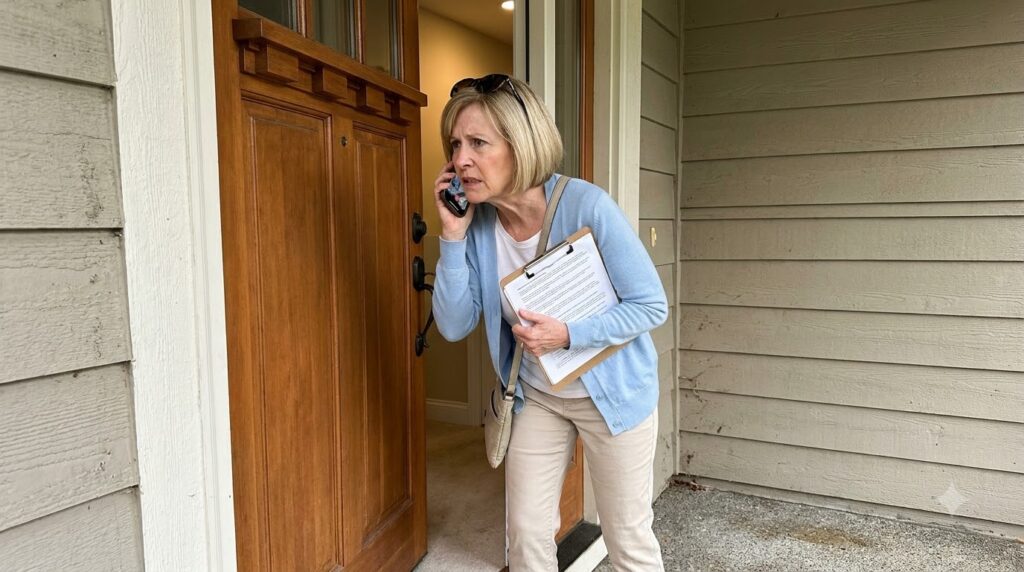
Standing on the porch mat was a woman in her early sixties, her short blonde bob perfectly styled despite the muggy air. A pair of oversized sunglasses rested on top of her head, catching the harsh white glare of the afternoon sun. She wore a light blue knit cardigan over a immaculate white blouse, a dark leather crossbody bag cutting diagonally across her chest. Locked firmly under her left elbow was a thick wooden clipboard, crammed with yellowing paper and printed template forms.
She did not offer a name. She did not look at Maya’s face. Her eyes swept immediately past Maya’s shoulder, probing the shadowed hallway as if searching for contraband.
“You’re blocking the driveway with that commercial van,” the woman said. Her voice was thin, clipped, and practiced, pitched just loud enough to carry past the hydrangeas toward the street. “And this property hasn’t been cleared for occupancy by the neighborhood committee.”
Maya kept her hand on the latch. “Good afternoon. The van belongs to the courier company. We’re unloading personal belongings.”
“It doesn’t matter whose van it is,” the woman snapped, leaning forward. Her stance was aggressive, her hip pressed against the wrought-iron porch railing as she wedged her foot inches from the threshold. She tapped the wooden clipboard against her chest with a dry, wooden thud. “This estate is under review. You can’t just step into this place and take over like this.”
Through the gap in the door, Maya caught sight of Greg, the parcel courier, pausing near the bumper of his truck at the curb, a wardrobe box balanced on his thigh. Across the street, a neighbor idling behind a riding mower turned off the engine, leaning over his steering wheel to watch the porch.
“I am Arthur Vance’s niece,” Maya said quietly, her tone dropping into a steady, measured cadence. “The deed was filed with the county clerk three weeks ago. If you have questions about the driveway, you can speak to me, but please step back from the door.”
The woman’s lips pressed into a thin, pale line. She didn’t retreat an inch. Instead, she slipped a smartphone from her cardigan pocket with her free hand, thumbing the screen with practiced speed before bringing the speaker to her ear.
“We’ll see what the county says about an unregistered occupant,” she said, staring directly into Maya’s eyes as the phone began to ring. “I’m calling Code Enforcement right now.”
As the call connected, the woman turned her head slightly into the mouthpiece, though her body remained wedged against the entry lane, blocking the door. “Yes,” she said sharply into the phone, her voice dropping into a tone of official urgency. “I’m still here at the door. I need an officer down here immediately—she’s holding a legal notice I served her late last year.”
Maya’s fingers tightened on the brass handle. Her uncle had been dead for six months, but the letter the woman was clutching at the top of her clipboard bore Arthur’s distinct, shaky handwriting right across the header.