
The Slow Decay of Concrete Gods and the Weight of Iron Sentences
CHAPTER 1: THE TASTE OF SALT AND IRON
“Or what, old man?”
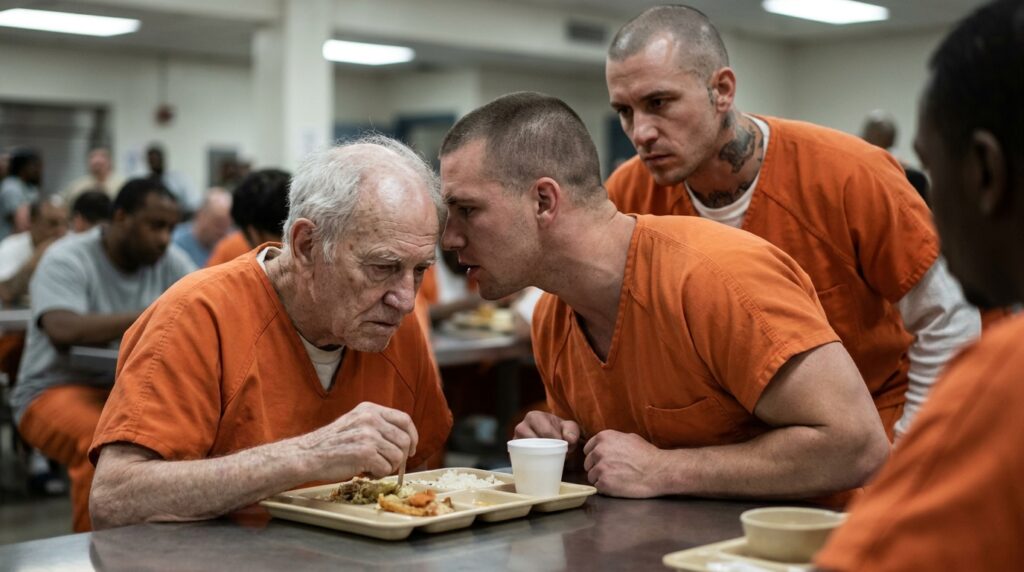
The words came out wet, thick with the cheap grease of the midday slurry. The younger man didn’t move his feet. He leaned his weight forward on scarred knuckles, pinning his palms against the laminate surface of the mess hall table until the metal frame groaned beneath them. His buzz cut was so close the gray of his skull showed through the stubble, catching the pale, green tint of the overhead fluorescent tubes.
The old man didn’t blink. A piece of boiled cabbage, cold and slick with industrial lard, slid slowly from the ridge of his eyebrow down across his temple, leaving a greasy trail before catching in the deep, leathered valley of his cheekbone. The salt of the broth ran into his eyes, but his stare remained fixed, leveled straight into the younger man’s nose. He could smell the boy—sour sweat, laundry soap that smelled like lime, and the sharp, metallic tang of raw adrenaline.
Behind the boy stood the shadow with the neck tattoos. He didn’t speak either, his mouth a flat, bloodless line, his thick arms crossed over an orange cotton shirt that had frayed through the collar. The shadow’s eyes shifted horizontally, checking the perimeter, watching the way the surrounding tables had gone completely quiet. The clatter of aluminum spoons against plastic trays had stopped three rows back. The institutional air, heavy with the stench of bleach and boiling starch, felt thick enough to leave a film on the teeth.
“You got a lot of miles on you,” the boy whispered, his teeth bare. He didn’t cross the line of the tray, but his breath moved the white hairs at the old man’s temple. “But miles don’t mean nothing when the tread’s gone. Look at you. You’re a ghost in a jumpsuit. We own the tier now. Your name ain’t on the brick anymore.”
The old man’s fingers remained loosely curled beside his tin cup. The tin was cool; the water inside was lukewarm and tasted of sulfur from the old pipes. He didn’t rise. If he stood, his knees would click, a small, brittle sound that the yard would interpret as fear. He kept his spine straight against the rigid plastic of the bolted seat, feeling the cold iron of the floorboards through the thin soles of his state-issued canvas shoes.
“The brick,” the old man said, his voice a dry scrape, like a shovel pulling through gravel. “The brick stays where it’s laid. You just walk on top of it.”
The boy laughed, but it was a short, defensive bark that didn’t reach his eyes. He reached down, his thick, blunt thumb flicking the edge of the old man’s plastic tray, sending a spray of lukewarm water across the front of the old man’s orange uniform. “You’re done talking. Tonight, when the gates drop, you better have something better than words.”
The boy stood up then, the tension in his shoulders dropping just an inch as he began to turn back toward the main aisle. But the old man’s hand shifted. It didn’t go for a weapon. His thin, spotted fingers simply reached out and gripped the edge of the boy’s sleeve—just two inches of stiff, coarse orange canvas held tight between his thumb and forefinger.
The boy stopped dead. The shadow behind him shifted his weight, his hand dropping automatically toward his waist.
The old man leaned slightly forward, his eyes narrowing as he looked past the boy’s face, focusing on the small, crude numerical stamp ink-printed just beneath the collar of the boy’s shirt. It wasn’t the standard institutional issue number. It was a three-digit sequence from the old intake blocks—the ones demolished back in ninety-eight.
“That shirt belonged to Miller,” the old man said softly, his thumb pressing into the boy’s wrist now with a cold, surprising leverage. “He sat in that exact seat you’re leaning on. They carried him out through the boiler room in three different bags. You keep wearing his clothes, son, you’re going to start tasting the coal dust.”
The boy pulled his arm back with a violent jerk, the fabric tearing slightly at the seam. His face had gone from red to a strange, chalky gray under the green light. He didn’t issue another threat. He turned, his shadow moving with him, their heavy boots thudding against the concrete as they broke for the exit doors before the guards could note the gathering crowd.
The old man sat alone. He reached up, his hand steady as he wiped the cold grease from his forehead with the back of his sleeve. He looked down at the surface of his water cup. In the reflection, he didn’t see his own lined face. He saw the reflection of the gray-haired guard standing by the riot gate fifty feet away—the one who hadn’t moved a muscle during the entire confrontation, and who was currently slipping a small, yellow slip of paper back into his pocket.

CHAPTER 2: THE LOGIC OF THE TIER
The screech of the hydraulic gate closing behind the lunch detail was a wet, iron groan that vibrated straight through the soles of the old man’s canvas shoes. It was a sound he had measured in his marrow for thirty-four years, a sharp resonance that signaled the daily contraction of his world. The air in the corridor of Cellblock C was different from the mess hall; it was narrower, stripped of the heavy steam of boiling starch, replaced instead by the smell of ancient dampness, flaking gray paint, and the dry, bitter powder of oxidizing rivets.
He walked with his arms hanging loose at his sides, his fingers occasionally brushing the rough, pitted surface of the tier railing. Every five feet, a vertical iron bar met the horizontal track with a clumsy, heavy weld that had been painted over so many times it looked swollen, like arthritic knuckles. To a younger man, the walk back to a cell was a dead space between confrontations. To him, it was a tactical layout of friction and angles. He noted the way the afternoon light fell through the high, reinforced slit windows, throwing long, angled bars of shadow across the concrete floor. At exactly four o’clock, those shadows would deepen, creating an eleven-inch blind spot right beneath the tier-two mirror where the glass had gone cloud-gray from sixty years of humidity.
The tier was alive with the low, transactional murmur of lockup. Men stood along the catwalks, their orange-clad shoulders leaning against the wire mesh, their eyes tracking him as he moved past. They were looking for the tremor. They were looking for the slight hitch in his stride that would prove the food thrown across his forehead had cracked the old foundation. A prison yard didn’t always destroy a man with a blade; more often, it dissolved him through the quiet consensus of the crowd. If they decided he was weak, his space would vanish by yard-time tomorrow. His shoes would be taken from his feet while he slept; his tin cup would be emptied into the drain before he could drink.
He reached Cell 42 without altering his pace. The iron door was already racked open three inches. He slipped his thin frame through the gap, his shoulder blade catching the edge of the steel frame just enough to feel the cold bite of the metal through his shirt. Inside, the space was six feet by nine, a limestone box where the moisture never truly left the corners. He didn’t lie down on the thin, horsehair mattress. He sat on the edge of the steel bunk, his knees bent at a precise right angle, his hands resting on his thighs.
Above him, on the upper catwalk, the rhythmic thud of heavy, rubber-soled boots began its rotation. It was Vance. The old man didn’t need to look through the bars to recognize the cadence of the senior guard’s stride—heavy on the heel, a slight drag on the left toe where an old ligament had torn during the riots of ninety-eight. Vance was the man who had stood by the gate during the cafeteria faceoff, the man who had looked away while the cabbage broth was running into the old man’s eyes.
A sharp, metallic click echoed from the corridor just outside the cell door. It wasn’t the sound of a guard’s key ring; it was the specific, light tap of a standard-issue aluminum clipboard hitting the second bar of the gate. A small, tightly folded square of yellow paper fluttered through the gap, landing on the pitted concrete floor just two inches from the old man’s shoe.
The boots on the catwalk didn’t stop. They kept moving down toward the end of the tier, the sound fading into the general hum of the block.
The old man waited. He counted sixty heartbeats, watching the way a solitary black beetle crawled along the seam where the iron toilet block was bolted to the limestone wall. Only when the tier-boss downstairs yelled for the afternoon headcount did he reach down and pick up the paper. It was a standard institutional transit slip, the kind used to move high-security assets between facilities, but the bottom edge had been roughly torn away from a larger ledger sheet.
The paper was old, yellowed at the margins by years of improper storage in the basement archives, and it carried the distinct, sour smell of coal ash from the old boiler rooms. On the lined side, written in the cramped, purple ink of a nineteenth-century institutional fountain pen, was a log entry dated November 14, 1994. It listed three names under a transfer authorization code that had been crossed out with two heavy, red wax lines. The first name was his own. The second name was a man who had died in the laundry tubs three weeks after the date on the page. The third name belonged to the father of Senior Guard Vance.
Beneath the ledger line, written in a modern, hurried pencil ballpoint that he recognized from the guard desk logs, were three words: Before the fifteenth.
The old man unfolded the slip completely, turning it over against his knee. The texture of the paper was brittle, the fibers breaking under the pressure of his thumb. On the reverse side was a carbon copy of a commissary receipt from last Tuesday, showing a twenty-dollar deposit into the account of the buzz-cut boy, authorized by Vance’s personal administrative key code.
The pieces fell into alignment with the dry, mechanical click of a deadbolt sliding into a rusted strike plate. The confrontation in the cafeteria hadn’t been an outburst of youthful ambition or a random test of the tier hierarchy. The boy with the buzz cut was an instrument, a cheap piece of muscle bought with canteen credits and the promise of an easy cell transfer, deployed by a guard who needed an old ghost buried before the federal review board arrived at the gates next week. Vance wanted the 1994 file closed permanently, and the easiest way to close an ancient yard investigation was to ensure the last surviving name on the ledger was carried out of C-Block in a canvas bag.
A low, grating whistle sounded from the ventilation shaft near the ceiling, a wet rattle of old pipes that signaled the evening steam was being forced through the blocks. The old man stood up slowly, his fingers tracing the contour of the yellow paper before rolling it into a tight, hard cylinder no larger than a cigarette. He didn’t hide it under his mattress. He stepped to the small, rusted electrical conduit plate behind his sink, where the iron screws had been worked loose over twenty winters until they could be turned with a thumbnail.
He slid the paper into the dark void behind the wire casing, but as his fingertips brushed the dusty metal interior, they hit something solid. Something cold.
He drew his hand back. Tucked into the electrical box wasn’t just old dust. His fingers had come away tipped with a thin, black smear of industrial machine grease—fresh grease, the kind used to lubricate the firing pins of the guard tower rifles, still wet enough to smell of kerosene.
CHAPTER 3: THE WEIGHT OF THE IRON
The grease on his skin remained cold, a small, distinct chemical smear that smelled of mineral spirits and high-pressure storage. The old man did not pull his hand back further. He kept his fingers resting against the lip of the zinc conduit plate, his thumb slowly rubbing the residue until the heat of his skin dissolved the thicker compounds. Weapon lubricant was tightly rationed inside the walls; it belonged exclusively to the armory on the tier-four observation deck, where the old Winchester pump-guns and Remington rifles sat locked behind wire-reinforced glass. A leak behind a cell sink meant an insider had cleared an armory gate within the last seventy-two hours, slipping a tool or a firing component into the plumbing lines before the daily inspection logs were signed off.
“Chore rotation, forty-two,” a voice barked down the tier. The sound was flat, amplified by the low ceiling of the gallery.
The old man replaced the plate with a smooth, practiced twist of his thumbnail, ensuring the rust lines aligned exactly as they had for two decades. He stepped through the iron threshold into the damp, echoing draft of the main corridor. The evening shift change had left the air thin and cold, but as he descended the spiral staircase toward the basement sub-structure, the atmosphere shifted, growing heavy with the boiling, alkaline weight of the industrial laundry facility.
The basement was a labyrinth of unpainted concrete pillar structures and low-slung steam mains wrapped in fraying asbestos insulation. Here, the noise of the prison changed from the sharp, percussive clanging of gates to a massive, low-frequency rumble that shook the floorboards. Twelve oversized steel drums turned on horizontal axes, washing thousands of pounds of gray institutional linens every six hours. The air was thick with white lint that clung to the damp walls like frost, and the stone floor was permanently slick with a gray film of recycled lye water.
He didn’t go to his usual station by the folding tables. He walked directly toward the rear of the room, where the massive industrial dryer vents exited into a common brick shaft. It was a space defined by dense shadows and the steady, rhythmic thump-thump of heavy canvas sheets spinning inside the iron cylinders.
A figure stepped from behind the number-four collector bin. It wasn’t the boy with the buzz cut, but the older companion—the shadow with the shaved sides and the dark, intricate lattice of prison ink crawling up the side of his throat. He had a heavy wrench held loosely in his left hand, his thumb tracing the iron threads of the adjustment screw. He didn’t look at the old man’s face; his eyes remained leveled at the center of the old man’s chest, measuring the distance between them.
“You’re away from your bin, old head,” the shadow said. The words were nearly lost underneath the roar of the exhaust fans, but the subtext was perfectly clear. The wrench wasn’t for maintenance.
“The water in C-block is coming up brown,” the old man said, his voice entirely steady, matching the industrial rhythm of the room. He reached into his shirt pocket, his fingers extracting a small, blackened copper coin—an old transit token from a city transit line that had been defunct since seventy-four. He placed it on the flat lid of an iron grease trap between them. “Vance is shifting the log sheets on Friday. He’s putting your name on the internal work crew for the old boiler house.”
The tattooed man stopped the movement of his thumb against the wrench. His head tilted slightly, his eyes narrowing as he looked down at the copper token. In the economy of the lower tiers, certain objects carried a lineage that exceeded the value of any currency. The token had belonged to an old block captain who had vanished from the yard during the reorganization of ninety-four—a man who had known exactly which names were stamped on the original burial records beneath the lower courtyard.
“Vance doesn’t have the keys for the boiler house,” the shadow muttered, though his grip on the tool loosened by a fraction of an inch. “That’s a restricted block. Nobody goes under the old foundations without an escort from the warden’s office.”
“He has the father’s keys,” the old man replied softly. He stepped closer, his canvas shoes making no sound against the wet concrete. He let his hand drop to his side, his thumb again touching the phantom trace of weapon grease on his fingers. “The ones that were supposed to be turned in when the old man took his pension after the laundry fire. Vance thinks he’s cleaning the slate before the auditors walk the line. He thinks if he clears the names on the ninety-four register, the state won’t check the funding accounts for the new gate house.”
The shadow was silent for three full cycles of the dryer drum. The heat in the small alcove was rising, drawing the scent of sour lard from their uniforms. The moral logic of the tier was simple: every man was an asset or a liability, and a man who was already marked for a transfer log was a fire that would eventually catch everyone standing downwind.
“The boy doesn’t know about the ninety-four file,” the shadow said, his voice dropping below the register of the exhaust fans. “He thinks he’s just taking your cell space because the block-boss wanted an example made in the mess hall.”
“The boy doesn’t read the print,” the old man said. “He just wears the shirt.”
The shadow reached down, his thick, tattooed fingers covering the copper token and drawing it off the iron lid with a quick, metallic snap. He didn’t offer a weapon in return, nor did he offer a promise of safety. He simply turned back toward the dark alley between the collector bins, his heavy boots splashing through a puddle of gray water.
But as he disappeared into the white haze of the lint collectors, a sharp clatter echoed against the concrete floor. A heavy piece of sharpened structural iron—an eight-inch rod salvaged from the reinforcement grids of the old eastern wall, its tip ground down against the industrial laundry stones until it was as sharp as a surgical needle—slid across the slick floor, stopping exactly against the toe of the old man’s left shoe.
The victory was small, paid for with an ancient secret that had cost a life thirty years ago, but as the old man reached down to pocket the iron, a heavy hand gripped his shoulder from behind. The grip was too wide to belong to an inmate. It was the thick, leather-gloved hand of a guard, and the smell of fresh tobacco smoke followed it into the darkness of the alcove.
CHAPTER 4: THE HORIZON OF THE COLD CORNER
The heavy leather glove didn’t shove him down; it steered him. Vance’s grip remained a static, crushing weight on the old man’s collarbone as they crossed the threshold of the lower sally port and stepped out into the desaturated glare of the afternoon recreation yard. The sun was low, a pale white disk hanging over the razor wire that stripped the color from the dirt, leaving the world a flat landscape of charcoal shadows and gray concrete.
“Keep your boots moving toward the western wall,” Vance said behind him. His voice was thin, dry as a dead leaf scraping across stone. The guard had his heavy winter jacket unzipped, his right hand buried deep in his pocket where the silhouette of a heavy duty key ring pressed against the canvas. “The boy’s waiting by the old drainage grate. You two are going to finish the conversation you started over the trays.”
The old man didn’t resist. His right hand remained pinned inside his jumpsuit pocket, his thin fingers curled around the eight-inch bar of sharpened iron he had retrieved from the laundry floor. The metal was warm now, taking on his own body heat, its ground point pressing lightly against his palm. He walked with measured strides, his old knees working with a dry, clicking precision as they neared the shadow of the brick ventilation shaft.
The boy with the buzz cut was already there, leaning his shoulder blade against the pitted limestone of the wall. He had changed out of the torn shirt; he was wearing a clean, state-issued denim jacket, but his fingers were twitching against his seams. Beside him stood the shadow with the neck tattoos, his arms loose, his weight balanced on the balls of his heavy rubber boots.
Vance stopped ten feet back, his boots grinding into the parched earth of the track line. He didn’t check the towers. He knew the guard on the tier-four perch was looking toward the western gate, his line of sight intentionally broken by the angle of the old boiler stack.
“Show him the print,” Vance said, his voice dropping into the low hum of the wind through the chain-link mesh.
The boy didn’t move, so the tattooed companion reached into his inner pocket. He didn’t pull a blade. He pulled a small, faded piece of photographic paper, its edges curled and stained with the distinctive brown ring of old laundry starch. He held it out horizontally, his thumb covering the lower right corner where a state evidence archive stamp had begun to bleed through the stock.
The old man looked down. The image was desaturated, the high-contrast silver halide print showing three men standing beside the old coal hopper in the winter of nineteen ninety-four. On the left was Vance’s father, young then, his guard uniform crisp and his badge catching the glare of an ancient flashbulb. In the center was the inmate who had died in the laundry tubs three weeks later. And on the right, looking straight into the lens with a flat, emotionless stare that time hadn’t altered, was the old man himself.
“My father didn’t sign that transfer ledger,” Vance said from behind, his boots shifting on the dirt. “He wasn’t even on the tier the night Miller went into the bags. You signed his name with the clerk’s pen. You kept that yellow slip in the wall for thirty-two years because you needed a shield in case the state ever dug up the floor under the old boilers.”
The old man looked from the photograph to the boy with the buzz cut. The boy’s jaw was tight, his breathing shallow. He wasn’t a predator anymore; he was a witness who had realized too late that he was standing inside the perimeter of an old execution ground.
“Your father was exactly where I put him, Vance,” the old man said. His voice was a low, gravelly rasp that didn’t rise above the whistling of the wind in the wire. He slowly withdrew his hand from his pocket, letting the sharpened iron bar slide down his sleeve until the blunt end rested securely against the heel of his palm. “He was a weak man. He took twenty dollars from the commissary fund to leave the boiler door unlocked on a Tuesday night. He thought he was buying a house in the suburbs. I bought his name instead.”
Vance’s face went stiff, the skin around his mouth turning the color of old lard. “You framed him. You let the board think he took the cartel’s money for the Miller hit.”
“He did take it,” the old man whispered, his eyes narrowing as he took a single, short step forward, narrowing the distance between his iron and the guard’s belt line. “He took it from me. I was the one who authorized the transfer from the old intake accounts. I was the block captain before your boy here was even breathing coal dust. I built the track your father walked on until his knees gave out.”
The ultimate reality of C-block didn’t belong to the guards or the cartels; it belonged to the architecture of the secrets buried beneath the stone. The old man hadn’t been targeted by an escalating chain of youthful ambition; he had systematically provoked the young crew from the moment they arrived on the tier, using their hunger for status to draw Vance down into the basement darkness where the old files could be opened one last time. He needed Vance to bring the photograph out of the administrative vault. He needed the last physical copy of the ninety-four register in the open yard before the lookback committee crossed the main gate tomorrow morning.
A sharp, sudden shadow fell across the limestone wall as the sun dipped behind the upper tier block.
The tattooed companion didn’t wait for Vance’s order. He saw the shift in the old man’s weight, the slight flare of the denim sleeve where the ground iron was seeded. He lunged forward, his heavy wrench swinging in a flat, horizontal arc designed to crush the old man’s shoulder.
There was no sound of impact, only the quick, dry scrape of canvas shoes on parched earth as the old man pivoted into the blind spot beneath the wall mirror. His arm moved with a mechanical, short-stroke leverage that had nothing to do with youth and everything to do with decades of repetition. The sharpened iron found the soft seam beneath the shadow’s armpit with a dull, hollow thud that was instantly swallowed by the roar of the boiler exhaust vents.
The shadow went down without a sound, his boots kicking once against the limestone foundation before his weight settled into the gray dirt.
The boy with the buzz cut backed away, his hands raised, his back hitting the chain-link fence until the wire shrieked against the iron posts. He looked at the old man, then down at the photograph that had fallen into the dirt between them, its surface already drinking the dark, expanding moisture from the shadow’s uniform.
Vance reached for his belt, his leather-gloved fingers clawing at the brass clasp of his holster, but his hand stopped when the high, metallic click of a rifle bolt echoed from the observation tier above. The guard on the perch wasn’t looking at the western gate anymore. His barrel was lowered, leveled directly at the center of Vance’s chest, and the small, yellow transit slip that the old man had hidden behind the cell sink was now tucked securely into the breast pocket of the tower sergeant who had just stepped onto the catwalk.
The old man didn’t run. He stood over the photograph, his breathing slow and even, the cold air of the yard filling his lungs as he watched the senior guard slowly drop his keys into the parched earth. The ultimate truth was out of the wall now, but the horizon remained wide, the long shadow of the cellblock expanding across the yard as the alarm whistle began its first, long wail.
CHAPTER 5: THE DARK BASE OF THE TIER
“The ninety-four log has three signatures, but the ink chemistry on the third line doesn’t match the year.”
The woman speaking didn’t belong to the state department. She sat across from the old man at the bolted steel table, her gray wool suit sharp against the peeling green primer of the isolation cell walls. Her hair was pulled back into a knot so tight it pulled the skin at her temples smooth, and her legal pad was completely white, clean of the graphite dust that coated every surface within C-block. She didn’t have a pen in her hand; she had a small, silver micro-cassette recorder sitting on the table between them, its plastic gears turning with a faint, rhythmic click that sounded like an insect caught inside an iron pipe.
The old man sat with his wrists bolted to the center anchor ring. The iron was cold, a heavy, four-inch loop welded directly into the structural plate of the table, restricting his movement to five inches in any direction. The skin around his forearms had turned a dull, bruised purple from the escort cuffs, but his fingers remained loosely interlaced, his white hair catching the harsh, blue glare of the auxiliary security light above the door.
“The ink was standard institutional stock,” the old man said, his gravelly voice flat, unbothered by the damp draft coming off the lower sally port. “Logbook ink from the warden’s clerk. If you run the spectrum test on the iron gall content, you’ll find it came out of the bottle we kept in the lower registry vault before the fire.”
“We didn’t come for the ink,” she said. She leaned forward, her elbows resting on the cold steel, her eyes a flat, pale gray that matched the desaturated stone of the yard outside. “Vance is in administrative lockup in the administrative wing. His boy—the one with the buzz cut—spent three hours detailing how you ground down an eight-inch reinforcement rod against the laundry stones. He says you’ve been holding the ninety-four file over Vance’s head since the day he took his stripes.”
The old man let a thin, dry smile touch the corner of his mouth, though his eyes remained dark, settled on the tiny, rotating wheels of the tape recorder. “The boy thinks a lot of things. He thinks a denim jacket makes him a boss, and he thinks a guard’s key opens every door on the tier. He’s young. He hasn’t figured out that the walls don’t care about who holds the iron ring. They just care about who knows where the drainage tracks run.”
The room was silent for ten rotations of the plastic tape. Outside, down the corridor of the segregation wing, the heavy, double-locked gates of the isolation block gave a low, dull thud as the evening watch began its first perimeter sweep. The air down here was different from the main block; it didn’t hold the smell of boiled lard or sour sweat. It tasted of lime dust, wet concrete, and the old, metallic tang of the sub-floor sewer mains that ran beneath the boiler house.
“The federal lookback committee has forty-eight hours before the authorization code expires,” she said, her finger tapping the edge of her unblemished pad. “The state wants Vance’s father listed as the sole actor on the ninety-four homicide. It cleans up the ledger, it closes the investigation, and it allows the funding for the new block extension to pass the board without a second audit. All we need from you is the confirmation that the yellow transit slip was in his handwriting.”
“The handwriting is his,” the old man said softly. He leaned back as far as the chain would allow, the iron links clinking against the table anchor with a sharp, percussive ring. “He wrote the names down because I told him which ones would fit the ledger. He was an illiterate man, lady. He could barely sign his own pay sheet until I showed him how to balance the column lines. If you put his name on that report as the architect, the first clerk who opens the ledger in Washington is going to look at his intake scores and throw the whole file into the incinerator.”
She didn’t blink, but her thumb moved to the stop button of the recorder, hovering just above the plastic tongue. “You’re seventy-eight years old. Your release date is scheduled for October of next year. If you complicate this report, the board will quarantine your file under the internal security act. You won’t see the outside of a concrete block before your heart stops.”
The old man leaned his face into the blue light, the deep, grease-stained valleys of his lined skin showing every winter he had spent beneath the tier. “I’ve been outside since ninety-four, girl. This whole facility is just a larger box with better lighting. You tell the warden that if he wants the ledger closed before the morning shift change, he better bring me the keys to the old boiler house ventilation shaft. Vance left something in the coal hopper thirty-two years ago that your committee isn’t going to find with a metal detector.”
She didn’t push the button. She stood up slowly, her gray wool skirt rustling against the iron frame of her seat as she gathered her clean pad. She didn’t look back at him as she moved toward the heavy, reinforced door, but her fingers lingered on the brass lock plate for three seconds—exactly the time it took for the tier guard to slide the observation viewing port open from the dark side of the wall.
As the heavy bolt shot back into the frame, a low, vibration ran through the floorboards, followed instantly by the high, screeching whine of the emergency generator line failing in the basement below. The blue light went dead, plunging the isolation box into an absolute, suffocating blackness that smelled of hot copper and dry oil.
CHAPTER 6: THE SILENCE OF THE DEAD LOCK
The dark was not a hollow space; it was heavy, pressed against the eyelids like wet clay. Inside the six-by-nine isolation box, the old man didn’t move a link of his wrist chain. He sat perfectly still on the bolted iron stool, his chin lowered toward his collarbone, using his teeth to gauge the frequency of the low-level vibration traveling through the concrete slab. The auxiliary lines hadn’t just blown an old fuse transformer. The blackout had a distinct sequence—the high-pitched hum of the main line dying, a four-second latency, then the structural thud of the sub-station breaker dropping into its housing down in the boiler cellar. That wasn’t an operational failure. Someone had driven an iron wedge directly into the main distributor gears.
Outside the reinforced door, the wide gallery of the segregation wing had gone entirely cold. The usual background noise—the ventilation fans, the constant hiss of the high-pressure water lines—was gone, leaving only the sharp, dry clicking of thirty different cell locks settling into their manual dead-locks as the emergency vacuum systems dropped their pressure.
Then came the sound. It was the specific, three-note rattle of an obsolete key configuration sliding along the iron tier rail.
The old man knew that rattle. It was a brass master ring, the heavy, double-bitted set that had been phased out of daily rotation when the facility switched to the electronic magnetic tracks in ninety-nine. A guard shouldn’t be carrying that ring on the evening watch. It belonged exclusively to the old shift sergeant’s locker in the basement registry—the locker that had remained welded shut since the fire.
“Forty-two,” a voice whispered through the ventilation screen. The tone was thin, strained through the iron mesh, but it didn’t belong to Vance. It belonged to the boy with the buzz cut, his breath coming in short, ragged gasps that smelled of sour tobacco and cheap adrenaline. “Vance isn’t in his cell. They let him out through the medical gate before the lights went down. He’s coming down the laundry shaft with the old man’s brass set.”
The old man didn’t answer. He turned his face toward the dark corner where the door frame met the stone, his eyes adjusting to the absolute lack of light until he could see the faint, gray perimeter where the door’s rubber seal had perished over thirty winters.
“You listening, old head?” the boy pressed, his knuckles tapping once against the iron mesh. “The tattooed man… he didn’t die on the dirt. They got him in the infirmary tier with a tube in his side. He told the ward sergeant about the boiler house project before they put the mask on him. Vance knows the federal woman didn’t sign the transfer waiver. He knows she’s leaving you in the box until the committee takes the wagon back to town.”
“The woman isn’t going back to town,” the old man said, his dry scrape of a voice cutting through the dark with a slow, mechanical precision. He shifted his wrists against the anchor ring, the iron links giving a single, heavy clink that died instantly against the lime-washed walls. “She’s waiting by the administrative gate until the clerk finishes the spectrum audit on the ink log. If Vance is down the shaft, he isn’t looking for me. He’s looking for the ledger copy I left behind the conduit plate.”
The boy’s breathing stopped behind the mesh. For five seconds, the only sound in the block was the slow, rhythmic dripping of sulfur water down the main drainage column thirty feet away.
“The plate’s empty,” the boy whispered, a new note of raw panic breaking through his gravelly tone. “I checked it when they walked the detail back for lockup. The wire casing was pulled out of the brick. There wasn’t any yellow paper in the slot, old head. Just an old, rusted iron bolt with two notches filed into the head.”
The old man didn’t move his tongue, but his fingers tightened against the cold steel of his cuff rings. The decoy secret had done its work. Vance had gone into the wall looking for the 1994 transfer log, believing he was erasing the only physical proof that could tie his father to the old yard homicide. But Vance didn’t know that the ledger sheet he had found was an identical copy the old man had forged with the clerk’s pen three days before the original hit went down. The real document—the one showing the original corporate signature that had funded the entire C-block extension—wasn’t in the cellblock at all. It had been buried inside the internal casing of the main laundry dryer drum since the afternoon of the fire.
A sharp, heavy clack resonated from the end of the isolation gallery. It was the sound of the manual bypass lever being pulled back into its iron socket. The tier gate was opening, one bar at a time, without the electronic buzz of the guard station console.
“He’s on the floor,” the boy hissed from the vent, his shoes scraping against the concrete catwalk as he backed away into the shadows of the upper tier. “He’s got the iron bar from the sally port gate. He’s clearing the boxes one by one.”
The old man sat down into the center of his shadow, his hands resting on his thighs, his knuckles cold. He didn’t have the eight-inch rod from the laundry floor; they had stripped that from his sleeve when they tossed him into the isolation box. He had nothing but five inches of chain and the heavy steel table bolted into four feet of reinforced concrete beneath his feet.
The boots approached with a slow, uneven cadence—heavy on the heel, a slight drag on the left toe. Vance was moving in the dark without a flashlight, his left hand tracing the cold rivets of the wall as he felt his way toward Cell 42. He didn’t call out. He didn’t issue a threat over the iron rail. He simply stopped outside the door frame, the dry, metallic rattle of the brass master ring sliding into the ancient keyway with a sound that felt as final as a spade hitting dry earth.
The old man closed his eyes, let his breathing drop into the long, rhythmic slow-motion of a man who had already measured the exact width of his grave thirty years ago, and waited for the iron to turn.
CHAPTER 7: THE FRICTION OF THE SHADOW WATCH
The double-bitted key finished its rotation with a dry, mechanical clunk that resonated up through the hollow core of the steel door. The door didn’t swing outward. In the absolute black of the isolation tier, the frame simply settled back two inches into its track, allowing a cold, wet draft from the laundry chute to bleed over the old man’s ankles. The smell came with it—hot machine grease, stale tobacco smoke, and the heavy, damp rot of old limestone sewers that had been sealed off since the expansion project.
The boots didn’t cross the threshold immediately. Vance stood in the gallery lane, his breathing rhythmic and thin, his heavy leather gloves scraping against the iron handle of an auxiliary crowbar he had pulled from the sally port lockbox. He was a man who knew the layout of Cellblock C as well as the old man did; he knew that in a six-by-nine space with an anchored table, a three-inch miscalculation in a swing meant hitting reinforced concrete instead of bone.
“The girl from the committee left her car at the main gate,” Vance said into the dark. His voice was flat, devoid of the heat that had carried him across the recreation yard. It was the dry tone of an administrator checking off an inventory sheet. “She’s sitting in the superintendent’s office waiting for the state line to come back up. She thinks she’s going to get the ninety-four file before the shift change.”
The old man didn’t move his chin from his chest. The four-inch iron ring welded to the center of the table was cold against his wrists, compressing the small bones until his fingers felt numb and heavy. “She’ll get what’s on the ledger, Vance. She’s already verified the signature. Your father’s ink is on the line.”
“My father didn’t know how to write in the registry script,” Vance whispered, his boots finally taking a slow, scraping step into the cell. The silhouette of his heavy shoulders blotted out the faint gray outline where the door seal had failed. “You thought you left a clean trail behind that wire plate, old head. You thought if I found that ledger fragment, I’d take the boy and clear out through the boiler room gate. But the ink on that yellow slip wasn’t ninety-four stock. It was the synthetic stuff the state started buying after the corporate merger in two thousand four. My father had been out of his uniform ten years before that bottle was cracked.”
The old man let his hands rest flat against the slick steel of the table surface, his thumb feeling the tiny pitting where generations of inmates had scratched their numbers into the laminate. The equal intellect of his enemy was a variable he had already factored into the calculation when he left the wire plate loose. Vance wasn’t a fool; thirty years on the tier had taught him how to spot a plant. But Vance was still chasing the decoy. He believed the fraud was designed to protect the old man from the federal lookback, rather than what it truly was—a breadcrumb trail designed to drag the senior guard down into the sub-structure of the facility before the power grid could reset.
“The synthetic ink doesn’t matter to the committee,” the old man said, his gravelly voice dropping an octave into the dark, matching the low rumble of the distant water mains. “They aren’t running a laboratory test on the chemical base. They’re running an audit on the name. If your father’s name matches the authorization code on the ninety-four burial register, the board will close the account. They don’t want a long trial, Vance. They want a signature that doesn’t cost them a seat on the corporate board.”
The crowbar moved in Vance’s hand, the tip of the iron bar dragging along the edge of the steel table with a sharp, high-frequency screech that set the teeth on edge. “The burial register isn’t in the office. The old man took the third volume home when he took his pension. It’s sitting in a cedar box under his workbench in Elmira. There’s no name on the ninety-four line but yours.”
The old man didn’t alter his breathing. The silence inside the limestone box stretched until the sound of the sulfur water dripping down the drainage column thirty feet away altered its rhythm, the metallic ping-ping-ping slowing as if a physical valve was being closed somewhere in the vertical line.
“The cedar box was cleared out three winters ago, Vance,” the old man said softly. “Your father sold that register to an asset clerk from the railway line for forty dollars and a bottle of gin. He thought he was selling an old book of work hours. But that asset clerk was the cousin of the man who went into the laundry tubs three weeks after Miller. He’s been waiting thirty years for the state line to go dead so he could verify the funding codes for the boiler house foundation.”
Vance’s boots stopped their scraping movement. The heavy bar didn’t rise, but the tension in his shoulders returned, a sudden rigidity that showed through his jacket silhouette under the pale gray draft. “The railway line doesn’t have an asset clerk in this county.”
“They do now,” the old man said. He slowly lifted his hands as far as the five-inch chain would permit, the iron links snapping tight against the anchor loop with a sharp, heavy ring that echoed off the damp stone. “They bought the right-of-way under the eastern wall last April. Tomorrow morning, when the lookback committee walks the yard, they aren’t going to look at the coal hoppers. They’re going to look at the original alignment pins under the number-four laundry dryer. If those pins don’t match the state surveyor’s map from ninety-three, the whole block sits on an unrecorded grave that belongs to the federal transport authority.”
The consequence loop had closed. The old man hadn’t just defense-mapped his own survival; he had turned the entire administrative legacy of the facility against the men who thought they owned the keys. He had become the sovereign protector of the unrecorded dead, using their names as structural anchors to ensure that neither Vance nor the cartel could clear the tier without his permission.
Vance didn’t answer with a threat. He turned his face toward the corridor, his head tilting as the sound of a heavy, brass-soled boot echoed from the laundry shaft at the far end of the gallery. It wasn’t the boy with the buzz cut, and it wasn’t the watch guard. It was a rhythmic, slow cadence that carried the distinct, heavy crunch of dry coal dust from the old foundations below.
The senior guard backed out of the cell room without closing the door, the crowbar held low against his leg as he vanished into the suffocating, absolute dark of the C-block lane, leaving the old man alone with the chain and the cold iron table.
CHAPTER 8: THE VERIFICATION OF THE CORNERSTONE
The darkness did not break when the second set of boots reached the threshold of Cell 42. It simply thickened, charged with the heavy, chemical stench of long-buried coal slurry and the dead, frozen moisture of the foundational tunnels. Vance didn’t swing the crowbar. The rhythmic, dragging scrape of his leather boots shifted backward, his uniform fabric rustling against the outer rivets of the gallery rail as he gave ground to the silhouette coming out of the laundry access line.
The old man remained seated at the center steel table, his wrist links pulled taut against the anchor loop. He didn’t look up when a single, thin beam from a heavy institutional flashlight cut through the dark. The light didn’t aim at his eyes; it washed across the floor, highlighting the fine layer of limestone powder that had shaken loose from the ceiling joints during the generator failure. Behind the beam came the federal woman, her gray wool suit already fouled with black streaks of coal dust along the hem, her clean legal pad abandoned somewhere in the upper sally port.
She wasn’t alone. Behind her stood the watch sergeant who had taken the yellow slip from the observation perch—the one whose father had signed the original masonry receipts before the county changed the ledger names in ninety-three. He carried the heavy brass master set now, the keys clicking against his belt with a clear, metallic resonance that signaled a total shift in the tier’s internal architecture.
“The registry clerk in the administrative wing didn’t finish the spectrum audit,” she said. Her voice had lost its sterile, administrative precision, replaced by a thin, ragged edge that caught in her throat. She didn’t look at Vance, who stood frozen five feet down the lane, his crowbar held low against his thigh. “The state server didn’t drop because of a transformer line. The original ninety-four data block was wiped from the regional archive from an external terminal forty minutes before the lights went out.”
The old man let his hands rest loose inside the steel hoops, his knuckles cold. “The archive was empty anyway, girl. The state didn’t keep the secondary logs after the ledger fire. They didn’t want the federal inspectors to note the difference between the survey lines and the actual yard displacement.”
He turned his wrist slightly, the iron chain giving a short, predictable ring against the laminate. He looked past the white circle of her flashlight toward the sergeant’s boots, where the black dust from the boiler shaft had left two thick, wet crescent moons on the gray stone floor.
“The number-four laundry dryer sits exactly eleven feet north of the original boundary track,” the old man whispered. His gravelly voice was the loudest thing in the block now, every word dropping into the absolute silence like a heavy rivet hitting a zinc bucket. “Vance’s father didn’t take twenty dollars to leave the door open because he was greedy. He took it because I told him the coal hopper was going to be filled with six tons of wet slate before the morning shift change. He thought he was covering a theft of state coal. He didn’t know he was building the foundation for the entire C-block gallery on top of the man who held the original transport codes.”
Vance took a sharp, shallow breath, the metal tip of his crowbar clicking against the rail as his arm began to lift. “You killed Miller.”
“Miller was an asset clerk who tried to alter the alignment pins,” the old man said, his eyes narrowing as he locked onto Vance’s silhouette in the dim, reflected glow of the floor beam. “He wanted to run the railway line three yards inside the perimeter fence so he could collect the percentage on the lime transport. If I let him turn that screw, every name on the ninety-four intake register would have been run through the county court before the winter freeze. I didn’t frame your father, boy. I gave him twenty years of safety under the brick. If he kept his mouth shut in Elmira, it’s because he knew what was waiting for him under the laundry stones if he ever tried to change the ledger line.”
The final reality of the case was a closed circle, an architecture of survival where every stone had been paid for with a calculated silence. The old man hadn’t been fighting for his release; he had been protecting the integrity of the perimeter he had spent half his life constructing. The young crew, the cafeteria provocation, the yellow transit slips—they were all minor adjustments in the friction of the tier, designed to pull the federal woman down into the dark spaces where the state’s legal authority stopped at the edge of the concrete foundation.
The sergeant stepped forward then, his hand steady as he reached down to the center table anchor, the brass master key sliding into the cuff lock with a clean, heavy clack. The iron loops popped open, releasing the old man’s wrists for the first time since the midday bell.
The old man stood up slowly. His knees didn’t click this time; the movement was smooth, deliberate, his long, slim frame balancing perfectly between the table and the door frame. He reached out and took the heavy institutional flashlight from the woman’s fingers, his spotted thumb settling on the hard plastic switch.
He didn’t aim the light at Vance, nor did he aim it toward the sally port exit. He pointed the white beam straight down into the square drainage grate beneath the cell sink, where the black water was beginning to rise through the rusted iron slats, carrying with it the cold, sweet smell of river silt and the gray dust of an ancient masonry mix that had never truly dried.
“The lookback is over,” the old man said, his voice entirely flat as he turned his back on the open corridor and stepped toward the laundry shaft access line. “The state’s going to sign the funding waiver before the morning headcount. They have to. Because if they don’t, I’m going to show the transport authority exactly which wall holds the cornerstone from ninety-three.”
Vance didn’t move to block the lane. He stood in the dark with the iron bar held loose at his side, his face a chalky gray circle as the old man passed him without a glance, his canvas shoes making no sound against the wet limestone as he descended into the permanent, cold horizon of the lower foundations.







