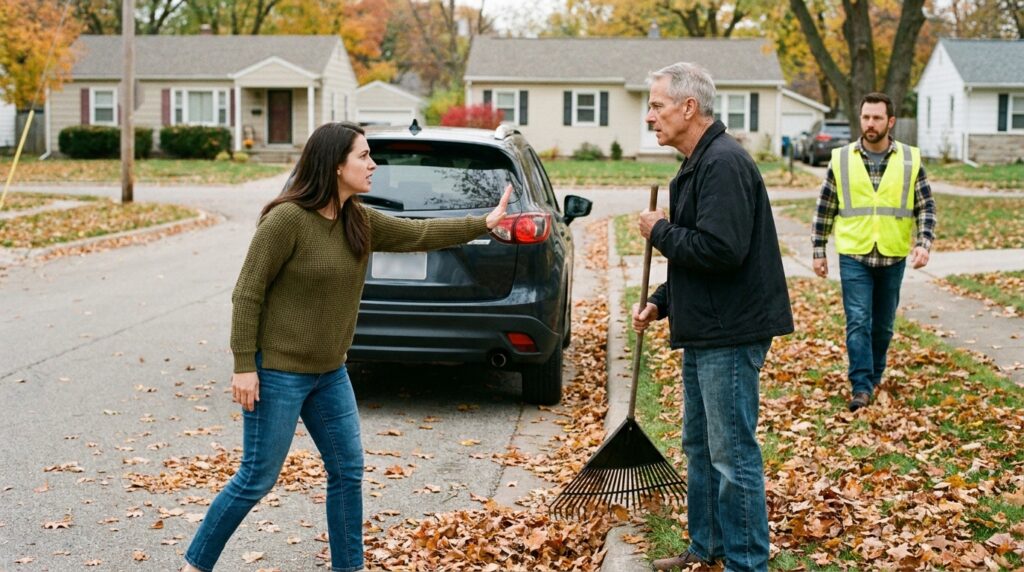
CHAPTER 3: THE WEIGHT OF THE INK
The heavy glass door of the county records annex didn’t swing so much as it dragged, its lower weatherstripping scraping a white arc across the salt-stained linoleum. The air inside smelled precisely of the past forty years—damp cellulose, dry ozone from a laboring copy machine, and the metallic tang of rusted iron flat-files. Arthur stepped into the fluorescent hum of the basement repository, his fingers still numb from the cold drive downtown.
He didn’t need the directory. He knew the layout of Box forty-two before the clerk even looked up from her terminal. He had stood at these exact high-pressure laminate counters in 1984, watching the ink dry on his original construction permit while the county surveyor stamped the true boundary lines with a brass seal that left an indentation you could feel with a thumb.
The woman behind the counter didn’t speak. She took Arthur’s handwritten request slip, her yellowed acrylic nails clicking a slow rhythm against the formica before she disappeared into the narrow aisles of the rolling stacks. When she returned, she dropped a square, battered cardboard container onto the rubber mat between them. A small cloud of gray lint rose from the corners, settling into the light.
“Microfiche index has been down since Tuesday,” she said, her voice dry as the documents she guarded. “If it’s the eighty-four plat updates for the eastern drainage sector, you’ll have to look through the manual ledger inserts. Nobody’s digitized the engineering amendments from that block yet.”
Arthur pulled the thick, canvas-bound ledger from the box. The metal corner brackets were oxidized, leaving a chalky green residue on his thumbs as he laid the book flat. The pages were heavy, vellum-backed sheets that crackled like dry leaves under his calloused fingertips. He flipped through the entries, his eyes tracing the clean, hand-drawn draftsman lines of his neighborhood—the neat squares of the lots, the dotted markers of the utility lines, and the solid black ink of the storm-water right-of-way.
He stopped at page seventy-eight. His own property line was there, rendered in steady, fade-resistant India ink. But as his thumb trailed along the eastern boundary—the exact edge where his turf met Chloe’s sod line—the texture of the paper changed.
He leaned down, the stark fluorescent light reflecting off a microscopic ridge in the vellum. Someone had used a razor blade here.
With the careful precision of a man who had spent forty years measuring lumber, Arthur ran his fingernail across the margin. The original line hadn’t just been amended; it had been scraped thin. Underneath the fresh, dark ink that designated the modern flow-line vector, there was a faint ghost of a previous entry. The original 1984 developer’s seal had been physically cut out and replaced with a circular patch of bond paper, held in place from behind with yellowed cellophane tape that had gone brittle and brown at the edges.
The new line—the one that biased the entire three-foot drainage liability onto Arthur’s property—was signed with a sharp, blocky hand that didn’t match the elegant cursive of the original county surveyor. In the corner of the modified section, a small, unrecorded municipal amendment stamp bore an engineering code that didn’t exist in the county index: AM-84-X.
“This change isn’t cross-referenced,” Arthur said, his voice cutting through the silent basement like a small snap of dry wood.
The clerk didn’t look up from her screen. “If it’s in the book, it’s the legal record, mister. The county doesn’t keep track of old clerical overrides.”
“It’s a white-out,” Arthur said, his hand remaining steady on the edge of the heavy page. “The developer who cleared lot twelve shifted the entire retention liability thirty inches to the west before the concrete was poured for the adjacent foundation. They did it to clear the buildable area for the house next door.”
Chloe’s house.
The silver core-drill plug he had found in his ditch wasn’t an assessment tool for a minor neighborhood dispute; it was a verification check. Someone was trying to confirm how much water his soil could take before the artificial boundary lines collapsed entirely. The pink flags placed by the utility worker weren’t based on the true iron pins driven into the curb; they were aligned to this specific, butchered sheet of vellum, drawn up in secret to protect a basement that never should have been built in the first place.
Arthur closed the ledger, the heavy canvas cover landing with a flat, concussive thud that sent a shudder through the counter mat. He didn’t make a copy. He didn’t need one. He knew the shape of the forgery now, and he knew that Chloe’s ice-cold confidence wasn’t built on a misunderstanding. She had the copies of this exact modified page in her folder. She knew about AM-84-X, and she was using the county’s own administrative rot as a shield to claim his yard before the weather changed.
He walked out of the annex and back into the gray afternoon light. The wind had shifted, blowing hard from the north now, carrying the wet, metallic smell of the approaching storm system. As he reached his truck, his phone buzzed once against his hip—a blunt text notification from the neighborhood association portal, signed by the board’s legal liaison. A formal notice of easement obstruction had been logged against his address, effective at midnight. They were moving fast, using the modified plat maps to lock him out before he could challenge the ledger.
Arthur put his truck in gear, his foot pressing hard against the mechanical linkage of the accelerator. He had to get back to the line. If they brought the physical barriers before the inspector arrived, the false map would become the active reality, and the true iron pin beneath the leaves would be buried under concrete for good.