
Chapter 5: The Sign She Had Never Checked
That evening, Karen spread photographs across her kitchen table.
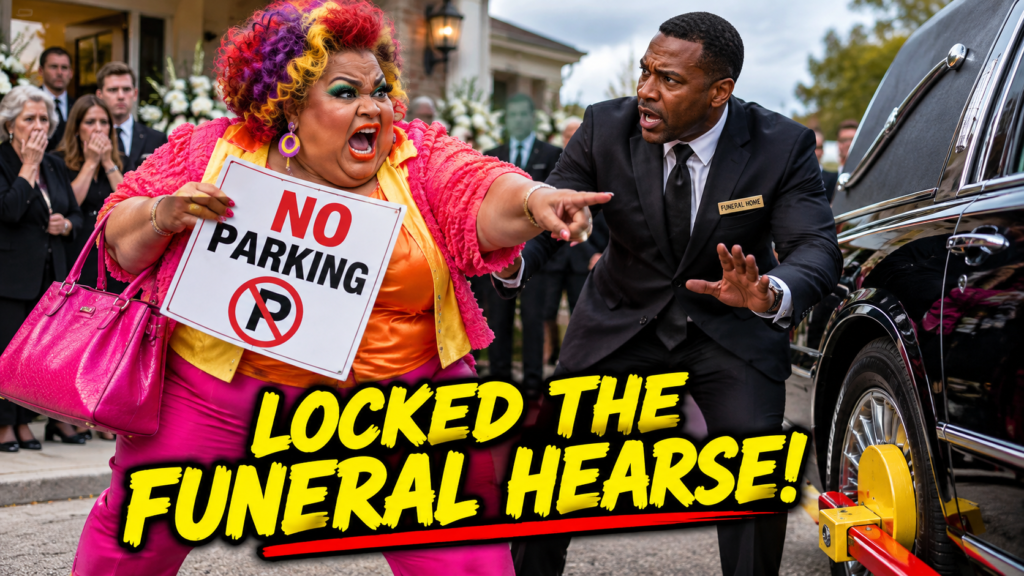
Her homemade sign sat in the middle.
Beside it were screenshots from the property website, a picture of the funeral home’s entrance, and the photograph the supervisor had taken of the official notices.
Karen had expected to find proof that someone had treated her unfairly.
Instead, she found a problem.
The area she had labeled “NO PARKING” was not ordinary visitor parking.
It was a designated service zone.
The funeral home’s vehicles used it during scheduled services.
Her sign had been based on what she believed the space should be—not on the rules governing it.
She called the property office.
The person who answered confirmed that the loading area was reserved for authorized funeral operations.
Karen hung up.
She sat quietly.
The next morning, she returned to the funeral home.
She did not carry the sign.
The manager was outside.
When he saw her, he stopped.
“I need to speak with you,” Karen said.
He waited.
She told him she had reviewed the property information.
“I still think the parking situation is confusing,” she said.
“That is something we can discuss.”
Karen glanced toward the driveway.
Then she noticed a second issue.
A delivery truck was parked near the actual visitor spaces, partly blocking them.
She pointed toward it.
“That one is in the wrong place.”
The manager looked.
“You’re right. I’ll have it moved.”
Karen seemed surprised by the answer.
“You will?”
“Yes.”
No argument.
No shouting.
No homemade enforcement.
Just a correction.
The manager then added, “If you see something that concerns you, tell us. Don’t take action on someone else’s vehicle.”
Karen nodded slowly.
It was not an apology.
Not yet.
But it was the first time she had allowed a concern to become a conversation instead of a confrontation.
She drove home with the old sign folded in the passenger seat.
Later that afternoon, she received a letter from the property owner.
It requested that she stop placing unauthorized signs or interfering with vehicles on the property.
Karen read it twice.
The words were formal.
The message was clear.
Her homemade rule had produced a real consequence.
And now she had a choice: continue fighting everyone who disagreed with her, or find a legitimate way to address the concerns she had been trying to express.
She folded the letter.
Then she looked at the sign.
For the first time, it no longer looked like authority.
It looked like a piece of paper.








