Chapter 2: The Woman Who Made Her Own Rules
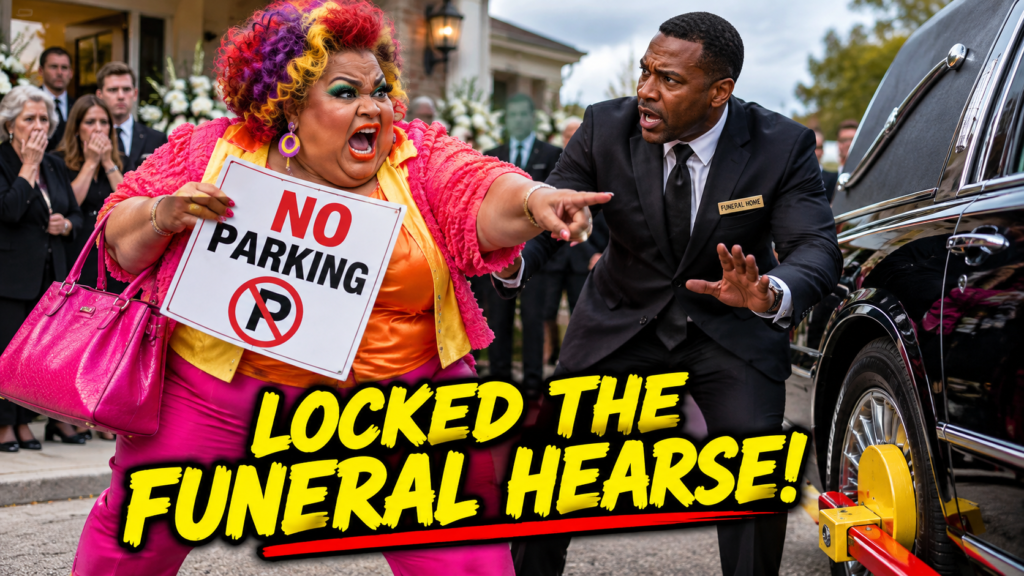
The manager ended his call and walked back toward Karen.
“Someone is coming to handle this,” he said.
Karen folded her arms.
“Good. Maybe they’ll understand what you don’t.”
“What exactly do you believe you’ve enforced?”
“The parking restriction.”
“You created that restriction yourself.”
Karen’s eyes narrowed.
“I put the sign where everyone could see it.”
“That doesn’t make it an official rule.”
For the first time, Karen glanced toward the curb.
The temporary funeral sign was still there.
She looked back at her own sign.
Then she noticed something else.
A small metal plaque near the entrance identified the loading area as reserved for funeral-home use.
She stepped toward it.
“That’s not what it says.”
The manager followed.
“It says exactly what I told you.”
Karen read it silently.
Her face tightened.
The mourners watched without saying a word.
She could have removed the lock.
Instead, she changed tactics.
“Fine,” she said. “Then show me where your authority comes from.”
The manager answered carefully.
“The funeral home leases and operates this loading area. We follow the property’s posted restrictions and local parking requirements.”
Karen immediately seized on the last phrase.
“Local requirements.”
“Yes.”
“So there are requirements.”
“Of course.”
“And you expect me to believe you’re following all of them?”
“I expect you to stop interfering with a funeral service.”
That answer angered her more than the first one.
Karen lifted her phone and began recording.
“Everyone can see what’s happening here,” she said to the camera. “I’m standing up for the rules, and now I’m being threatened for it.”
“I haven’t threatened you,” the manager said.
“You don’t have to.”
The widow’s son quietly approached the manager.
“Can we still leave soon?”
The manager nodded.
“We’re working on it.”
That simple exchange changed the atmosphere.
Karen saw the mourners gathering around the hearse.
For a moment, even she seemed to understand that the argument had moved beyond parking.
But rather than step aside, she walked back to the wheel.
“I want someone to prove that my sign doesn’t matter.”
The manager looked at the lock.
Then at Karen.
“All right.”
He took a photograph of the lock and the homemade sign.
“I’ll document everything.”
Karen smiled.
“Perfect.”
She did not realize that documenting the scene would preserve something she had not considered: the exact placement of her sign, the reserved loading markings, the time of the funeral service, and the lock she had placed on a vehicle she did not own.
Within minutes, the dispute would no longer be simply between Karen and the funeral home.
There would be a record.