Chapter 5: A Neighborhood Begins to Remember
By Thursday morning, Willow Creek had become a neighborhood divided.
Some residents defended Margaret.
They credited her with improving property values, organizing holiday decorations, and keeping common areas attractive.
Others had grown tired of her aggressive enforcement tactics.
For years, most people had remained silent.
They had jobs, families, health concerns, and responsibilities that mattered more than arguing about landscaping rules.
Margaret understood that exhaustion.
She had learned to use it.
A homeowner who challenged a fine might face additional inspections.
A resident who questioned a contract might be accused of undermining the community.
People who complained often discovered that their neighbors preferred not to get involved.
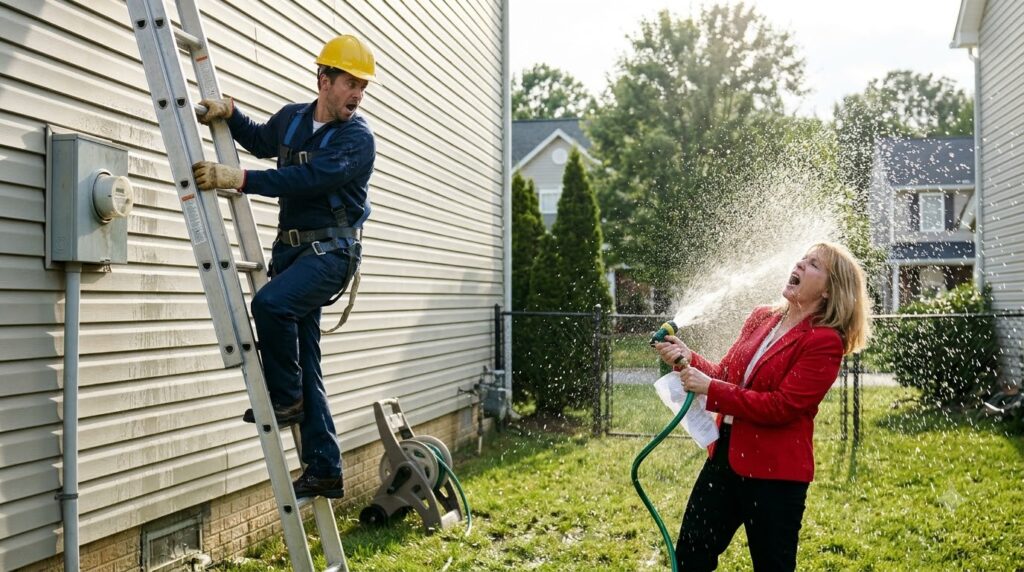
But the video of the hose attack changed something.
It gave residents a clear picture of behavior they had previously experienced only in private.
Ruth Collins began receiving calls.
One came from a retired firefighter named Harold Simmons.
Harold had lived in Willow Creek for twenty-seven years.
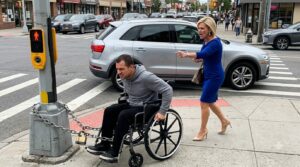
He told Ruth that Margaret had once threatened him with fines because his wheelchair-accessible ramp did not match the approved exterior design.
His wife, Patricia, had needed the ramp after a stroke.
Harold had submitted medical documentation and requested an accommodation.
Margaret delayed the process for weeks.
Eventually, another board member intervened.
The ramp remained.
But Harold never forgot the humiliation of having to defend his wife’s basic mobility needs.
Another call came from a young couple, Marcus and Jenna Reed.
They had purchased their first home two years earlier.
After a windstorm damaged their roof, Margaret insisted that they use a contractor from an HOA-approved list.
The recommended contractor charged nearly twice the estimate they had obtained independently.
When they refused, violation notices followed.
Jenna had saved every email.
By Thursday evening, Laura had collected accounts from eleven households.
Not every complaint established misconduct.
Some involved legitimate disagreements about HOA rules.
But several showed a disturbing pattern of selective enforcement, intimidation, and unexplained contractor recommendations.
Laura organized the material carefully.
She did not want rumors.
She wanted documents.
Meanwhile, Evelyn’s house remained without power.
A licensed electrician had begun replacing the damaged meter equipment and coordinating with the utility for reconnection.
The repairs were expensive.
Laura offered to pay.
Evelyn initially refused.
Then she looked at the darkened kitchen and admitted that she needed help.
That evening, mother and daughter sat together beneath the soft glow of a battery-powered lantern.
Outside, the neighborhood looked peaceful.
Porch lights illuminated trimmed lawns.
Children rode bicycles along the sidewalks.
A dog barked in the distance.
Evelyn watched the familiar scene through the window.
“I used to love living here,” she said.
Laura turned toward her.
“You still can.”
“I’m not sure.”
Evelyn paused.
“Your father and I moved here because people looked after one another. When Mrs. Henderson broke her hip, six families took turns bringing dinner. When the big storm knocked out power, everyone shared generators and helped clear branches.”
Her voice softened.
“We didn’t need permission to be good neighbors.”
Laura reached for her hand.
“Then maybe it’s time people remembered that.”
Across town, Margaret was preparing her own response.
She had hired an attorney and contacted several board members.
She claimed the video was misleading.
She described Daniel as an unauthorized contractor.
She insisted that Evelyn’s property presented a threat to neighborhood safety.
Most importantly, she wanted Friday’s meeting to proceed.
The emergency agenda proposed escalating Evelyn’s unpaid fines and authorizing additional collection measures.
Margaret believed that enough pressure would finally convince the widow to sell.
But she had underestimated the reaction to the video.
And she had underestimated Daniel Mercer.
Daniel had spent Thursday speaking with utility safety investigators.
His report documented the interference and the electrical defect.
The company’s legal department had also reviewed the HOA notice claiming authority over utility inspections.
That evening, Daniel received a call from his supervisor.
The utility had decided to send a representative to Friday’s meeting.
Daniel was asked to attend as a witness.
He agreed.
Then his supervisor mentioned something unexpected.
The utility had reviewed its records for Willow Creek.
There had been three other recent complaints involving interference with service access.
Two concerned blocked meter inspections.
One involved a contractor who had been told to leave before completing an urgent repair.
All three complaints mentioned the HOA president.
Daniel stared at the notes in front of him.
The hose attack had not been an isolated misunderstanding.
It was part of a larger problem.
And now the utility intended to address it publicly.