Chapter 7: What the Evidence Revealed
Over the next six weeks, Ocean Crest Estates underwent a transformation.
The board retained an independent accountant and outside counsel to examine association records.
Residents submitted formal requests for documents.
Former board members were contacted.
Bank statements, invoices, meeting minutes, and contracts were collected.
The investigation moved slowly.
But unlike Karen’s accusations and threats, it relied on evidence.
The accountant discovered that Whitmore Coastal Consulting had received $42,000 in three payments.
The company’s owner, Steven Whitmore, confirmed that his firm had performed preliminary research and produced a draft report.
However, the draft did not support removing the traffic signal.
Instead, it recommended retaining signal control and improving pedestrian visibility.
Steven provided the report and related correspondence.
The discovery was significant.
Karen had repeatedly claimed that the consultant supported removing the light.
The actual findings said otherwise.
Further examination revealed that the association had paid an additional $18,500 for administrative and legal consulting services that lacked adequate supporting documentation.
Some expenses appeared legitimate but poorly recorded.
Others required further explanation.
The accountant did not conclude that every questionable payment represented theft.
But the review identified serious weaknesses in financial oversight.
The most disturbing findings involved the meeting minutes.
Several documents had been altered after meetings concluded.
Votes had been recorded inaccurately.
In two instances, electronic signatures appeared on documents that the named directors denied approving.
The board referred those findings to appropriate authorities for further review.
Meanwhile, the traffic investigation continued.
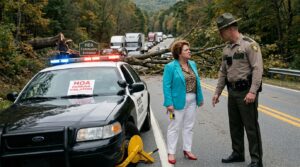
Police obtained the original video from Tyler Bennett.
They also collected footage from a nearby business security camera.
The recordings confirmed the sequence of events.
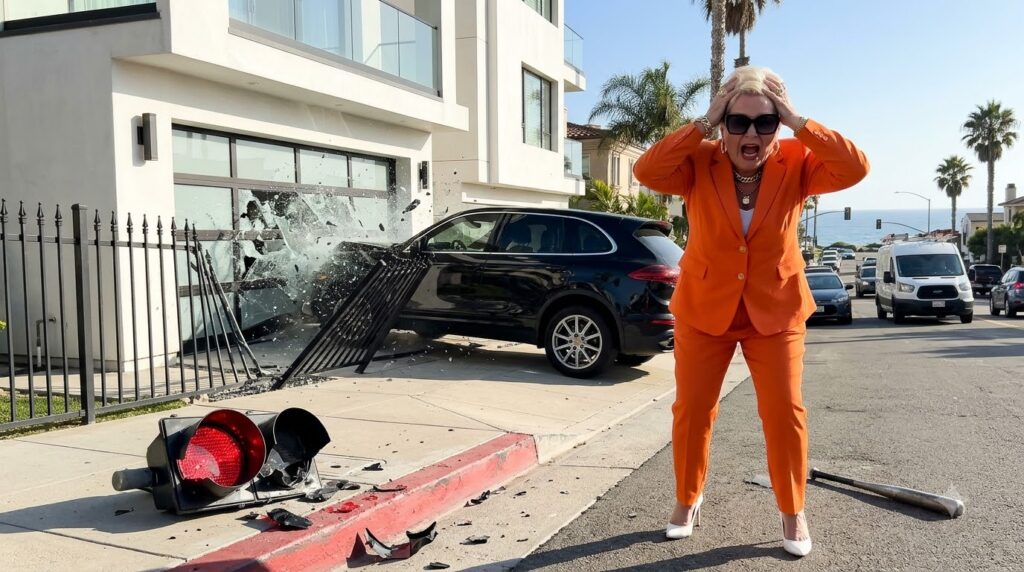
Karen struck the signal.
The signal went dark.
The delivery van and Cadillac entered the intersection.
Daniel swerved to avoid a collision.
His SUV struck Karen’s property.
A traffic reconstruction specialist reviewed the available footage, vehicle damage, road conditions, and physical evidence.
The report found that the loss of signal control contributed to the confusion at the intersection.
It also examined both drivers’ actions.
Daniel had been traveling within the posted speed limit before braking.
Marcus had approached at a moderate speed.
Neither driver had been shown to be intentionally reckless.
The report did not make Karen automatically responsible for every dollar of damage, but it provided strong evidence that her destruction of the signal was a major factor in the crash.
Karen’s criminal case proceeded separately.
She faced charges connected to damaging public property and creating a hazardous roadway condition.
Her attorney advised her to stop discussing the incident publicly.
For once, she followed that advice.
But the silence was difficult.
Karen had spent years building her identity around authority.
Now she found herself unable to control the narrative.
Her mansion remained partially boarded up.
Her insurance company was reviewing coverage issues related to the circumstances of the collision.
Her husband had moved forward with their separation.
Her daughter answered calls only when conversations remained respectful.
And the HOA board had removed Karen from her officer position pending the outcome of its internal review.
A special election was scheduled.
One afternoon, Karen sat alone in the mansion’s enormous living room.
The house was beautiful.
Imported marble covered the floors. Custom furniture filled the rooms. A crystal chandelier hung above the staircase.
But without Richard, Caroline, or the constant stream of association business, the place felt strangely empty.
Karen walked toward the front windows.
Across the street, Eleanor Hayes was pruning her roses.
The sight stirred an old memory.
Years earlier, before Karen became HOA president, Thomas Hayes had helped Richard repair a damaged section of fencing after a tropical storm.
Thomas had refused payment.
He had simply said that neighbors were supposed to help one another.
Karen remembered dismissing the gesture as old-fashioned.
Now, watching Eleanor work alone, she felt an unfamiliar discomfort.
She had spent years trying to make the neighborhood more prestigious.
But somewhere along the way, she had made it less kind.
That evening, Caroline called.
Karen answered immediately.
Caroline explained that she wanted her mother to seek professional counseling and take responsibility for the damage she had caused.
She was willing to rebuild their relationship.
But she would no longer defend intimidation, dishonesty, or cruelty.
Karen listened.
For once, she did not interrupt.
After the call ended, she sat quietly for a long time.
Then she opened a drawer and removed an old photograph.
It showed Caroline at age eight, standing beside Richard and Karen in front of their first modest home.
They were smiling.
There was no mansion.
No HOA title.
No expensive jewelry.
Just a family standing together on a sunny afternoon.
Karen held the photograph until the room grew dark.
And for the first time, she wondered whether the life she had worked so hard to control was the very thing she had destroyed.