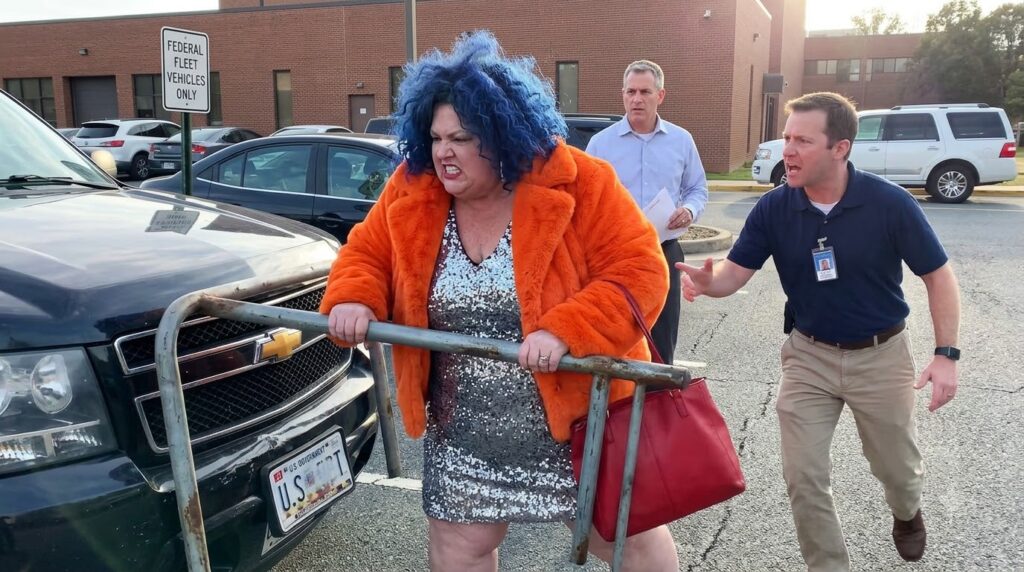
Chapter 6: What the Records Revealed
The independent review began the following week.
Susan Bennett worked with the association’s attorney and an outside accountant to examine relevant expenditures, board authorizations, and correspondence.
The investigation uncovered a series of decisions that Patricia had made without proper approval.
She had hired a consultant to prepare objections to the federal facility’s parking arrangements.
She had ordered HOA-branded warning notices.
She had paid for preliminary drawings of a proposed entrance barrier that would have extended beyond Willow Creek’s property boundary.
And she had charged several related expenses to an administrative account normally used for routine association operations.
The total was just over $8,000.
The review did not establish that Patricia had stolen the money.
The services appeared to have been provided.
But the expenditures lacked the approvals required by the association’s governing procedures.
The distinction mattered.
The issue was not whether Patricia had personally profited.
It was whether she had used community resources to pursue a dispute the community had never authorized.
Susan asked the accountant to prepare a detailed report.
Meanwhile, the federal investigation continued.
Daniel Mercer provided a written statement describing the incident.
Robert Hayes documented the operational delay.
Elena Brooks preserved the security recordings, photographs, and the unauthorized HOA parking notice.
The government fleet SUV was inspected.
The repair estimate included replacement of the damaged front license plate assembly, repairs to the mounting hardware, refinishing the scratched fender, and inspection of the bumper and grille.
The total exceeded $3,000.
The damage was repairable, but it was not imaginary or insignificant.
Daniel found himself thinking about the incident more often than he wanted.
He had grown up in a working-class family in western Maryland.
His father had been a mechanic who taught him that other people’s property deserved the same care as his own.
Daniel had carried that lesson into adulthood.
He maintained his family’s vehicles, helped neighbors with minor repairs, and took pride in keeping the government fleet safe and serviceable.
Watching Patricia damage a vehicle simply because she disliked where it was parked had disturbed him.
But what bothered him most was her assumption that his job made him less deserving of respect.
He was not an obstacle.
He was a person doing his work.
One evening, Daniel returned home later than usual.
His wife, Rebecca, noticed his silence over dinner.
Their sixteen-year-old daughter, Lily, asked whether something had happened.
Daniel told them about the parking lot.
Lily had already seen a version of the story online.
“Why would somebody do that?” she asked.
Daniel considered the question.
“Sometimes people get so used to being obeyed that they forget other people have rights too.”
Rebecca reached across the table and touched his hand.
“You handled it properly.”
Daniel appreciated the reassurance.
Still, he wondered whether the incident would become another example of people treating public employees as convenient targets for their anger.
The next morning, he received an unexpected letter.
It was from Margaret Ellis.
She explained that she lived in Willow Creek and had learned what happened.
She did not attempt to excuse Patricia.
Instead, she thanked Daniel for the help he had given her months earlier when her car broke down.
She wrote that the community contained many decent people who respected public employees and regretted the confrontation.
Daniel read the letter twice.
He had nearly forgotten the rainy afternoon when he helped Margaret.
To him, it had been an ordinary act of kindness.
To her, it had mattered enough to remember.
He placed the letter in his desk drawer.
Later that day, Robert informed him that the government had formally referred the property-damage matter for prosecutorial review.
Daniel felt relief, but not satisfaction.
He did not want revenge.
He wanted the rules to mean the same thing for everyone.
And he wanted to return to work without wondering whether another angry stranger would decide that public property was theirs to destroy.
Across town, Patricia received a letter from an attorney she had hired privately.
After reviewing the available evidence, the attorney explained that the security footage significantly weakened any claim that the collision had been accidental.
He advised her to stop discussing the incident publicly and to cooperate through counsel.
He also warned her that her HOA position provided no special protection from personal responsibility.
Patricia read the letter alone.
For eleven years, she had believed that authority meant being able to make other people comply.
Now she was learning that authority could also mean being held accountable for the decisions made in its name.