Chapter 10: A Place That Belonged to Everyone
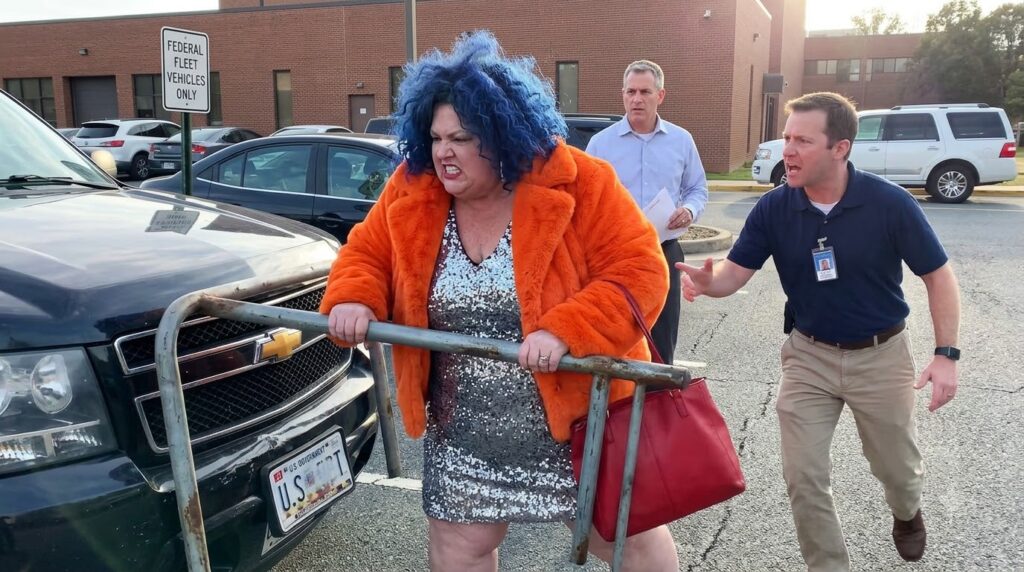
By spring, the Chesapeake Federal Operations Center had completed repairs to the damaged SUV.
The front license plate was secure.
The scratched fender had been refinished.
The bumper and grille were restored.
The vehicle returned to ordinary fleet service.
Daniel Mercer inspected it one morning before a scheduled trip.
He ran his eyes over the repaired front corner, checking the plate and bodywork.
Nothing about the SUV suggested the confrontation that had once taken place beside it.
But Daniel remembered.
He remembered the crash.
The scraping metal.
The woman shouting that a government parking space belonged to her.
And the strange feeling of standing in front of someone who believed her personal anger outweighed everyone else’s rights.
He also remembered Margaret’s letter.
That memory mattered more.
Over the following months, the relationship between the federal facility and Willow Creek improved.
The facility clarified visitor access information.
The HOA stopped asserting authority over government parking areas.
Residents learned where to direct legitimate traffic and safety concerns.
The neighborhood remained a neighborhood.
The government facility remained a government facility.
Neither needed to dominate the other.
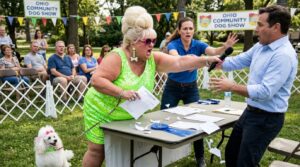
At Willow Creek, Susan’s board introduced a spring community gathering.
It was simple.
Coffee, sandwiches, homemade desserts, and tables beneath the trees near the clubhouse.
Residents were encouraged to bring photographs from the neighborhood’s early years.
Walter displayed pictures of the original development.
Margaret brought a photograph of Thomas working on their wooden bench with their grandson.
Children played on the lawn while older residents shared stories about families who had moved away and neighbors who had passed on.
For the first time in years, the event felt relaxed.
People were not whispering about fines or worrying that a casual conversation might be reported to the board.
They were simply enjoying their community.
Patricia did not attend.
But she sent a small contribution toward the refreshments, without attaching her name or requesting recognition.
Susan learned where it came from and sent a brief thank-you note.
There was no ceremony.
That was enough.
Later that afternoon, Margaret returned home and sat on her bench.
The maple leaves were beginning to fill out overhead.
A gentle breeze moved through the branches.
She watched a young couple walking their dog along the sidewalk.
Across the street, Walter was helping a neighbor adjust a loose gate latch.
For a moment, the scene reminded her of the Willow Creek she had known when Thomas was alive.
Not because everything was perfect.
It never had been.
But because people were once again treating one another as neighbors rather than opponents.
A white SUV approached slowly.
Margaret recognized it.
Patricia pulled to the curb and lowered her window.
She looked different without the dramatic clothes and towering curls.
Her hair was tied back, and she wore a plain navy cardigan.
For several seconds, neither woman spoke.
Then Patricia looked toward the bench.
“Thomas made that, didn’t he?”
Margaret nodded.
“He did.”
Patricia swallowed.
“I should never have made you put it away.”
Margaret studied her.
There was no audience.
No board meeting.
No camera.
No opportunity to turn the moment into a performance.
Only two women who had lived in the same neighborhood for years and had forgotten how to speak to each other.
“No,” Margaret replied gently. “You shouldn’t have.”
Patricia nodded.
She did not argue.
She did not explain.
After a moment, she said, “I’m sorry.”
Margaret looked down at the worn wooden armrest.
She thought about Thomas, about the years that could never be recovered, and about the small indignities that had accumulated under Patricia’s leadership.
Then she looked up.
“Thank you for saying that.”
It was not an invitation to forget everything.
It was not a promise that their relationship would suddenly become close.
But it was a beginning.
Patricia gave a small nod and drove away.
Margaret watched the SUV disappear around the corner.
Then she settled back against the bench.
She thought about how the entire ordeal had begun.
A parking space.
A steel barrier.
A government vehicle.
One woman’s furious insistence that her title entitled her to control something that did not belong to her.
The damage had been repaired.
The legal consequences had been addressed.
The unauthorized spending had been reimbursed.
The HOA had changed its leadership and its procedures.
And Patricia had finally begun to understand the difference between being feared and being respected.
Margaret looked across the street as Walter finished repairing the gate.
The neighbor thanked him.
Walter waved away the praise and headed home.
It was such a small thing.
A man helping another person without expecting anything in return.
Yet Margaret understood that those ordinary gestures were what made a neighborhood worth living in.
Not expensive gates.
Not perfect lawns.
Not impressive titles.
And certainly not the power to tell everyone else what to do.
A good community was built when people understood that their neighbors had lives, memories, responsibilities, and rights of their own.
Rules could protect that community.
But rules became dangerous when they were used to humiliate people rather than serve them.
Patricia Whitmore had spent eleven years believing that respect came from making others obey.
She had lost her position, her public standing, and a considerable amount of money before discovering that obedience and respect were entirely different things.
Daniel Mercer had never needed a title beyond the one his job required.
He had simply done his duty, protected public property, and treated people fairly.
Margaret had never held an important office.
Yet her willingness to speak up had helped restore a sense of dignity to an entire neighborhood.
As the afternoon sunlight stretched across her front lawn, Margaret rested her hand on the bench Thomas had built.
She smiled.
The neighborhood was not perfect.
Neither were the people who lived there.
But it was beginning to feel like home again.
And in the end, that was worth far more than winning an argument over a parking space.
Because real authority is not measured by how many people you can force to obey you. It is measured by how fairly you treat people when you have the power to do otherwise.