
The Subdivisions of Iron and Dirt: A Narrative of the Eighteen-Inch Border

CHAPTER 1: THE TRENCH LINE

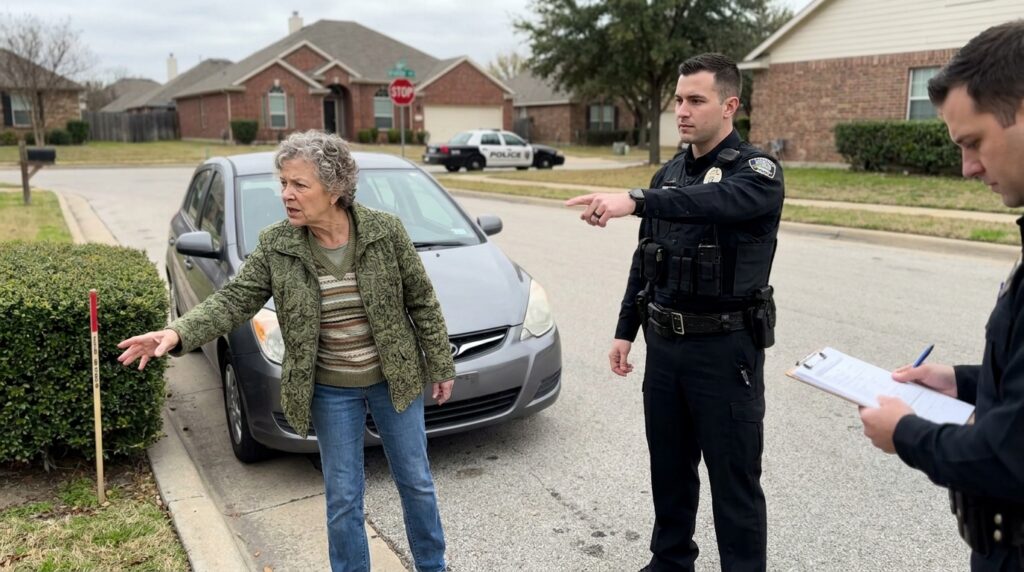
The plastic citation was tucked beneath the wiper blade, a neon-pink square of legalistic fiction that fluttered against the dusty glass of the gray compact sedan. Evelyn Fletcher didn’t pull it off immediately. Instead, she stood in her mud-stained garden clogs on the edge of the asphalt, smelling the dry iron of the midday heat and the bitter scent of the trimmed privet hedge. Across the narrow strip of property line, the grass changed abruptly—from Evelyn’s unwatered, crabgrass-choked patch to Brenda Vance’s chemical-green, golf-course perfection.

A fresh, raw line of dark earth ran along the base of the privet bushes. Someone had taken a spade to the sod early this morning, carving a narrow trench six inches deep, leaving the exposed, severed roots of Evelyn’s hedge bleeding into the dry dirt.

“You’re over the mark, Evelyn,” a voice called out.

Brenda Vance was already leaning against her pristine crossover SUV in the adjacent driveway. Her heavy frame was wrapped in a bright, synthetic floral blouse that seemed to vibrate against the sun-bleached concrete. She wore oversized designer sunglasses that obscured her eyes, but the rigid tilt of her chin was unmistakable. In her left hand, she held her primary weapon: a thick, black plastic clipboard bulging with copied sections of the Whispering Pines code of conduct.

“The bylaws are quite clear about unapproved vehicle storage within the perimeter of primary curb lanes,” Brenda said, her boots crunching lightly on her own manicured gravel as she stepped closer to the boundary. She didn’t cross it. She never crossed it when she was executing a citation. “The board met last night. The gray car hasn’t moved in forty-eight hours. That makes it an obstruction under Section 4.”

Evelyn slowly turned her head. Her lined face remained dry, her small stance planted firmly in front of the sedan’s front bumper. She wore a green patterned jacket over a frayed striped sweater, the fabric heavy and thick despite the humidity. “This car has sat on this asphalt since my husband bought the lot in ninety-eight, Brenda. The asphalt didn’t belong to the board then, and it doesn’t belong to your clipboard now.”

“Things evolve,” Brenda replied, her pen scratching against the pink carbon paper with a small, rhythmic rasp. “The neighborhood has standards to maintain. A dilapidated vehicle lowers the index for the entire cul-de-sac. We’ve retained a private flatbed. If the keys aren’t in the ignition by twelve, it’s county property.”

Evelyn reached out, her fingers catching the corner of the pink notice. The paper left a faint chemical residue on her skin. As she pulled it free, her gaze dropped to the raw trench between their yards. Nestled deep in the freshly turned dirt, right where the severed privet roots met the clay, something dull and metallic glinted under the harsh sun. It was the square top of an old steel surveyor’s pin, heavily pitted with orange rust, exposed for the first time in thirty years.

Brenda noticed Evelyn’s downcast stare and shifted her weight quickly, her floral sleeve rustling as she pulled the clipboard closer to her chest. “The trench is for a French drain,” Brenda added, her voice dropping into a flatter, harder register. “To handle your runoff.”

Evelyn looked from the rusted iron pin up to Brenda’s covered eyes. The distance between the pin and the sedan’s front tire was exactly eighteen inches.


CHAPTER 2: THE PAPER LINE

“You shouldn’t be looking at things that don’t concern your taxes, Evelyn,” Brenda said.

The black plastic clipboard clicked against the metal buckle of her patterned dress as she pulled it tight against her chest, a shield of manufactured authority. Her designer sunglasses remained locked on Evelyn’s hands, which were still stained with the grey dust of the pink citation paper.

Evelyn didn’t look up from the raw trench. She kept her eyes fixed on the pitted, orange head of the steel surveyor’s pin. The cut roots of her privet hedge hung over it like frayed cables, dripping a slow, clear sap into the dry clay. “A surveyor’s stake is a matter of county record, Brenda. It concerns anyone who pays a mortgage on the dirt it’s driven into.”

“That pin was decommissioned when the phase-three drainage assessment was filed in 2022,” Brenda snapped. Her boots didn’t move from her pristine gravel, but her posture went rigid, her heavy frame blocking the sightline to her own garage. “The new boundary line accounts for the easement shift. The board sent the addendum to every resident three months ago. If you didn’t read the registry updates, that’s an administrative failure on your part, not a legal error on ours.”

“I don’t sign registry updates from a private corporation that didn’t exist when my foundation was poured,” Evelyn said softly. She stood up straight, her joints cracking with a small, dry sound that felt amplified by the dead quiet of the cul-de-sac. She rubbed her thumb against the palm of her green patterned jacket, feeling the grit of the soil she had just disturbed. “And I don’t remember the county granting the board the right to use a spade on my root systems.”

Brenda let out a short, sharp laugh—a rehearsed sound that carried no heat, only the cold confidence of a bureauctat backed by a legal fund. “We have maintenance access for all properties adjoining common areas, Evelyn. Check Section 9. Or don’t. It won’t stop the flatbed.”

At the far end of the street, where the asphalt turned toward the main county road, a low, hydraulic groan vibrated through the heavy air. A yellow commercial tow truck had backed into the mouth of the cul-de-sac, its steel ramp angled slightly downward like an open jaw. The driver didn’t clear the turn; he simply left the diesel engine idling, a heavy cloud of grey exhaust settling over the manicured lawns.

Evelyn didn’t blink. She turned her back to Brenda, walking the three paces to the driver’s side of her gray sedan. The chrome trim around the window was hot enough to sting her fingertips, the metal retaining the cumulative heat of the mid-day sun. She placed her hand flat against the roof, feeling the steady thrum of the idling tow truck through the soles of her shoes.

“You haven’t called the county tow, Brenda. That’s Miller’s Private Recovery,” Evelyn said, her voice dropping into a flat, pragmatic cadence. “They don’t have a municipal franchise contract for this township. They operate on private dispatch.”

“They operate on my authorization as a representative of the lienholder,” Brenda said, her voice rising slightly as she finally took a step closer to the property line, her shadow stretching across the severed hedge line into Evelyn’s crabgrass. “Every day that vehicle stays stationary without a valid registration sticker from the association, it accrues a seventy-five-dollar cumulative penalty. As of ten o’clock this morning, the board has placed a structural lien against this lot. We have the right to secure the asset.”

Evelyn looked down at her own front tire. The rubber was dusty, but the tread was deep enough to survive another five winters. A few inches below the hubcap, buried under the loose gravel of the curb edge, the concrete lip of the original municipal gutter showed a faint, stamped serial number from 1974—the year the county laid the water mains.

“An association can’t lien a property over an unratified parking code,” Evelyn murmured, more to herself than to the woman with the clipboard. She reached into her pocket, her fingers closing around the cold, heavy iron of her house keys. The metal felt stable, an anchor against the rising panic that usually choked the residents of Whispering Pines when Brenda showed up on their driveways. “You’re pushing the fence before you’ve bought the post, Brenda.”

“The documents are already logged in the master county database, Evelyn. I don’t bluff.” Brenda held up the clipboard, her thumb pressing down hard on the metal lever to flash a stack of thick white pages covered in official-looking blue ink stamps. “The greenway expansion gave the board total jurisdiction over the first three feet of every curb lane from the cul-de-sac to the main road. We own the dirt under your front axle.”

Evelyn watched the white pages flutter in the slight, warm breeze. The ink on the top stamp looked exceptionally dark, almost wet against the coarse texture of the paper. She didn’t look at Brenda’s hidden eyes; she looked at the signature line at the bottom of the form—a jagged, hurried scrawl that matched the handwriting on the pink citation under her wiper.

A shadow fell over the gravel between the two houses. It wasn’t Brenda’s. From around the corner of the block, the low, steady tick of a municipal engine approached, accompanied by the distinct, high-frequency chirp of a short-wave police radio adjusting its frequency. A black-and-white cruiser emerged from the shade of the suburban oaks, its roof lights dark but its front bumper moving with a slow, deliberate momentum toward the gray sedan.

Brenda’s mouth closed instantly into a hard, triumphant line. She lowered the clipboard, turning her body toward the arriving vehicle as if welcoming a long-awaited guest to a private dinner party.

Evelyn remained planted by her front tire, her hand still resting on the hot roof of her car. She didn’t reach for the pink paper. She simply watched the cruiser’s tires crunch against the public asphalt, her jaw tightening as she calculated the distance between her bumper and the rusted pin hidden in the dirt.

CHAPTER 3: THE ARRIVAL STATUS

The black-and-white cruiser didn’t rush. It glided over the concrete apron of the cul-de-sac with a heavy, administrative weight, its suspension squeaking softly as the front tires crossed from the public thoroughfare onto the lighter, aggregate asphalt of Whispering Pines. The engine gave off a dry, oily warmth that blended instantly with the heat radiating from Evelyn’s sedan.

When the brakes engaged, the vehicle pitched forward an inch, its metallic undercarriage settling directly opposite the raw trench Brenda had dug.

The driver-side door swung open, the hinge releasing a dry click. A uniform boot, polished but covered in a fine layer of gray limestone dust from the county access roads, planted itself firmly on the concrete gutter lip. Officer Miller—his brass nameplate glinting against the black fabric of his tactical vest—stepped out into the midday glare. He adjusted his heavy duty belt with a habitual, two-handed tug, his fingers brushing past the textured grip of his sidearm and the yellow casing of his taser before resting on his hips.

“Afternoon, ladies,” Miller said. His voice was raspy, dried out by a full shift of air-conditioned air and local radio static. He didn’t look at Evelyn first. His gaze swept the gray sedan, noted the neon-pink square of paper clutched in her hand, and then locked onto the thick white sheets flapping on Brenda’s clipboard. “Got a report about an obstruction. A commercial vehicle block on a residential fire lane.”

“Right here, Officer,” Brenda said, her voice dropping its aggressive edge, replacing it instantly with the smooth, conversational tone of an aggrieved taxpayer. She stepped off her gravel driveway, her synthetic dress rustling as her sandaled feet stopped exactly two inches short of the raw trench line. She held up the clipboard like a shield, pointing her pen toward Evelyn’s front bumper. “The vehicle has been red-tagged by the association safety committee. It’s an unregistered hazard under our municipal emergency access agreement.”

Evelyn didn’t move from her position by the front wheel. Her fingers remained buried in the pocket of her green jacket, her thumb tracing the cold, notched edge of her front-door key. “There is no hazard, Officer. And there is no fire lane on this side of the cul-de-sac. The municipal hydrant is sixty yards down, across from the mailbox bank.”

Miller didn’t answer. He turned his head slightly toward the passenger side of his cruiser, nodding once.

The passenger door opened, and a taller, thinner man climbed out of the vehicle. He didn’t wear a badge or a duty belt. His uniform was a simple charcoal-gray canvas shirt with a dark township patch sewn onto the sleeve, the edges slightly frayed from repeated washings. He carried a heavy, aluminum-backed ledger box under one arm and a rolled cylinder of heavy, linen-backed paper under the other. His eyes were small, squinting against the glare of the white concrete as he walked toward the curb.

“This is Inspector Vance from the county zoning office,” Miller said, his boots crunching as he took two deliberate steps into the narrow space between Evelyn’s sedan and Brenda’s trench. He used a low, flat hand gesture to separate them, his open palm facing down toward the hot asphalt. “Ma’am, I need everyone to step back while I get this straight.”

Brenda smiled, a quick, small movement behind her oversized sunglasses. “Inspector, I have the board minutes from last month’s infrastructure assessment right here. The greenway expansion allocation was fully codified under the regional density amendment. The three feet extending inward from this curb line were legally transferred to the association’s maintenance ledger to allow for uniform drainage installation.”

The inspector didn’t look at Brenda’s clipboard. He set his aluminum ledger box flat on the hot roof of Evelyn’s sedan with a loud, metallic clunk that made the pink paper in Evelyn’s hand vibrate. He unlatched the steel clips of the box, his thick fingers moving with a slow, mechanical precision that had nothing to do with suburban urgency.

Evelyn watched him lift a heavy pair of iron-rimmed reading glasses to his nose. “The greenway expansion,” Evelyn muttered, her eyes tracking the way the inspector’s dark uniform sleeve brushed against the gray paint of her car. “The board didn’t allocate anything three months ago, Brenda. You had a surveyor out here at five in the morning on a Tuesday while the rest of the street was asleep. That’s why the ink on that registry stamp is still dark enough to smudge.”

Brenda’s pen stopped its rhythmic clicking. Her shoulders squared beneath the floral pattern of her blouse, her heavy silhouette casting a long, dark shadow that reached across the raw trench and touched the toe of Evelyn’s garden clog. “The timing of administrative filings is completely irrelevant, Evelyn. The county approved the density adjustments. The land was ceded.”

“We’ll look at the township master grid,” the inspector said. His voice was entirely flat, devoid of any neighborly interest. He unrolled the cylinder of linen-backed paper across the roof of the car, weighting the corners down with two rusted iron brackets he pulled from his vest pocket. The paper was old, its edges yellowed and smelling of vinegar and dry storage drawers. It was the master plat map for the 1954 township survey—the original iron-and-dirt coordinates laid down before the first bulldozer ever broke ground for the Whispering Pines development.

Miller stood between them, his hands still hooked over his duty belt, his radio chirping once with a burst of digital noise that cut through the heavy heat. He looked down at the trench, his eyes focusing on the severed privet roots that hung over the orange, rusted head of the old surveyor’s pin.

“Officer,” Brenda said, her tone tightening as she leaned slightly over the trench line, her clipboard tilted toward the inspector’s face. “The current registry entry is what governs the towing ordinance. The truck is waiting at the intersection. I have the signed recovery order right here.”

The inspector didn’t look up from his map. He took a heavy iron divider from his box and placed the sharp points against the faded linen grid, measuring the distance from the old township center line to the edge of the asphalt gutter where Evelyn’s front tire rested.

“Let’s see what the dirt says,” the inspector murmured.

CHAPTER 4: THE STANDOFF AT THE BOUNDARY

“Let’s see what the dirt says,” the inspector repeated, his thumb pressing down hard on the yellowed linen map spread over the gray sedan’s roof.

The wind caught the loose corner of the 1954 plot survey, producing a dry, paper rattle that cut through the low rumble of the idling diesel engine down the block. Nobody moved. Officer Miller took a step closer, his heavy duty boots straddling the aggregate edge where the asphalt met the dry clay of the trench. His tactical vest creaked as he bent slightly to examine the rusted head of the old iron surveyor’s stake.

“Officer,” Brenda said, her voice dropping all remaining pretense of neighborhood politeness. She did not look at the map; her eyes were locked entirely on Evelyn. The heavy plastic clipboard clicked aggressively against her side as she took an uninvited step over her own gravel line, her shadow fully engulfing the trench. “The master county database was updated electronically three months ago. A paper map from the fifties doesn’t change the active lien registration. This property is in clear violation of the safety committee’s density ordinance.”

Evelyn didn’t back away from the trench. She stood her ground at the very lip of the asphalt, her mud-stained clogs inches from Brenda’s sandals. Her arm snapped outward, her finger pointing straight past the manicured privet hedge toward the concrete foundation of Brenda’s garage. “You can’t stand in my place, Brenda, then judge me like you understand what’s buried beneath it. You dug this ditch to hide the stake because you knew exactly what the electronic registry was covering up.”

“That is a baseless, defamatory accusation,” Brenda countered, though her hand gripped the edge of her clipboard so tightly her knuckles turned a stark, bloodless white under the glaring sun. “Officer, I want this woman cited for non-compliance immediately. The towing service has already logged the dispatch entry.”

Miller held up a single, black-gloved hand. The movement was low, slow, and entirely unyielding. “Ma’am, I said step back. Everyone. I’m establishing a hard procedural pause right here until the inspector reads the line.”

The inspector didn’t look up from his iron dividers. He adjusted his heavy reading glasses, his thick fingers tracing a jagged ink line that marked the township’s historic public easement boundaries. He muttered something under his breath, his pen scratching a calculation against the margin of his ledger box. “The aggregate asphalt was poured six inches wider than the original road grant during the ninety-eight resurfacing,” he murmured, his voice gritty and clinical. “The curb lane isn’t where the developer claimed it was.”

A sudden, sharp metallic crack echoed down the cul-de-sac.

Evelyn’s head snapped toward the intersection. The yellow flatbed tow truck had begun to back up the street, its steel winch cables clinking against the ramp as the driver took his cues from the private dispatch order Brenda had signed. The heavy truck tires rolled over the concrete curb lip two houses down, leaving dark, oily streaks on the aggregate stone.

“Stop the truck, Officer,” Evelyn said, her voice flat, the internal panic completely locked behind her tense, lined jaw. “They’re executing a seizure on a public easement before the line is verified.”

“Miller’s Private Recovery doesn’t take orders from residents under active citation, Evelyn,” Brenda said, her lips curling into a tight, defensive smirk behind her designer sunglasses. She held the clipboard higher, thrusting the white pages with the wet blue ink stamps toward Officer Miller’s face. “The lien gives us immediate possession of any vehicle parked within the expansion zone. The officer is here to maintain the peace, not interpret real estate records.”

Miller didn’t take the paperwork. He turned toward the approaching flatbed, his hand moving to his shoulder mic with a practiced, fluid motion. “Dispatch, this is Unit Four. I need a temporary hold on the private recovery unit at the 400 block of Whispering Pines. We have an active jurisdictional dispute on-site. Inform the driver to cut the engine.”

The radio chirped with a burst of gray static before a flat voice confirmed the hold. The tow truck ground to a halt twenty yards away, its diesel exhaust blowing a hot, dark cloud over the manicured lawns.

The inspector slowly lifted his iron dividers from the linen sheet. He turned toward Officer Miller, his eyes small and entirely neutral behind his thick lenses. He didn’t look at Brenda, and he didn’t look at Evelyn. He reached into his canvas shirt pocket, pulled out a heavy steel tape measure, and dropped the hook directly into the raw dirt of the trench, catching the side of the rusted iron stake.

“The registry entry from three months ago is validly stamped,” the inspector said softly, his voice carrying the dry weight of an administrative executioner.

Brenda let out a short, triumphant breath, her shoulders settling.

“However,” the inspector continued, his thick thumb sliding along the yellow metal tape as he pulled it tight against the front tire of Evelyn’s gray sedan, “the registry entry is based on a fraudulent deed transfer. The board cedes the driveway to lot forty-two, but the original town charter states the easement extends eighteen inches past this stake into the gravel lane. The association doesn’t own the dirt under this axle, Officer. They don’t even own the dirt under this trench.”

The smirk died on Brenda’s face. Her clipboard dropped an inch, exposing the trembling edges of the white paper. The dark, wet blue ink of the stamp seemed to mock her under the brutal midday sun.

“That’s impossible,” Brenda whispered, her voice cracking as she looked down at the raw dirt. “The board president signed the expansion order himself.”

“The board president doesn’t have the authority to override a county easement from 1954,” the inspector said, his metal ledger box clicking shut with a final, definitive sound. “This entire side of the street belongs to the township. Evelyn Fletcher is parked legally on public land.”

Evelyn felt the heavy iron key in her pocket grow warm against her thigh. She didn’t gloat. She simply leaned her hand harder against the hot chrome of her car door, her eyes fixed on the sudden, desperate tremor in Brenda’s fingers. The decoy secret was broken, but as the inspector began rolling up the yellowed linen map, Evelyn noticed a secondary set of unrecorded red ink marks running along the very bottom of the document—a completely separate set of coordinates that didn’t match the development, the town, or the association lines at all.

Miller turned back around, his boots grinding into the aggregate stones as his focus shifted entirely away from Evelyn’s sedan. He stepped directly onto Brenda’s gravel driveway, his unreadable eyes fixed on the heavy clipboard she was trying to pull back against her chest.

CHAPTER 5: THE TOWNSHIP CHARTER EXCEPTION

Officer Miller’s boots ground into the loose driveway limestone, a sharp, white crunch that sounded loud against the low, heavy thrum of the idling tow truck. He didn’t take his hand off his tactical belt, but his body turned fully toward Brenda, his unreadable gaze dropping down to the white sheets of the clipboard she was trying to pull back against her floral blouse.

“Ma’am,” Miller said, his tone dropping into a lower, formal register that made the shortwave radio static on his shoulder sound like a distant warning. “Let me see that filed registration copy you’ve got there.”

Brenda didn’t hand it over immediately. Her synthetic dress rustled as she clutched the plastic backing tighter against her chest, her knuckles turning a deep, bloodless white under the blazing sun. Her oversized sunglasses slipped a fraction of an inch down her nose, revealing the wide, panicked whites of her eyes. “Officer, this is an internal administrative ledger. It was verified by our corporate counsel before the enforcement notices were printed. The zoning inspector is looking at an obsolete county grid.”

“The grid isn’t obsolete,” the inspector said. He didn’t look up from his aluminum ledger box, his thick fingers already sliding the heavy iron reading glasses off his face. He began rolling the yellowed linen map back into its cylinder with slow, rhythmic movements, the dry paper crackling like dead leaves. “The 1954 county grant has a non-severability clause, Brenda. The developer who sold these lots never acquired the underlying municipal easement rights for the road lanes. The township never signed over the dirt.”

Evelyn watched Brenda’s jaw go slack, the heavy foundation on her cheeks looking dry and chalky under the brutal glare of the midday heat. Evelyn took her hand off the sedan’s hot chrome roof, her thumb still circling the notched iron key inside her jacket pocket. “The board president didn’t just sign an expansion order, Brenda. He signed a document that doesn’t have an asset behind it. You’ve been collecting seventy-five dollars a day from every driveway on this block for a perimeter that belongs to the county.”

“That is a complete mischaracterization of our regulatory structure,” Brenda said, her voice rising an octave, cracking against the quiet weight of the cul-de-sac. Two houses down, the neighbor who had been leaning over the porch railing stepped out onto his top stair, his arms crossed over his chest as he watched the uniform turn away from Evelyn’s car. “The association is a registered entity under state law. We have a corporate charter.”

“You have a charter for a corporate entity,” Evelyn said, taking a single, deliberate step across the aggregate asphalt line until her garden clogs were resting right at the edge of the raw trench Brenda had dug. She pointed down at the orange, pitted iron stake sticking out of the dry clay. “But you don’t have a charter for this dirt. You unburied that pin this morning to see how far you could push the ditch before the county noticed the water main access was blocked.”

Miller reached out, his gloved fingers wrapping around the top edge of Brenda’s clipboard. He didn’t pull it hard, but the physical weight of his arm forced her to release her grip. He flipped through the thick white pages, his eyes scanning the wet blue ink stamp and the jagged signature at the bottom of the registry sheet.

“The dispatch order for the private recovery unit is logged under a fraudulent municipal lane designation,” Miller murmured, his pen tracing the dark lines on the form. He looked over his shoulder toward the yellow flatbed idling twenty yards away. “Dispatch, this is Unit Four. Cancel the private tow on the gray sedan. Inform the driver he’s blocking a public township thoroughfare and needs to clear the cul-de-sac immediately.”

The radio chirped in response. Within seconds, the heavy diesel engine of the flatbed revved, its steel winch cables clinking as the driver threw the truck into reverse, backing out of the subdivision with a loud, mechanical groan that left a blue cloud of exhaust trailing behind it.

Brenda watched the truck disappear, her heavy silhouette shaking slightly as she turned back to the officer. “Miller, you can’t just dismiss an active lien. The association has legal precedence over neighborhood maintenance.”

“Not on a county easement, you don’t,” Miller said. He slid the clipboard under his left arm, his right hand moving to his chest pocket to pull out a small, black-bound citation book. He looked at the unrecorded red ink marks running along the bottom of the inspector’s linen chart, which was now fully rolled and secured under the inspector’s arm. “Ma’am, filing a false report regarding an emergency lane obstruction is a class-A misdemeanor under the municipal code. Especially when that report is used to execute a private vehicle seizure on land your organization doesn’t legally control.”

Evelyn didn’t feel the surge of triumph she had expected. Instead, she watched the inspector slide his aluminum ledger box into the passenger side of the cruiser, his movements clinical and unhurried. As he did, the rolled linen charter shifted, and Evelyn saw the bottom edge of the paper clearly for the first time—the red ink markings weren’t just coordinates. They were a series of unratified cancellation codes stamped directly over the original developer’s corporate signature from 1954. The entire Whispering Pines Homeowners Association hadn’t just overreached its boundaries on her driveway; according to the red lines on that charter, the entire subdivision was sitting on land that had never been legally removed from the county’s unincorporated ledger.

Brenda stood frozen on her gravel, her fingers twitching against her synthetic floral pattern as Miller pressed his pen to the carbon paper of his citation book. The dead quiet of the street returned, heavy with the scent of dry clay, cut roots, and the unyielding weight of an old iron law that was about to pull the foundation out from under the entire block.

CHAPTER 6: THE DISPATCH CORRECTION

The metal clip of Officer Miller’s citation book clicked shut against the carbon backing with a sharp, heavy report that caused Brenda to jump back an inch, her sandals skidding in her own loose gravel. The sound hung in the thick, dry air between the two houses, a clean, administrative finality overriding twenty years of neighborhood intimidation.

Miller stepped closer to the property boundary, his polished uniform boot hovering directly over the trench line, inches from the orange, rusted surveyor’s stake.

“Sign the lower copy, ma’am,” Miller said, his voice flat, completely devoid of any conversational heat as he thrust the black ballpoint pen toward Brenda’s chest. “It’s a formal summons. Municipal code violation for filing a fraudulent emergency services report to facilitate a civil property dispute.”

Brenda did not reach for the pen. Her heavy frame shook beneath the synthetic floral pattern of her blouse, her clipboard held loosely against her hip like a broken shield. She looked past the officer’s shoulder toward the street corner, where the blue exhaust from the departed private tow truck was slowly dissipating into the oak trees. Her voice came out thin, a high-pitched scratch that completely lacked the rhythmic cadence of the Whispering Pines rulebook. “This is a procedural error. The board president will have the county registry updated by tomorrow morning. You don’t understand how the subdivision density laws work, Officer.”

“The town map dictates the boundary, Brenda, not your clipboard,” Evelyn said softly.

She took her hand completely off the hot chrome roof of her gray sedan, her knuckles dry and powdered with the gray aggregate dust of the curb lane. She didn’t raise her voice, and she didn’t look at the neighbor who was now standing on his middle porch step down the block, watching the neighborhood enforcer crumble under the midday glare. Evelyn stood planted in her mud-stained garden clogs, her body balanced on the very edge of the public asphalt. “And according to the county charts, your board president doesn’t have a jurisdiction to update.”

Brenda’s sunglasses slipped down the bridge of her nose, her eyes scanning the rolled linen map tucked beneath the zoning inspector’s charcoal-gray arm. Her mouth twisted into a tight, desperate line. “The developer filed the master articles in ninety-eight. We have an enforceable corporation. Every deed on this street has a mandatory covenant attached to it.”

The zoning inspector, who had already reached the passenger side of the cruiser, stopped with his hand flat on the door frame. He turned back slowly, his heavy iron reading glasses resting against his chest pocket as he adjusted his grip on the faded 1954 linen cylinder. “The developer filed an intent to incorporate, ma’am,” the inspector said, his voice carrying the dead, dry weight of a records vault. “But the 1954 original charter has an active reservation clause at the foot of the ledger. The county nullified the land acquisition six months before the primary foundations were poured because the developer defaulted on the municipal utility bond. The red cancellation stamps on this document are unratified, which means the state never legally transferred these parcels out of the public domain.”

The dead quiet returned to the cul-de-sac, heavy and suffocating.

Evelyn watched the realization hit Brenda’s face—not just the shock of a single lost argument at the driveway line, but the total, systemic collapse of the artificial authority she had spent half her life maintaining. The Whispering Pines Homeowners Association wasn’t just overreaching; it didn’t legally exist. The thousands of dollars in cumulative fines, the daily citations for trash bins and lawn heights, the late-night safety committee votes—they were all nothing but hot air and expensive stationery printed by a private club that had no more right to dictate the use of the asphalt than a stranger passing through.

“Sign the line, Brenda,” Miller repeated, his hand steady as he held out the carbon paper. “I’m not going to ask a third time.”

Brenda’s hand shook violently as her fingers closed around the black plastic pen. She scribbled her name across the bottom of the summons, her signature a jagged, unreadable crawl that looked identical to the hurried marks on the fraudulent registry sheets she had clutched so confidently ten minutes ago. When she handed the pen back, her head dropped, her heavy silhouette turning away from the boundary line as she retreated up her pristine, chemical-green lawn toward the dark interior of her garage. The door began to slide down with a heavy, mechanical hum, cutting off the view of her clipboard before the metal track hit the concrete base with a dull thud.

Evelyn didn’t move until the sound of Brenda’s garage door fully died out. She looked down at the trench, then down at the front wheel of her gray compact sedan, which sat perfectly stable against the public concrete gutter lip. The rusted iron surveyor’s stake remained exposed in the dirt, a single permanent coordinate of real law that time and petty bylaws couldn’t alter.

Miller tore the yellow carbon copy from his book, holding it out to Evelyn with a brief, unreadable nod of his head. “Keep this with your property papers, ma’am. If anyone from that association board knocks on your door before the county clerk finishes the formal audit next week, you call the precinct directly.”

“Thank you, Officer,” Evelyn said, her fingers catching the corner of the yellow sheet. The paper felt cool in the slight breeze, a stark contrast to the burning metal of her car.

The officer climbed back into his black-and-white cruiser, the chassis creaking slightly as he settled behind the wheel. The engine purred, the aggregate gravel popping beneath the wide tires as he backed slowly out of the cul-de-sac, leaving Evelyn standing alone at the edge of her yard.

She slid the paper into her green jacket pocket, right next to the iron house keys. She looked across the street at the brick facades of the subdivision, realizing that by Monday morning, every resident on the block would find out their mortgages were tied to an unratified ghost town. She reached down, picked up her garden trowel from the aggregate edge, and began to slowly push the dry clay back into the trench, covering the rusted iron pin until the ancient boundary was once again completely hidden beneath the surface of the earth.

Similar Posts

Leave a Reply

Your email address will not be published. Required fields are marked *






