
CHAPTER 4: THE PAPER AND THE REFUSAL
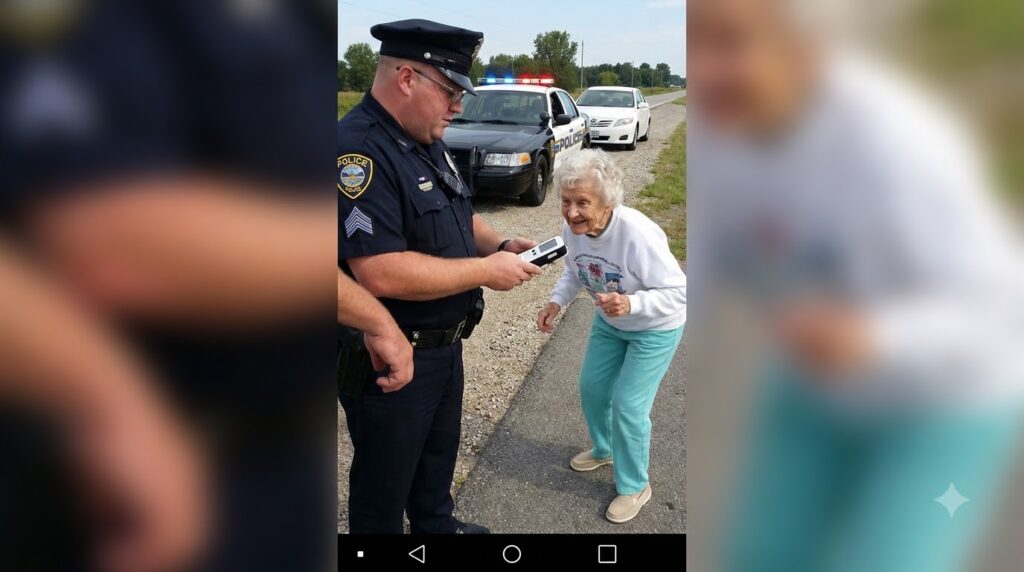
The cardboard backing of the yellow citation pad snapped against Miller’s palm with a sound like a dry branch cracking in winter. He didn’t unclip his pen. He held the pad high against his navy chest, using his broad shoulders to block Evie’s view of the text pre-filled across the top voucher.
“Refusal to complete a secondary field assessment under suspected thermal sensor fault,” Miller said, reading the phrase off the paper like a judge pronouncing a sentence. His voice had lost its panicked edge, flattening into the rigid, rehearsed drone of a man seeking safety inside bureaucracy. “Vehicle subject to immediate ninety-minute administrative hold until a secondary transport officer arrives with a calibrated stationary unit.”
Evie didn’t look at his face. Her eyes remained locked on the yellow pad. Through the thin, carbonless top copy, she could see the heavy blue-ink impression Miller had pressed into the sheet long before he ever flipped his emergency lights on. The date at the top wasn’t today’s date. It was stamped three days prior, under the header: County Secondary Impound & Right-of-Way Inspection Protocol.
The Decoy Secret sat right there in plain ink—Miller’s official cover story. He wasn’t just claiming her breath test was invalid because the roadside tester had overheated in his trunk; he was utilizing a pre-issued heat-fault waiver to declare her vehicle mechanically unserviceable and force her car off the shoulder and into the county impound lot.
“You wrote that citation before I left the grocery store, Miller,” Evie said quietly.
“I’m exercising administrative discretion under County Code Four-Twelve,” Miller snapped, his thumb pressing down hard over the pre-stamped impound order. “Your breath sample is void. The sensor cell overheated. That makes your legal status unconfirmed, and an unconfirmed driver doesn’t put four thousand pounds of steel back on Route Nine.”
“The sensor cell didn’t overheat,” Evie said. She stepped past his right arm, ignoring his heavy gasp as she reached straight for the window frame of his cruiser. “And that paper in your hand isn’t about my driving.”
“Stay back from the cruiser!” Miller shouted, his heavy frame shifting sideways to block her, his duty belt clattering loudly against the door frame. “Deputy, secure her!”
The young deputy took two fast steps across the gravel, but he didn’t grab Evie. He stopped right beside the open driver-side window, his eyes falling directly onto the floorboard where the manila folder had landed when Miller knocked it off the dash. The folder had spilled open against the transmission hump.
Prominently displayed across the top blueprint was a bold red stamp from the State Highway Administration: EASEMENT DENIED – PRIVATE RESIDENTIAL TITLE PREVAILS.
The deputy froze. He looked at the red stamp, then at the yellow citation pad in Miller’s hand, then at Evie, whose face remained entirely unbothered.
“Sergeant,” the deputy said, his voice dropping into a tight, flat strain. “The easement on parcel T-14 isn’t cleared. The state turned down the county’s right-of-way expansion last week.”
Miller’s head snapped around toward the kid, his eyes bulging behind his sweat-smudged spectacles. “Shut your mouth, Millerson! Step back to your vehicle!”
“He can’t shut his mouth, Miller,” Evie said softly, her voice carrying a dry, terrible clarity. “Because the clerk behind you has had his phone live-streaming to the county community board for the last four minutes.”
Ten yards away, the store clerk leaned even farther out the window of his flatbed, holding the phone with both hands now, a cold, mocking grin spread across his sun-burned face. “Three hundred people watching live, Sergeant. They’re really enjoying the part where you try to impound a seventy-eight-year-old’s Buick because her late husband wouldn’t sell you forty feet of ditch.”
Miller turned back toward Evie, his jaw working silently. The yellow citation pad shook in his grip. The sweat on his forehead was pouring freely now, running down his nose and dripping onto the yellow paper, smudging the blue ink of the pre-filled impound order.
His official line of defense—the heat-faulted breathalyzer, the administrative safety hold, the procedural necessity—had crumbled completely under the weight of the spilled folder and the live video feed. He stood exposed on the hot limestone shoulder, a man holding a false document in front of three witnesses and a camera.
“You’re going to hand me my license, Sergeant,” Evie said, taking one small, firm step forward until her soft graphic sweatshirt was less than six inches from his navy chest. “And then you’re going to explain to the sheriff why you’re using county paper to settle a private real estate grudge.”
Miller looked down at her. For fifteen years, his authority had been absolute because no one on Route Nine ever called his bluff. No one ever looked past the badge to see the small, frightened clerk underneath who needed his brother-in-law’s road project to pass so he could pay off his mortgage.
He didn’t hand her the license.
In a final, desperate attempt to regain control of the scene, Miller shoved the yellow citation pad into his belt, grabbed the portable breathalyzer off the hood, and turned toward his open driver-side door.
“Vehicle is being impounded under Code Four-Twelve,” Miller growled, his voice thick with unreasoning malice. “Key handover is mandatory. Step away from the door, Mrs. Harper, or I will physically remove you from the roadway.”
He reached for his handcuffs.
Evie didn’t back up. She didn’t flinch. She bent her knees once more, her posture dropping into that same nimble, springy stance.
“Try it, Miller,” she whispered.








