CHAPTER 3: THE IMPRINT OF THE STAKE
The white county truck didn’t clear the corner softly. It bounced over the asphalt apron of the cul-de-sac, its rear utility racks clattering with the heavy, rhythmic iron chime of iron T-bars and zinc-coated tripods. When the brakes caught, the front bumper dipped within an inch of Aaron’s rusted flatbed trailer hitch, forcing the grey water pooling around the tires to splash up against the white-painted quarter panels.
A man in a thick canvas jacket climbed down from the cab. He didn’t lock his door; he left the diesel engine chugging, a wet, mechanical vibration that matched the pulse of the water still bubbling from the split in the blacktop. He carried a heavy leather map case under his arm, its strap reinforced with unpolished brass rivets that had turned green around the edges.
“Miller?” the surveyor asked, squinting through the light, salt-heavy drizzle. He had the dry, leathery skin of someone who had spent thirty years tracing old colonial deeds through the overgrowth of the county line.
Miller took his hand off the cold steel rail of Aaron’s trailer. He nodded once, shifting his weight to the ball of his right foot, keeping himself positioned directly between the surveyor and the gray plastic work crate holding the unsealed deed folder. “The brass pins are in,” Miller said. “But we have an access problem on the municipal side.”
“I see it,” the surveyor muttered. He walked toward the rear axle of the trailer, his heavy boots leaving deep, dark imprints in the wet silt washing down the slope. He stopped exactly where the grey trickle emerged from beneath the tires, his gaze sliding down to the pile of broken concrete blocks Aaron had dumped over the utility cap. He dropped a heavy steel measuring tape onto the pavement with a sharp, metallic clack. “This is the entry sleeve for the district water main. Who authorized the aggregate dump on top of the inspection valve?”
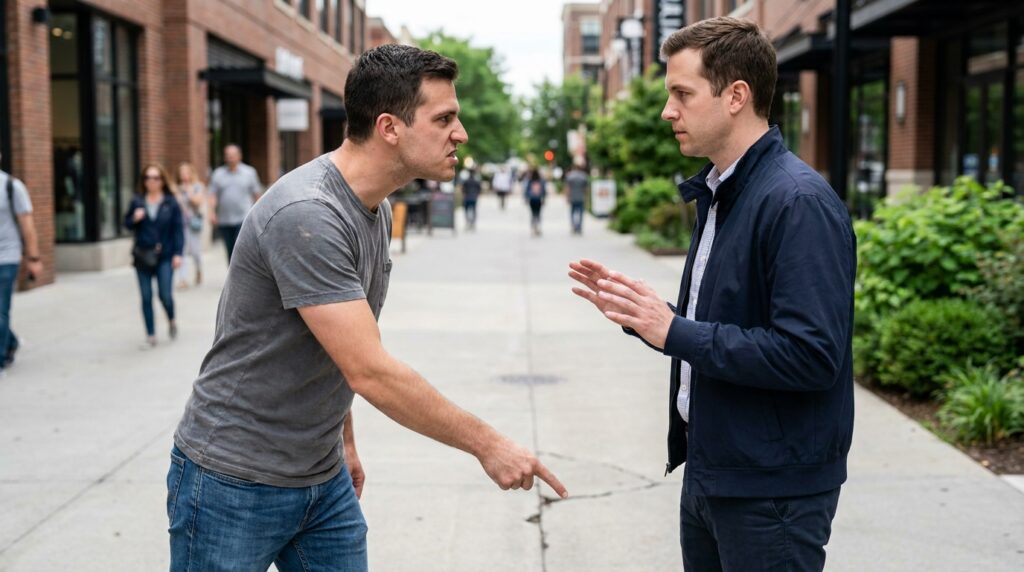
“Nobody authorized anything,” Aaron snapped, stepping out from the hedge line. His t-shirt was thoroughly soaked now, clinging to his ribs, but his jaw remained locked in that same aggressive forward lean. He pointed his finger directly at the surveyor’s leather case. “The main line runs six feet to the north, under Miller’s gravel strip. My uncle watched the county lay the lateral in seventy-two. You’re reading the wrong grid lines.”
The surveyor didn’t look up from his tape. He knelt in the mud, his canvas coat scraping against the rusted frame of the trailer as he reached beneath the axle. His fingers came back slick with a thick, orange slime—iron bacteria from a pipe that had been leaking far longer than three days. He wiped his hand on a clean rag, then unbuckled the leather case, pulling out a heavy, blue-printed linen sheet that had been varnished against the weather.
“Your uncle didn’t have to sign the industrial easement bonds in eighty-four, neighbor,” the surveyor said, his voice flat, dry, and unyielding. He laid the map flat across the top of Miller’s plastic crate, right next to the yellow surveyor string. “The lateral shifts forty degrees at the property seam. It goes right through this concrete walkway. And according to the township deed revision, anything within four feet of this pin is an open utility lane.”
Miller walked closer, his boots steady against the concrete. He didn’t look at Aaron’s face; he looked at the blue linen print. His eye caught a specific, handwritten annotation from 1954, scrawled in faded red ink near the margin of the plot. There was a small symbol—a crossed key—drawn right over the intersection of their property lines. He felt the cold shape of the old brass key in his pocket, its weight suddenly feeling three times heavier against his hip.
“Look here,” Miller said, his finger coming down on the map just short of the red ink marker. “The main valve isn’t just a shut-off. There’s an unmapped connection point listed under the old district code.”
Aaron stepped forward, his body crowding the space between Miller and the surveyor. He didn’t look at the map; he used his shoulder to block Miller’s line of sight, his face less than six inches from Miller’s jacket collar. “You don’t touch that folder, Miller. You don’t have the authorization to review the township utility deeds. That’s private infrastructure until the county serves an enforcement notice.”
The delivery driver from the gravel truck let out a short, sharp blast on his air horn, the sound shattering the quiet of the residential lane. Several porch watchers three houses down shifted their positions, their silhouettes dark against the screen doors as they watched the three men cluster around the work crate.
“I don’t need an enforcement notice to clear an obstruction during an active discharge, son,” the surveyor said. He reached into the back of his truck and pulled out a four-foot iron pry-bar, its tip sharpened to a blunt chisel edge. He drove the iron tool into the pile of concrete blocks under Aaron’s trailer, the impact sending a shower of gray stone dust over Aaron’s boots. “We’re pulling this rig out of the lane right now. If the hitch snaps, it’s a municipal liability waiver.”
Aaron didn’t back up. He reached out and grabbed the shaft of the surveyor’s iron bar, his knuckles turning dark red against the rusted metal. “You touch this trailer, and I’m calling the district supervisor. I know exactly who signed your field warrant.”
Miller watched the water bubbling faster now from the split pavement, the grey silt turning into a thick, dark slurry that was beginning to undermine the very spot where Aaron was standing. He didn’t intervene; he simply turned his head toward his own roofline, where the small blue light of the security camera continued its silent, rhythmic blink, capturing every inch of the contact.