
CHAPTER 7: THE BOUNDARY STAYS RIGHT WHERE IT IS
The gravel gave a low, dull crunch beneath Mark’s boots as he reached the mouth of the open garage bay. He stopped, his hand resting on the cool aluminum frame of the overhead door, and looked back down the length of the driveway.
The wind had shifted out of the north, carrying the sharp, clean scent of damp cedar and wet pine needles off the ridge. Down at the property edge, the waist-high chain-link fence sat perfectly straight—a silver grid of galvanized steel catching the pale, filtered sunlight. The top rail ran level and unbent from the street curb to the rear alley post, dividing the world into two distinct, unquestionable realities.
At the corner post, the dark patch of earth Mark had cleared with his boot remained exposed. Four inches beneath the damp sod, the heavy brass face of the thirty-year-old surveyor’s pin caught a sliver of grey light. It didn’t gleam; it sat dull, oxidized, and indifferent—a cold piece of metal anchored deep into the bedrock long before either house had been built, and bound to remain there long after the paint peeled from the siding.
Kilo sat unbidden at Mark’s left side, his dark muzzle level with Mark’s knee. The shepherd’s ears were forward, his dark eyes watching the quiet expanse of the yard. There was no tension in the dog’s shoulders now, no tight hum of adrenaline vibrating along his spine. The working collar sat loose against his coat, its heavy brass ring dull against the dark fur.
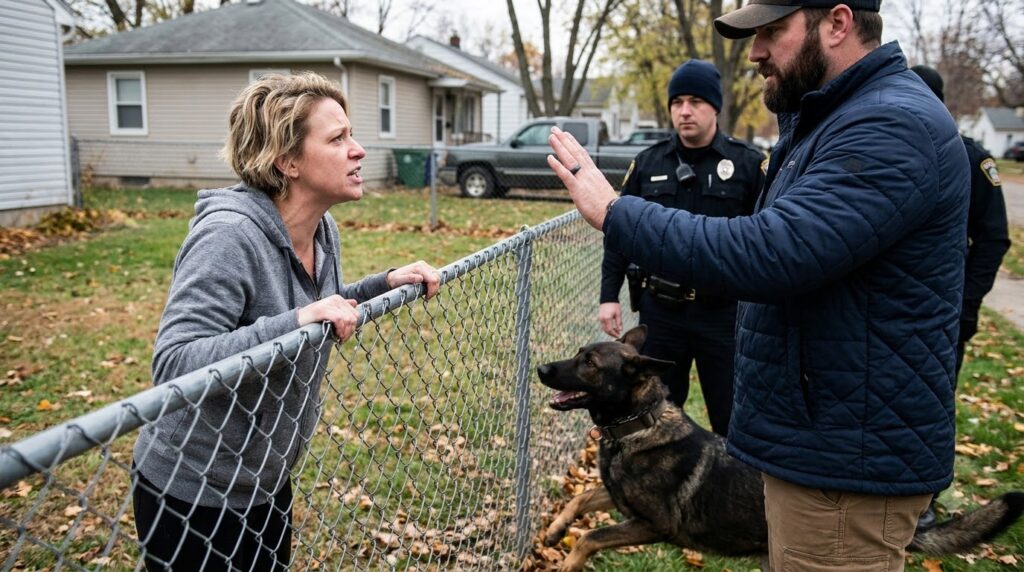
Across the fence line, Lot 13 was silent. The grey zip hoodie and short blonde hair were gone from the porch steps. The heavy cream paper with its fake red seal lay somewhere inside behind closed blinds, rendered useless by the cold blue geometry of the county plat map. Beyond the kitchen window, the edge of Brenda’s back patio sat half-buried under loose soil—three unpermitted feet of cracked concrete resting square on public drainage land, waiting for the inevitable arrival of a municipal inspector’s orange tape.
Officer Davis stood near his cruiser at the curb, adjusting his dark knit cap before opening the driver’s door. He offered Mark a brief, two-finger salute across the roof of the vehicle—a quiet, unspoken acknowledgment between men who understood that real authority required neither shouting nor performance. The cruiser door clicked shut, the engine turned over with a low rumble, and the car pulled smoothly away from the curb, leaving Maple Street in absolute stillness.
Mark looked down at Kilo, unclipping the short lead from his collar with a familiar, metallic snap. He looped the leather strap over his shoulder and rested his palm flat on the dog’s broad head.
“Good boy,” Mark murmured.
He didn’t check his phone. He didn’t write a note or look for a witness to validate what had happened at the fence line. A man’s life wasn’t measured by the noise he made when challenged, nor by the legalistic illusions others constructed to cover their own soft ground. It was measured by the quiet discipline of knowing where his boundaries lay, and having the fortitude to plant his feet when the wind blew against them.
Mark reached for the handle of the garage door and pulled it down. The rollers track-glided smoothly along the steel rails with a heavy, satisfying thud as the bottom rubber seal pressed flat against the concrete apron, sealing out the damp autumn draft.
Outside, the chain-link fence stood silent in the quiet neighborhood. The rusted brass pin remained buried in the mud, cold and unyielding beneath the turning leaves, holding the line precisely where it belonged.
The boundary stayed right where it was.








