
CHAPTER 6: THE CLEAR REFLECTION
The thrumming vibration of the industrial sump pump hummed through the soles of my shoes, a steady, rhythmic heartbeat against the damp concrete patio.
Three days had passed since the yellow surveyor stakes were driven into the turf along the fence line. Three days of quiet, mechanical labor. The commercial remediation crew had worked in silence, running thick corrugated hoses from the deep end through the side gate, siphoning thirty-five hundred gallons of corrupted water out to the storm main on the street.
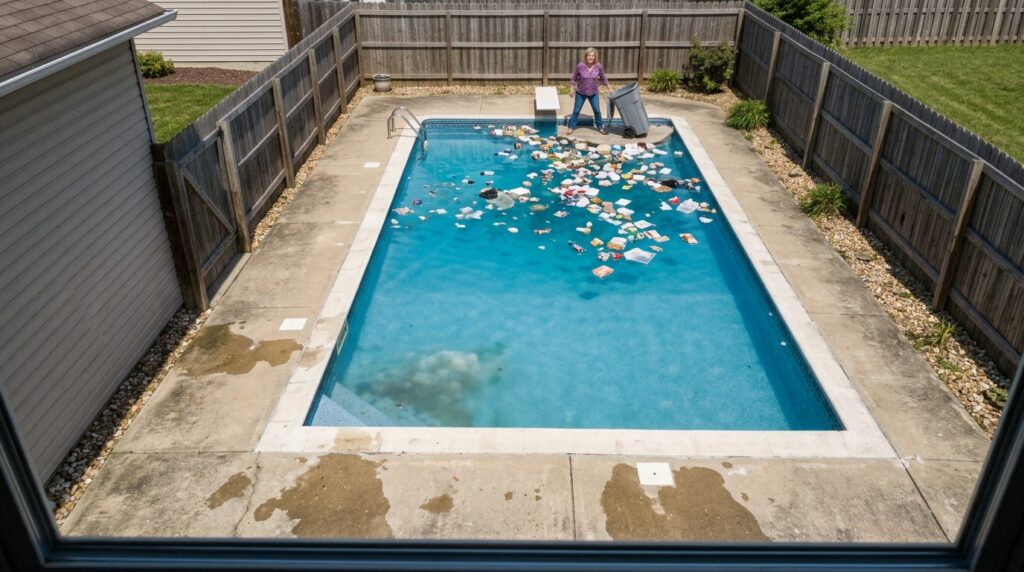
I stood by the edge, watching the last inch of dark, oily sludge slide down the sloping blue vinyl liner toward the main drain. The plastic trash cart was gone, taken into evidence by Officer Miller’s department along with the unedited 4K security file and the forged yellowed page. The floating cardboard, the coffee grounds, the sour milk cartons—all swept away into heavy biohazard drums.
Across the property line, the silence was absolute.
Evelyn’s garage door remained closed, its white paint chalky and peeling along the bottom panel. Along her retaining wall, where Vance had discovered the iron-stained clay seepage, two bright orange county notice tags hung taped against the stone, fluttering softly in the afternoon breeze. The structural order was official: an immediate mandate for professional underpinning and foundation repair, issued directly to her insurance carrier under strict civil code compliance. There would be no secret erosion, no shifted blame, and no forged covenants to mask the decay beneath her floor.
The head technician from the pool service stepped up beside me, pulling off his heavy rubber gloves with a dry snap.
“Liner washed down, sanitized, and sealed,” he said, wiping sweat from his forehead with a blue shop towel. “Pumps flushed out with fresh filters. We’re running the fill hose now. Give it about six hours, and you’ll be back to crystal clear.”
“Thank you,” I said, handing him the signed work order. The total on the invoice was steep—nearly four thousand dollars for emergency remediation, pump overhaul, and chemical balance—but the court restitution filing was already attached to Evelyn’s citation record. Every cent would be recovered through legal channels, backed by the undeniable weight of physical evidence.
As the technician walked back to his service van, I stepped over to the wooden side gate. A local contractor had repaired the frame yesterday morning, replacing the shattered cedar post with a solid four-by-four timber, bolted deep into the concrete footing with heavy galvanized steel bracketry. The new latch was thick, forged iron, dropping into place with a firm, decisive clack that echoed with absolute authority.
I pulled the gate closed and threw the deadbolt.
I walked slowly back toward the pool edge. The heavy blue fill hose was already churning out a steady, forceful stream of fresh, clean city water into the shallow end. It rippled outward in translucent blue circles, washing away the last lingering scent of damp garbage and stale grease, replacing it with the clean, crisp smell of fresh water hitting sun-warmed tile.
I looked up toward the second-story bedroom window. The glass reflected the pale afternoon sky, clear and unbroken.
There was no shouting match on the lawn, no lingering bitterness, no need for vengeance. The boundary had been drawn—not with anger or elevated voices, but with cold, unyielding facts, legal clarity, and the quiet dignity of a space reclaimed.
I sat down on the edge of the patio coping, dipping my bare feet into the cool, rising water. As the pool filled, the surface smoothed out into a mirror, reflecting the sky, the new gate, and the peaceful, unbroken solitude of a home restored.








