
Chapter 5: The Meeting Nobody Expected
Three weeks later, the neighborhood association held its monthly meeting.
Karen arrived early.
So did Daniel.
Neither spoke.
The room filled slowly.
Older homeowners sat beside young parents. People who had argued online now sat across from one another in person.
The Halloween incident was the first item on the agenda.
Daniel expected another confrontation.
Instead, Karen asked to speak.
She stood at the front of the room, holding a folder.
“I was angry,” she said.
Nobody interrupted.
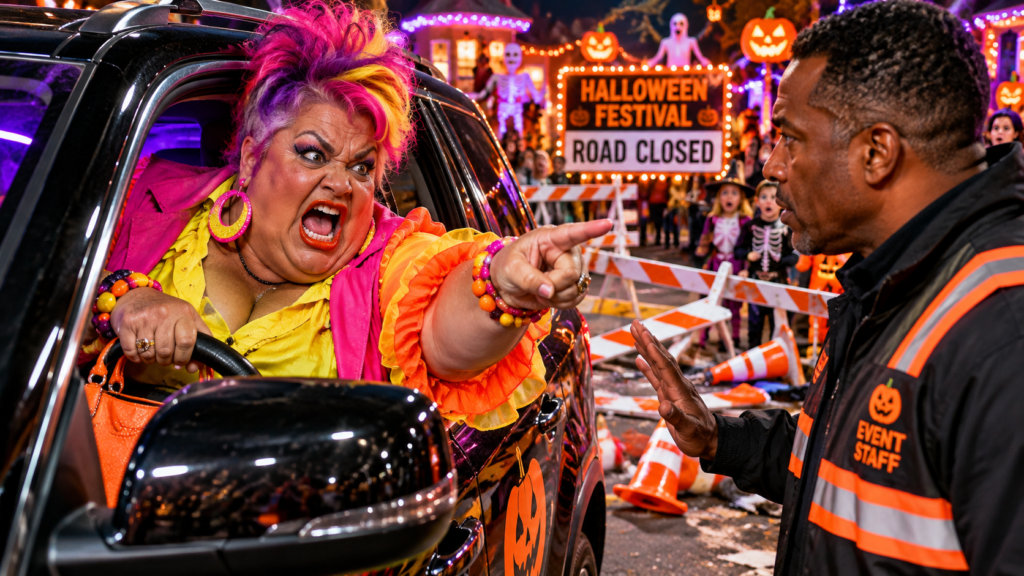
She admitted she had seen the road-closure sign.
She admitted she had driven through the first barrier.
But then she added something Daniel had not expected.
“I still think residents should have a better way to get home during events.”
That was different.
It was no longer an accusation.
It was a request.
Daniel asked what she wanted.
Karen opened the folder.
She had collected complaints from other residents about past events: unclear detours, blocked driveways, confusion about parking, and poor communication about closure times.
Some complaints had nothing to do with her.
That mattered.
Karen had taken the original conflict and, instead of simply repeating her anger, gathered information.
The association discussed the issues.
A new system was proposed.
For future festivals, residents on affected streets would receive notices several days earlier. A volunteer would monitor the detour entrance. Temporary parking permits would be available for residents who needed access before the closure began. The committee would publish the exact closure window online and on printed notices.
Nobody declared Karen right.
Nobody declared Daniel wrong.
Something more useful happened.
They separated the legitimate question from the unacceptable action.
A resident could object to a road closure.
A resident could ask for better access.
A resident could challenge a community decision.
But none of those rights meant driving through a barricade.
The meeting ended after nine.
Karen stayed behind.
Daniel was stacking chairs when she approached.
“I don’t like you,” she said.
Daniel almost smiled.
“I figured.”
“But you were right about one thing.”
“What?”
She looked toward the empty meeting room.
“The road wasn’t mine.”
Daniel nodded.
Karen picked up her handbag.
“Still think your signs are terrible.”
This time, Daniel laughed.
It was the first moment all evening that didn’t feel like a fight.
But there was still one unfinished matter.
The association had not yet decided whether Karen would be allowed to volunteer at the next community event.
And Karen had already submitted her name.








