Chapter 7: The Truth Behind the Broken Washing Machine
Karen’s daughter, Rachel Whitmore, was twenty-six and lived in Dayton.
She worked as a respiratory therapist and rarely visited Willow Creek Drive.
Daniel knew her only vaguely.
He remembered seeing her during holidays and occasionally helping her carry luggage when she visited her mother.
Rachel sounded embarrassed when she called.
She explained that she had learned about the incident from a relative who attended the neighborhood meeting.
She had also spoken with her mother.
Karen’s version of events had changed several times.
Rachel wanted to understand what had actually happened.
Daniel told her he was uncomfortable discussing an active dispute without his attorney’s advice.
Rachel understood.
She wasn’t calling to negotiate.
She wanted to apologize for the disruption and share something that might help Daniel understand the situation.
Karen’s washing machine had indeed stopped working.
But it had not broken suddenly three days before the incident, as Karen claimed.
According to Rachel, it had been malfunctioning for months.
A repair technician had recommended replacing a worn component.
Karen refused the repair estimate.
She then asked Rachel to pay for a new washing machine.
Rachel declined because she had recently paid several of her mother’s overdue household bills.
The disagreement became heated.
Karen accused Rachel of abandoning her.
Rachel eventually stopped answering the repeated demands.
Daniel listened quietly.
The information didn’t excuse Karen’s behavior.
But it suggested that the laundry-room confrontation was part of a larger pattern.
Karen had a problem.
She expected someone else to solve it.
When they refused, she treated their refusal as an offense.
Rachel explained that her mother had always struggled with boundaries.
As a child, Rachel remembered Karen borrowing belongings from relatives and becoming angry when asked to return them.
She remembered family gatherings ruined by arguments over money, favors, and perceived disrespect.
Yet Rachel also remembered a mother who worked long hours when she was young, volunteered at school events, and could be fiercely protective.
The contradiction had shaped much of Rachel’s adult life.
She loved her mother.
But she no longer allowed that love to become an unlimited obligation.
Daniel recognized the same distinction his father had written about.
Compassion did not require surrendering control over one’s life.
Rachel asked whether Daniel intended to ruin Karen financially.
He answered carefully.
He had no interest in revenge.
He wanted the damage addressed and the boundary respected.
Rachel seemed relieved.
Before ending the call, she said something Daniel remembered for days.
Her mother had spent so many years winning arguments by exhausting other people that she had forgotten how to accept a reasonable refusal.
Afterward, Daniel informed Rebecca about the conversation.
Rebecca advised him not to involve Rachel further.
The dispute was between Daniel and Karen.
Rachel should not be placed in the middle.
Daniel agreed.
The following week, settlement discussions began.
Karen initially resisted acknowledging that she had entered the laundry room without permission.
Her attorney explained that any agreement would need to reflect facts both sides could accept.
Daniel refused to sign a statement describing the incident as a misunderstanding.
It had not been a misunderstanding.
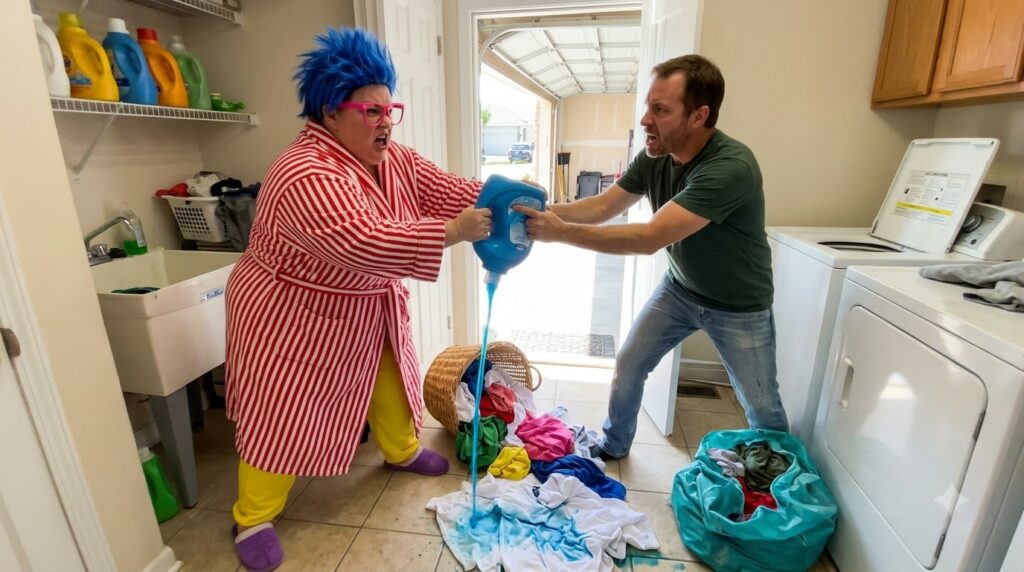
Karen had entered his house, overturned his laundry, and poured detergent onto his clothes.
He would not erase those facts to make the agreement more comfortable.
Negotiations stalled.
Then Rebecca proposed a narrower approach.
The agreement could state that Karen had entered Daniel’s garage and laundry room without his express permission, that Daniel’s clothing had been damaged during the incident, and that Karen would reimburse documented cleaning and replacement costs.
It could also require Karen to retract her allegations that Daniel had assaulted or threatened her, without forcing her to make a broad public confession.
Finally, it could include a written no-entry commitment.
Karen would not enter Daniel’s property without express invitation or another lawful basis.
Both sides would refrain from further harassment.
Daniel reviewed the proposed terms.
They were practical.
They addressed the harm.
They did not require either person to pretend the incident had never happened.
But Karen still resisted one provision.
She didn’t want to withdraw her public accusations.
Rebecca explained that Daniel would not settle while false allegations remained attached to his name.
Several more days passed.
Then Susan Bell issued the association’s promised correction.
It was sent to every household and posted in the neighborhood group.
The notice stated that the board had not authorized the warning distributed against Daniel and had found no basis for association discipline.
It also clarified that residents had no general right to enter another homeowner’s private property or use household equipment without permission.
The notice did not name Karen as a criminal.
It did not speculate about her motives.
It simply corrected the record.
Neighbors began responding.
Some apologized to Daniel for believing the original accusations.
Others thanked the board for clarifying the association’s authority.
Karen’s public narrative had lost its foundation.
Two days later, her attorney contacted Rebecca.
Karen was prepared to withdraw the allegations and sign the agreement.
Daniel should have felt relieved.
But when Rebecca sent him the final draft, he noticed one sentence that mattered more than the payment amount.
Karen acknowledged that she had entered his laundry room without his permission.
For Daniel, those words represented the real turning point.
Not because they humiliated Karen.
Because they recognized that his home belonged to him.