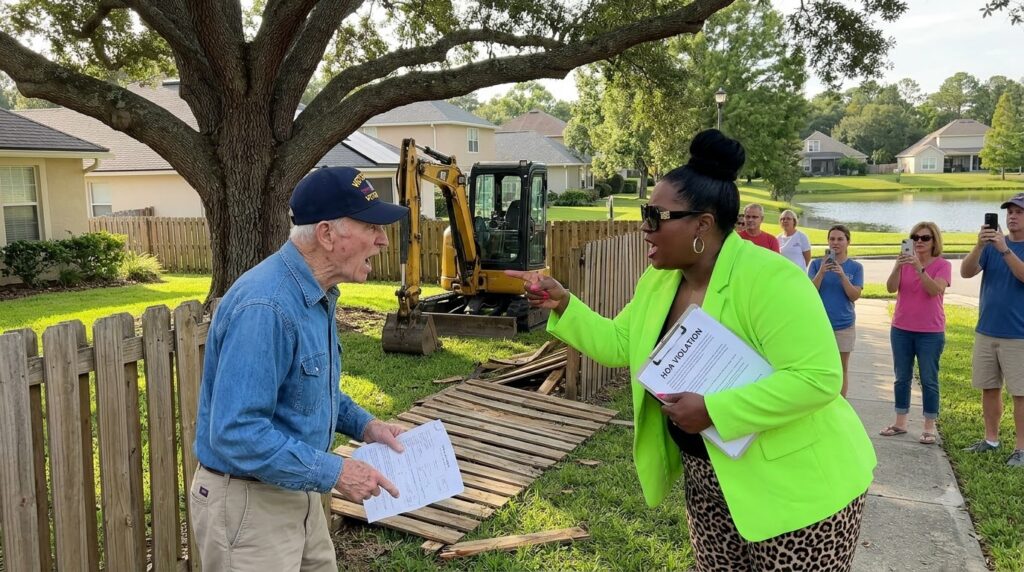
Chapter 7: The Price of a Million-Dollar View
Patricia Whitmore had spent years cultivating the appearance of success.
Her house was the largest on Willow Creek’s eastern shore.
Its white columns, elaborate landscaping, and broad balcony made it look like something from a luxury real estate advertisement.
She hosted charity luncheons, served on committees, and frequently reminded neighbors that property values depended on maintaining high standards.
But behind the polished image, her finances were less impressive.
The independent audit, commissioned after the board’s special meeting, began uncovering irregularities.
The accountants examined contracts, bank records, payment approvals, and vendor relationships.
Their preliminary findings identified unsupported expenditures, inadequate approval procedures, and multiple transactions involving Whitmore Property Solutions that required further investigation.
The board retained separate legal counsel to advise it about potential conflicts of interest and recovery of association funds.
Patricia resisted the review.
She argued that her leadership had improved the community.
She claimed critics were attempting to embarrass her.
She accused Charles of disloyalty.
But the documents continued to accumulate.
Her brother’s company had received payments for consulting services that lacked adequate supporting records.
Some invoices contained vague descriptions.
Several projects appeared to have been approved without the votes required by the governing documents.
The auditors also found that the association had been billed for a tree inspection supposedly conducted before Walter’s fence was destroyed.
The inspection report could not be located.
The arborist named on the invoice denied performing an inspection at Walter’s address.
Thomas shared that information with the appropriate authorities through the proper channels.
He cautioned Walter that a financial investigation could take months and that conclusions about criminal wrongdoing belonged to investigators and courts.
Walter accepted that.
He wanted accountability, not rumors.
Meanwhile, Rebecca discovered that Patricia had quietly listed her house for sale.
The asking price was just under two million dollars.
The listing described panoramic lake views and extensive landscaping improvements.
Its photographs had been carefully framed to minimize the oak tree’s presence.
Rebecca showed the listing to Walter.
He studied the glossy images.
He remembered Patricia pointing toward the lake while shouting that Margaret was not her problem.
For Patricia, the oak was an obstacle to a sale.
For Walter, it was part of the family.
That difference explained nearly everything.
The dispute took another turn when Daniel Price’s employer provided a complete copy of its communications with Whitmore Property Solutions.
The records showed that Patricia had repeatedly urged the contractor to complete the removal quickly.
She had described Walter as an uncooperative homeowner who had already been notified.
She also instructed the company not to contact him directly.
Daniel’s employer acknowledged that its crew should have verified the property boundaries and authority before beginning work.
The company agreed to cooperate with Walter’s claim for the fence damage.
That admission mattered.
Walter had never wanted Daniel to lose his livelihood.
The operator had stopped when he understood the situation.
But the company had still sent machinery onto private property without adequate verification.
Responsibility could not disappear simply because someone else had given the order.
The legal case moved into a more complicated phase.
Patricia’s attorney initially sought to dismiss Walter’s claims.
Thomas opposed the motion with the property records, witness statements, and communications already obtained.
The court allowed the central property-damage and related claims to proceed.
The association’s new counsel began discussing settlement.
Walter wanted the fence restored, his legal expenses addressed, and a binding assurance that the HOA would not attempt to remove the tree under the rejected view-protection theory.
He also wanted the association to correct the false notices.
Rebecca asked whether he wanted compensation for emotional distress.
Walter considered it.
He had suffered sleepless nights.
He had relived Margaret’s final months while watching strangers argue over the value of her tree.
But he did not want his grief turned into a price tag.
He told Thomas to pursue whatever remedies were legally appropriate, while keeping the focus on protecting his property and making the damage right.
Then the audit report reached the homeowners.
Its findings were serious enough that several board members called for Patricia’s removal from the presidency under the association’s bylaws.
A special meeting was scheduled.
For the first time since Patricia had taken control of Willow Creek, her authority would be tested by the people she claimed to represent.
Walter did not celebrate.
He had seen too many disputes become personal wars.
He wanted the neighborhood repaired.
But before it could heal, the truth had to be faced.