Chapter 4: The Money Nobody Could Explain
Robert Ellis arrived at Laura’s house the following morning carrying a worn leather briefcase.
He was seventy-two, a retired accountant with neatly combed silver hair and the patient manner of someone accustomed to examining numbers other people preferred to ignore.
Thomas recognized him immediately.
Robert had lived in Magnolia Pines for more than a decade before moving to a smaller condominium near his daughter.
He had served as HOA treasurer until a disagreement with Brenda ended his involvement.
Robert placed the briefcase on Laura’s dining table.
Inside were copies of meeting minutes, financial summaries, correspondence, and several spreadsheets.
He explained that the trouble had started eighteen months earlier.
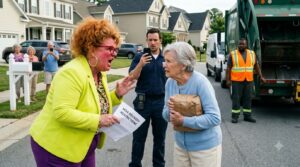
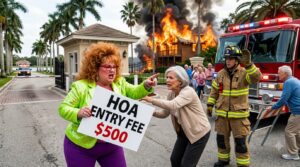
Brenda had proposed a new category of penalties called emergency compliance assessments.
According to her proposal, the HOA needed stronger enforcement tools to address urgent threats to community standards.
The board approved a limited version of the policy.
It was intended for genuine safety hazards, such as dangerous debris blocking access roads or abandoned structures presenting immediate risks.
But Brenda began applying the language much more broadly.
Unapproved porch decorations became emergency violations.
Parking disputes became emergency violations.
Minor landscaping disagreements resulted in immediate financial penalties.
Robert objected.
He requested documentation showing how the penalties were assessed and where the money was deposited.
Brenda provided incomplete answers.
When he pushed harder, she accused him of undermining the board.
Eventually, he resigned.
Thomas studied the paperwork.
One document contained a list of fines assessed during the previous year.
The amounts were startling.
Two hundred dollars for an unauthorized bird feeder.
Three hundred dollars for a porch railing painted the wrong shade of white.
Four hundred dollars for a temporary wheelchair ramp installed before written approval was granted.
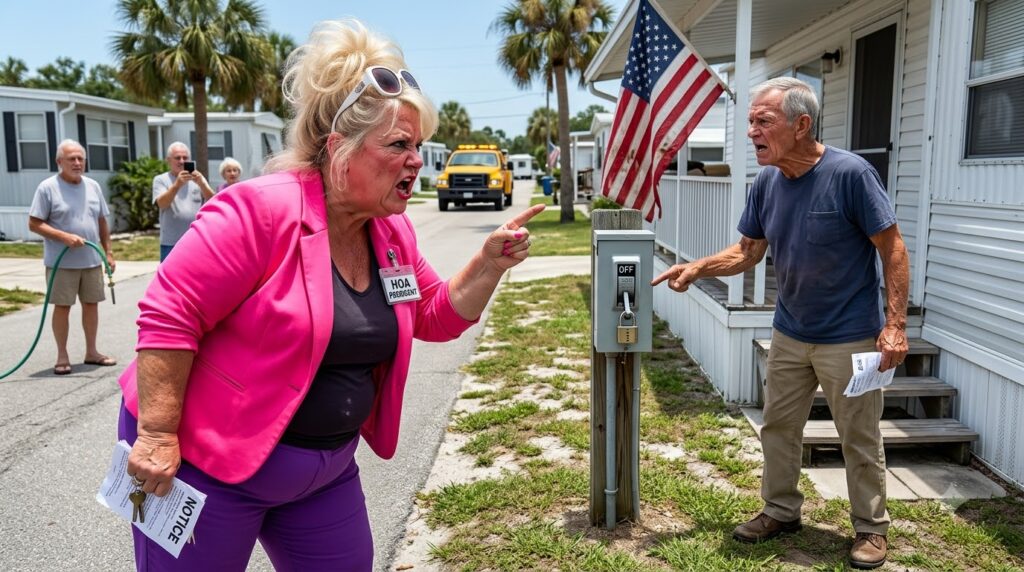
Five hundred dollars for displaying an American flag from a porch bracket.
Thomas recognized the last entry.
It was his own.
Laura examined the financial records.
Something did not add up.
The violation summaries showed more than thirty thousand dollars in assessed penalties over twelve months.
But the financial statements Robert had obtained accounted for substantially less in collected fine revenue.
That difference did not necessarily prove theft.
Some residents might never have paid.
Some fines could have been canceled.
Others might have remained outstanding.
But there should have been a clear record explaining the discrepancy.
Robert had never received one.
He also showed them a series of payments to a company called Whitmore Administrative Services.
The company had received monthly checks for consulting, compliance administration, and emergency enforcement support.
Laura searched Florida’s public business records.
Whitmore Administrative Services was registered to Brenda’s adult son, Kevin Whitmore.
Thomas leaned back in his chair.
“Does the board know about this?”
Robert shook his head.
“I asked. Brenda said it was none of my business.”
Laura knew enough about nonprofit governance to understand the importance of conflicts of interest and proper authorization.
A board member’s family business was not automatically prohibited from working with an association.
But such arrangements required appropriate disclosure, oversight, and compliance with governing rules.
The documents Robert had brought raised questions that deserved answers.
Laura suggested contacting an attorney experienced in Florida community association law.
Thomas agreed.
But he wanted something else first.
He wanted to know whether his neighbors understood what was happening.
That afternoon, he returned to Magnolia Pines.
The repair crew had restored his electricity shortly before noon.
The damaged disconnect component had been replaced, and the technicians had documented their findings.
Thomas walked through the house, relieved to hear the refrigerator running again.
He switched on the porch light.
Then he raised Margaret’s flag.
Across the street, Harold watched from his driveway.
Evelyn stood beside her mailbox.
Several neighbors emerged from their homes.
Nobody applauded.
Nobody made a speech.
But they stayed outside until Thomas finished securing the flag.
It was a quiet show of support.
Later that evening, Thomas received an email from the HOA management address.
The subject line read:
FINAL NOTICE OF NONCOMPLIANCE.
Brenda had increased his fine to one thousand dollars.
She had also scheduled an emergency board hearing to consider additional enforcement measures against his property.
Thomas stared at the screen.
The electricity was back.
But the fight was no longer just about keeping the lights on.
Brenda was trying to make an example of him before the rest of the community could organize.
And the hearing was only four days away.