
CHAPTER 4: THE DECOY DEPOSIT
“Don’t read what you don’t understand, Arthur,” Evelyn said.
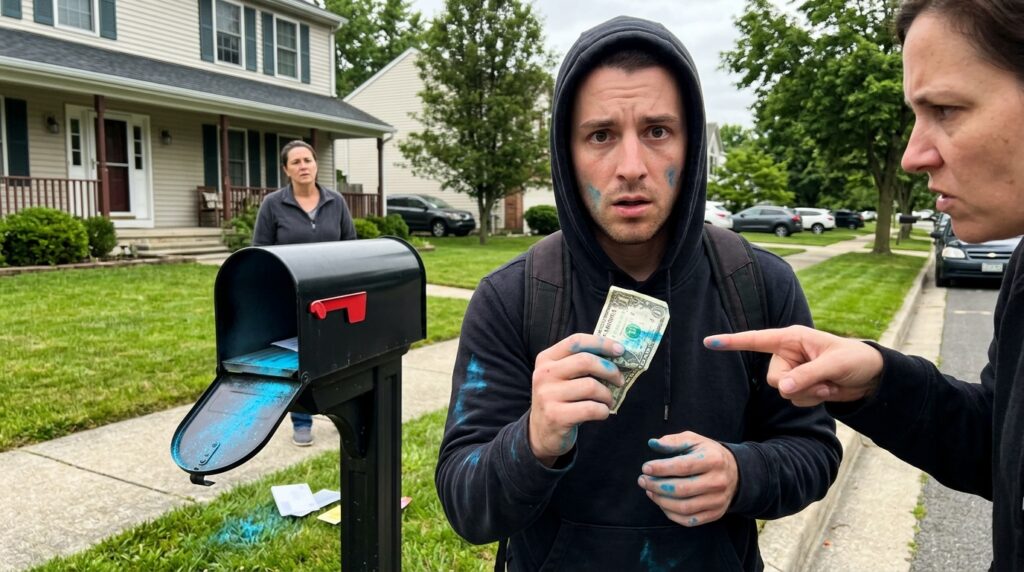
Her voice had dropped from a public screech into a tight, grating rattle. She took one step toward him, her blue-crusted hand twitching at her side before Inspector Miller’s outstretched forearm blocked her path like an iron gate.
“That slip is for an equipment liquidation account,” she hissed, her eyes darting toward the gathering neighbors on the sidewalk. “Edward didn’t own those tools when the shop burned. He’d leased them through my father’s trust. When the fire investigators closed the file, the carrier paid out to the primary lienholder. That’s me, Arthur. That’s my family’s money.”
Arthur didn’t blink. He smoothed the crumpled deposit slip against the stiff backing of his own palm, his thumbnail tracing the faint carbon trail beneath the red bank stamp.
“The shop burned in October,” Arthur said, his voice level, carrying over the idling hum of the inspector’s sedan. “The carrier closed the claim in January. Why is an endorsement check clearing through a regional branch forty miles away three days ago?”
“Because the probate court took eighteen months to clear the liability waivers!” Evelyn shot back. She turned toward Inspector Miller, her posture stiffening again as she tried to reclaim her administrative footing. “Inspector, this man is intentionally conflating private estate recovery with a postal matter. The check in that mailbox was a commercial draft issued to an inactive business entity registered at this address. Under municipal ordinance four-B, any mail delivered to an abandoned or unverified commercial point is subject to impoundment by the neighborhood board—”
“Mrs. Vance,” Inspector Miller interrupted. He didn’t look up from his metal clipboard as he recorded the deposit slip’s serial number in neat, block lettering. “Municipal ordinance four-B isn’t a federal law. And a private neighborhood board doesn’t have the authority to reach into a locked or unlocked residential box to intercept a draft, regardless of who it’s made out to.”
He clicked his pen once, the sharp metallic snap echoing against the asphalt.
“Furthermore,” Miller continued, turning his weathered face toward her, “this deposit slip shows a clearing draft from an insurance casualty group. But the endorsement stamp on the back of this voucher isn’t from an equipment lessor. It’s a second-party transfer.”
Evelyn’s breath hitched. She reached instinctively for her leather handbag, but Miller stepped neatly into her line of movement, his body positioning forcing her back onto the grass margin.
“A second-party transfer,” Arthur repeated softly. He turned the slip over in his hands. Embedded in the crease was a tiny, carbon-copy endorsement voucher, stained with moisture at the edge. “Who endorsed it over to you, Evelyn?”
“It’s an estate adjustment,” she said, though her words lacked the sharp edge they had two minutes ago. Her fingers pulled at the lapel of her patterned coat, smearing another faint haze of blue powder across the fabric. “It was signed by the executor.”
“Edward was the executor,” Arthur said. “And Edward was in a hospice bed in Saint Jude’s three days ago.”
A heavy silence settled over the driveway. Down the block, Mr. Henderson took a slow step off his lawn, his boots crunching on the loose gravel of the shoulder as he leaned forward to listen. Mrs. Gable hadn’t moved from her gate; her garden shears hung limp in her hand, forgotten.
Evelyn looked around the street, her eyes bouncing from one familiar face to another. For six years, she had run the subdivision association from her sunroom, issuing fines for unclipped hedges and parking violations, enforcing a rigid standard of suburban order. Now, standing on the curb with cobalt dye dried across her cheek and hands like a brand, the illusion of authority was stripping away piece by piece.
“He signed the authorization before he went into ICU,” she whispered, her voice faltering as she looked directly at Arthur. “He knew the debts were coming for this house. He gave me power of attorney over the casualty claims so the bank wouldn’t take the lot out from under you!”
She stepped closer, pointing a blue-stained index finger at Arthur’s chest.
“You think I took that money for myself?” she barked, her voice suddenly cracking into a raw, ragged strain. “I paid his back taxes! I paid the contractor who cleared the charred timbers out of the back lot after the town threatened to condemnation-lock the property! You were off working timber lines in Oregon while I spent every Tuesday arguing with county assessors to keep this roof over his head!”
Inspector Miller looked from Evelyn’s furious, blue-streaked face to Arthur’s quiet, stone-hard expression.
“Is that true, Mr. Vance?” Miller asked quietly. “Was she acting under a power of attorney for estate liabilities?”
Arthur didn’t answer right away. He reached into his shirt pocket and pulled out a small, folded piece of yellowed paper—a receipt from the county clerk’s office dated two months prior.
“The back taxes were paid, Inspector,” Arthur said, holding out the receipt. “By a cashier’s check drawn from my credit union account in Eugene. The tax lien was cleared in May.”
He looked Evelyn dead in the eye.
“So where did that casualty money actually go, Evelyn?” Arthur asked. “Because it didn’t go to the town. And it didn’t go to Edward’s care.”
Evelyn froze. Her blue fingers opened and closed against her coat, unable to form a word as the decoy logic she had built around the shop fire collapsed around her boots.
Inspector Miller reached down, picked up his portable radio from his belt, and raised it to his lapel.
“Control,” Miller said into the mic, his voice calm and methodical. “This is Inspector Miller, unit four-seven. Send a marked township unit to my location for a transport assist. We have a confirmed Section 1708 mail theft with secondary financial fraud indicators on site.”








