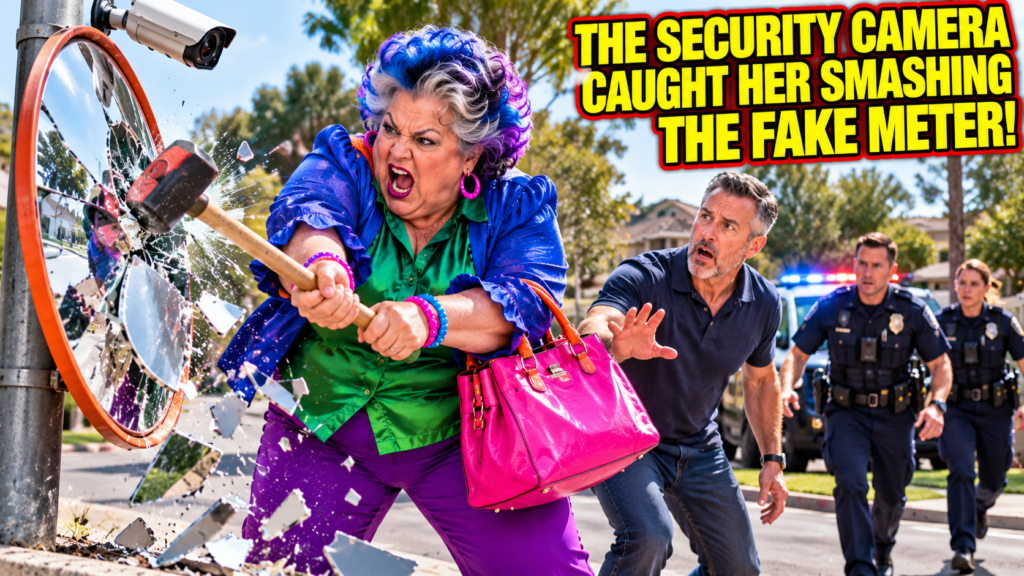
Chapter 6: What the Camera Could Not Decide
The neighborhood safety demonstration went ahead.
The genuine traffic mirror remained securely mounted, and the replacement dummy was used for the demonstration exactly as intended.
Marjorie watched from a distance.
She did not interfere.
Daniel noticed her but did not approach.
There was no dramatic reconciliation waiting for them. The damage had been real, and trust did not return simply because someone admitted a mistake.
But something important had changed.
Marjorie no longer looked at the camera as an enemy.
She looked at it as a reminder.
The camera had not decided that she was right or wrong.
It had not judged her.
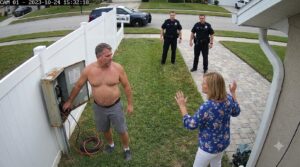
It had simply recorded what she chose to do when she thought nobody was watching.
Marjorie looked toward the intersection one last time.
The convex mirror reflected the street.
The camera watched from above.
And the neighborhood carried on around both of them.
She turned toward home.
Behind her, the real traffic mirror remained untouched.
So did the camera.
And for the first time, Marjorie understood that having no blind spot was not the same thing as having no privacy.
It meant something simpler.
In a shared community, what you choose to do still belongs to you—even when someone else happens to see it.