
The Fading Lines of the Delta: A Novel of Unbroken Memory and Lost Records

CHAPTER 1: THE WEIGHT OF THE LINE

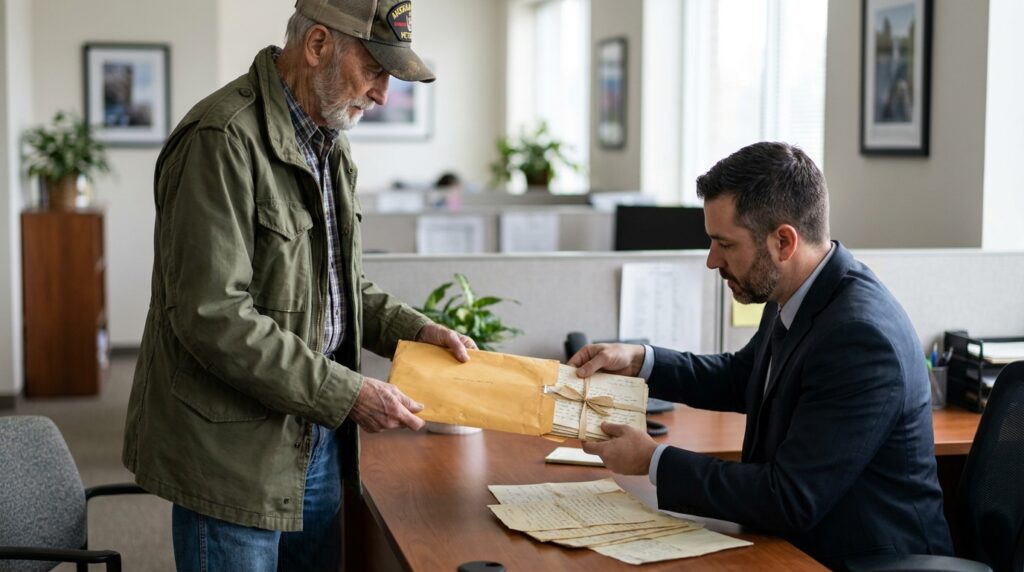
The air inside the Douglas County Administration Building smelled faintly of industrial lemon bleach and the heavy, sour dampness of forty citizens waiting in a room with a failing air conditioning unit. Arthur Vance adjusted his grip on the manila envelope. The paper was thick, compressed fiber, heavy enough to hold eighty-four pages of carbon-copied tactical logs and three hand-drawn topographical overlays, but against his ribs, it felt like cold sheet iron. He kept his thumb hooked over the bent brass prongs of the fastener. The metal was dull, scratched white at the curves from thirty years of sitting in a cedar footlocker beneath his winter blankets.

Behind him, a child let out a thin, persistent wail that scraped against the low hum of the fluorescent light ballasts overhead. Arthur didn’t turn around. His boots, an old pair of black leather issue with soles worn down to smooth, flat discs, stayed perfectly parallel to the yellow vinyl tape stuck to the industrial carpet. To his left, the beige wall was covered in framed portraits of county commissioners whose eyes had been bleached out by three seasons of unshaded morning sun.

“Number forty-two,” a flat, synthesized voice chimed from a small plastic speaker near the ceiling.

Arthur looked down at his right hand. The skin across his knuckles was thin as parchment, dotted with dark liver spots, but the fingers were steady. He wasn’t holding a ticket. He hadn’t taken one from the red dispenser by the security door because his hands had been full, and because forty years ago, a man didn’t need a slip of thermal paper to speak to someone behind a desk. His thumb pressed deeper into the manila paper, feeling the distinct, hard ridge of a small chunk of black grease pencil rolling around at the bottom of the sleeve. It was the exact same pencil he had used to mark the parameters of Fire Support Base Ryder when the monsoon had turned the red dirt into soup.

Two paces ahead of him, the line shifted. A young man wearing a neon utility vest and muddy work boots stepped away from Window 3, grumbling into a glowing smartphone.

Arthur took three slow, deliberate steps forward, the rubber of his heels clicking against the exposed metal transition strip at the edge of the carpet. He stopped exactly two inches from the high oak counter. The wood was old, its dark varnish worn completely away at the center where thousands of forearms had rested while waiting for titles, deeds, and death certificates.

Behind the glass, David Miller didn’t look up. He was forty, maybe forty-two, his dark hair cut short enough to show the neat, pale contour of his scalp above his ears. His charcoal suit jacket was draped over the back of an ergonomic mesh chair, leaving his white dress shirt crisp and free of wrinkles despite the midday heat. He clicked a mouse twice, his eyes tracking something across a dual-monitor display with the rapid, rhythmic twitching of a man who measured his life in transactions per hour.

“Next,” David said. His voice was smooth, institutional, completely devoid of friction. He reached for a stack of white printing paper without breaking his gaze from the blue light of the screen.

Arthur didn’t reach for the handout. He took his dark blue cap off his head, revealing a fringe of silver-gray hair that stayed pressed flat against his skull, and placed it neatly on the right side of the oak counter, the gold embroidered lettering facing the glass. Then, using both hands, he laid the heavy manila envelope down between them. The dull scratch of the paper against the wood was loud enough to make the woman at the adjacent window pause her typing.

“I brought these records,” Arthur said. His voice wasn’t loud, but it possessed a strange, dry resonance that seemed to drop the ceiling by six feet. “Because they deserve to be seen and remembered.”

David’s hand hovered over the white paper stack for a fraction of a second. He slowly turned his head, his gaze sliding down from the fluorescent light reflection on the glass, past the gold letters on the blue cap, until it settled on the thick, unyielding block of the envelope. His brow furrowed slightly, a sharp crease appearing between his trimmed dark eyebrows. He didn’t touch the paper. He simply leaned back into his mesh chair, his silver smartwatch flashing a green notification as his wrist hit the armrest.

“Sir,” David said, his tone dropping into the careful, measured pitch reserved for citizens who had wandered into the wrong department. “If this is a historical donation or a personal veterans’ claim, you’re on the wrong floor. We handle municipal land records and probate filings. You need the federal archives branch over on Fourth Street.”

Arthur didn’t pull the envelope back. He left his large, thick-knuckled hands flat on either side of the paper, his thumbs bracketing the brass clasp like a pair of sight alignment markers. Through the glass, he could see the tiny reflection of his own olive field jacket, a small patch of green canvas fraying at the pocket seam where an old combat infantryman badge had once been pinned.

“Fourth Street is closed, son,” Arthur said softly. “And these aren’t claims. These are coordinates.”


CHAPTER 2: THE REJECTED TETHER

The word coordinates fell into the space between them like a lead weight hitting stagnant water. David Miller’s fingers remained frozen over his mechanical keyboard, the small blue light from his computer monitor casting a pale, unnatural sheen across his high cheekbones. For three seconds, the only sound in the administration office was the high-frequency hum of the ballast directly above the service window and the heavy, rhythmic sigh of the old contractor behind Arthur in the queue.

David cleared his throat, his posture straightening further as he forced a professional smile that didn’t reach his eyes. “Mr. Vance, I appreciate that you have historical materials. But as I said, we are a repository for current county records. Unless these documents pertain to a filed property deed or a pending local estate inside the Douglas County limits, I cannot legally catalog them. The system doesn’t have a code for…” He glanced down at the blue cap with its faded gold lettering. “…for military tactical maps.”

Arthur did not blink. His eyes, the color of winter flint, remained anchored on the clerk’s face. He didn’t raise his voice, but his large, worn hands shifted, pressing flat against the oak counter with the quiet solidarity of an old stone foundation. “The county line changed in seventy-four, son. The valley where the old railway spur intersects the eastern marsh—the land your office re-zoned for the industrial park last Tuesday—that used to be state territory. It holds the records you’re looking for. You just don’t know it yet.”

David’s smile vanished. The mention of the Tuesday zoning meeting—a closed-session vote that had barely made the legal notices section of the local paper—sharpened the atmosphere instantly. His eyes narrowed, his gaze dropping to the thick manila envelope. The paper was weathered, its edges slightly furry from decades of friction, but it was solid. And protruding from the bottom corner of the envelope, visible only now that it sat under the flat glare of the county lights, was a tiny loop of black typewriter ribbon, frayed and stained with old violet ink. It was a detail David’s bureaucratic eye caught immediately—the hallmark of an old government filing system that hadn’t existed since the Nixon administration.

Behind the security rope, the silence deepened. The young mother stopped bouncing her toddler; the child’s wail subsided into a wet, curious sniffle. The younger veteran in the utility jacket stepped out of the strict alignment of the queue, his eyes fixed on the olive-drab canvas of Arthur’s sleeve. The room was no longer a line of citizens waiting to pay fees; it had become an audience.

“Look, sir,” David said, his voice dropping into a tense, hushed register as he leaned toward the glass partition, his silver smartwatch clicking against the metal frame. “I don’t know where you got your information about the zoning board, but I have a queue of thirty-five people behind you. If you refuse to step back behind the security rope, I will have to call the floor supervisor. We have procedures for a reason.”

“Procedure didn’t build that valley, David,” Arthur said softly. He used the clerk’s name without checking the plastic badge pinned to the suit jacket; his eyes had already read the cursive font during the first thirty seconds of the exchange. “And procedure isn’t what’s keeping those pages together.”

With a slow, deliberate movement that carried the absolute certainty of a command briefing, Arthur’s right hand moved to the brass fasteners. He didn’t pull the envelope away from the clerk; instead, he pushed it an inch closer, until the worn paper touched the base of David’s desk organizer. His ancient fingers caught the prongs of the brass clip, straightening them with a dry, metallic snap that echoed off the glass.

David reached out instinctively, his palm flat as if to push the packet back across the counter, but his hand stopped three inches away. The scent of old cedar, dry dust, and the faint, unmistakable tang of degraded machine oil wafted through the speaking grate. It was the smell of an old vault. As the brass prongs parted, the heavy bundle inside expanded slightly, revealing a flash of pale yellow paper and a dark green cloth binding stick at the spine.

“Just open it,” a voice called out from the back of the line. It was the contractor, his blueprint tube tucked under his thick arm like a club. “Let the man show you what he came for, Miller. It’s eighty-five degrees in here.”

David’s face flushed a deep, blotchy crimson beneath his trimmed beard. He looked from the contractor back to Arthur, whose face remained as unreadable as an old mountain trail. The public pressure was a physical force now, thick and unyielding under the white tube lights. David’s jaw tightened. He knew the protocol for uncooperative visitors, but he also knew that calling security over an eighty-year-old man holding a handful of old papers would look like a failure of management on his monthly evaluation.

His fingers reached out, hesitant, before grasping the upper edge of the manila flap. He pulled.

The bundle slid out onto the polished oak with a soft, heavy thud. The top sheet was not a letter. It was a mimeographed operational log sheet, dated August 14, 1969, the letters stamped in a crude, purple typeface that had bled into the fiber of the paper over fifty seasons. Across the header, two heavy black lines had been drawn with a marker that had since faded to a sickly greenish-gray, trying to obscure the words Company C, 3rd Battalion, 12th Infantry.

David’s eyes scanned the first three lines of the log. His technical training in document validation kicked in automatically, his gaze tracking the official stamp format at the margin. But as his eyes moved lower, past the time stamps and the fuel consumption numbers, they hit a large, red ink impression that made his hand twitch away from the page as if the paper were hot.

Stamped across the entire lower half of the first manifest, over the signatures of the logistics officer and the supply sergeant, were five clean, unsmudged words: UNIT DISSOLVED — RECORDS VOID BY ORDER.

David looked up, the administrative coldness in his eyes fracturing to reveal a sudden, sharp confusion. He looked at the paper, then at the old man’s face. The date on the stamp was two full weeks before the legendary defense of Firebase Ryder had even begun according to the county’s own historical monuments plaque in the square.

“This…” David began, his voice losing its smooth, transactional rhythm, replaced by something thin and uneven. “This says the unit didn’t exist when these logs were written, Mr. Vance. This isn’t a legal record. According to this stamp, this paperwork was cancelled before it was even finished.”

Arthur looked at the purple ink beneath the glass, his thumb tracing the small piece of grease pencil inside his jacket pocket. “That’s what the clerk in Saigon thought, too,” Arthur murmured. “But the mud didn’t care about the stamp.”

CHAPTER 3: THE STRATIFIED SHADOWS

“The mud didn’t care about the stamp,” Arthur said, his voice remaining low, level, and entirely empty of anger.

David Miller looked away from the old man’s face, his eyes dropping back to the sharp purple ink that branded the historical papers as an administrative phantom. His hand, still hovering near the desk organizer, twitched. He felt a cold sweat prickling the back of his neck beneath his stiff collar. This was the midpoint of his Friday shift, the hour where numbers usually balanced and the waiting room slowly emptied into the weekend. Instead, the sterile air of Window 3 had grown dense, thick with the scent of unventilated history and the rising murmurs of thirty citizens who had stopped looking at their own paperwork.

“Mr. Vance,” David said, his fingers tracing the edge of his laminated desktop partition as he tried to re-establish the familiar boundary of his authority. “If a unit was dissolved on paper, its operations are no longer part of our active verification matrix. We can’t log documents from an entity that legally ceased to exist two weeks before the events took place. The county archival database will literally reject the file structure if I try to enter the registry keys.”

Arthur leaned forward slightly, the worn canvas of his olive jacket whispering against the oak counter. “The men who were holding the eastern ridge on the twenty-eighth didn’t check the registry keys, son. They stayed because the radio told them help was coming. They stayed because they trusted the line.”

From three spaces back in the queue, the younger veteran in the modern utility jacket moved closer to the security rope. His boots made no sound on the thin carpet, but his eyes were sharp, scanning the top page of the bundle that lay exposed under the fluorescent lights. “Let me see that header,” he said, his voice cutting through the low hum of the ceiling ballasts.

David didn’t answer him. He was looking at something else—a small, pale watermark embedded in the lower margin of the third sheet down, where the paper had frayed away from the heavy green binding stick. It wasn’t an army seal. It was a modern, geometric crest consisting of three interlocking diamonds—the exact corporate insignia of the Vanguard Development Group, the very conglomerate that had secured the commercial excavation rights for the eastern marshland during Tuesday’s closed-door zoning session.

The discovery hit David with a cold, mechanical click. These historical records hadn’t been pulled from a random military vault; they had been cross-referenced with modern local land surveys. The physical paper in front of him carried a dual identity—a bridge between a thirty-year-old erasure in the jungle and the concrete foundations being poured four miles away near the old railway spur.

“This watermark,” David whispered, his voice cracking slightly as he used his index finger to lift the edge of the second log sheet, keeping the movement small so the crowd behind the rope couldn’t see the interlocking diamonds. “This is from our local planning archive. Someone accessed these grid maps from the county basement four days ago. The signature on the digital log-out sheet was under an administrative override.”

Arthur watched the clerk’s fingers handle the yellowed fiber. His expression didn’t change, but his large hands slowly closed into quiet, still fists on the wood. “A lot of things get buried under administrative overrides, David. Sometimes it’s an old supply ledger. Sometimes it’s a valley full of iron.”

Behind the partition, the inner office doors remained closed, but the rhythm of the room had broken completely. The young clerk at Window 2 had stopped processing a title transfer; she was leaning back in her chair, her eyes darting between David’s tense shoulders and the old man’s steady posture. The waiting queue had pressed entirely against the velvet security rope, their faces illuminated by the harsh, flat glow of the overhead tubes.

David felt the cage of his metrics tightening. If he accepted these files, he was entering non-conforming data into a system monitored by the state archive board; if he pushed them back through the slot, he was doing so under the watchful eyes of a room full of voters who were already recording the interaction on their phones. His smartwatch vibrated again—a sharp, rhythmic buzz reminding him that his average handling time per citizen had passed twenty-two minutes.

“Sir,” David said, his voice hardening as he reached for the black telephone receiver mounted to the side of his monitor bracket. “I’m calling the chief registrar down here. This isn’t just an indexing issue anymore. If these documents carry our corporate planning seals from the basement vaults, they fall under a non-disclosure hold until the zoning board certifies the land plats next month.”

Arthur didn’t pull the envelope back. He didn’t look at the phone. He simply reached into his jacket pocket, his thick knuckles catching on the frayed lining as he pulled out the short, blunt piece of black grease pencil he had carried across the state line. He laid it gently beside his blue veteran cap, the tip pointing directly toward the clerk’s computer screen.

“Call him,” Arthur said softly. “Tell him the man from the ridge is here. And tell him the water in the eastern marsh is already turning red.”

CHAPTER 4: THE HARDENED CORE

The telephone receiver made a sharp, clattering impact against David Miller’s ear. He didn’t look at the queue as his thumb stabbed the three-digit extension for the administrative floor supervisor. His pulse thrummed behind his teeth, matching the relentless, tiny flicker of a malfunctioning screen pixel at the lower edge of his workstation monitor.

“Supervisor’s desk, this is Thomas,” a gravelly voice rasped through the plastic grate of the earpiece.

“Jerry, it’s David down at Window 3,” David said, his voice dropped to a forced, trembling whisper that barely carried past the glass speaker holes. He kept his shoulder turned away from the glass, his eyes pinned to the small piece of black grease pencil Arthur had left lying on the oak counter like an unexploded shell. “I have an applicant here… an elderly gentleman. He’s presenting historical documents regarding the eastern marshland sector. Jerry, the paper carries our archive’s internal watermark from the closed repository downstairs, but the sheets are stamped with obsolete federal headers. And the top log sheet is marked Unit Dissolved.”

There was a long, dry silence on the other end of the line. Through the receiver, David could hear the distinct, faint sound of a heavy metal filing drawer rolling shut three floors below.

“Did you say the eastern marsh?” Thomas’s voice lost its standard bureaucratic fatigue, instantly sharpening into something rigid and flat. “What’s the applicant’s name, Miller?”

David shifted his gaze. Arthur Vance stood entirely motionless, his large hands resting on the oak counter with the same patient, unyielding weight as a stone pier enduring a rising tide. His faded cap with its gold embroidered lettering sat precisely where he had placed it, a silent anchor amidst the sterile plastics of the service desk.

“Vance,” David murmured into the plastic mouthpiece. “Arthur Vance. The paperwork contains operational field records from August of sixty-nine.”

“Hold him there,” Thomas ordered. The voice didn’t hesitate. “Do not register those files into the system queue. Do not hand them back to him. I’m coming down with security.”

The line clicked dead. David slowly lowered the receiver back onto its plastic cradle, the mechanical chime of the hook sounding like a heavy latch dropping into place. He looked up at Arthur through the grease-smeared glass partition. The air in the service stall felt thin, hot, and restricted, smelling more of old dust and failing air conditioning than it had ten minutes ago.

“They’re coming down,” David said, his voice flat as he tried to look back at his computer screen to avoid the veteran’s flint-colored eyes. “They’re going to verify the security chain on these basement watermarks. If these files were removed from the non-disclosure vault without an authorized signature, it’s a Class E administrative violation, sir. I can’t let you leave the counter with them.”

Arthur didn’t pull his hands back. His thumbs remained bracketed around the worn manila sleeve, his posture straight as an old iron rod under the modern fluorescent tubes. “I didn’t come here to leave with them, David. I came here to give them to you because the county records are incomplete without them. Every name that’s missing from your database is written on page twelve.”

From behind the velvet security rope, the younger veteran in the utility jacket stepped forward, his heavy boots making a clear, solid thud against the floor transition strip. “Hey, friend,” the younger man said, addressing David with a quiet but dangerous intensity that made the clerk’s hands freeze over his keyboard. “The man said those are operational logs. If those are original battalion documents, they don’t belong under an administrative hold by a county clerk. That’s federal record.”

“Step back behind the rope, sir,” David snapped, his administrative facade fracturing completely as the pressure from the room pressed closer against the counter. “This window is currently handling an active verification protocol. If you disrupt the line, I’ll have the guard clear the lobby.”

The young mother in the queue pulled her toddler against her side, her eyes darting between Arthur’s quiet, lined face and the thick bundle of yellowed paper spread across the desk organizer. The contractor with the blueprint tube simply stood his ground, his arms crossed over his chest like a wall, his silence carrying more weight than a protest.

Arthur didn’t turn his head to acknowledge the support of the line. He kept his eyes locked onto David’s face, his voice dropping into that low, dry resonance that seemed to freeze the mechanical clicking of the keyboards around them. “He’s right, son. The records don’t belong to the county. They don’t belong to the Vanguard Group either. They belong to the families who think their boys just went missing in the grass.”

David reached out with a trembling hand to slide the document stack back inside the manila sleeve, but as he moved the second page, his finger caught on a hard, sharp edge hidden beneath a rusted iron staple at the upper spine. He pulled his hand back, a small bead of dark blood forming on his index finger where the skin had snagged against something rigid.

Peeking out from between the yellowed carbon pages was a small, notched piece of silver metal, dull and heavily tarnished by decades of oil and marsh water. It wasn’t an archive clip. It was a duplicate identifier tag, its stamped letters partially obscured by a dark, reddish-brown stain that had eaten into the aluminum thirty years ago.

David stared at the silver notched metal, his breath catching in his throat as his eyes tracked the name stamped into the tarnished surface: VANCE, A.

The door behind the service counter clicked open with a sharp, heavy jar, and the sound of polished dress shoes on linoleum cut through the room’s silence.

CHAPTER 5: THE RIPPLED REFLECTION

The heavy, laminated security door swung backward against its hydraulic arm with a hollow hiss. Jerry Thomas stepped onto the gray linoleum of the service floor, his presence immediately shifting the air like an onshore wind before a rainstorm. He was a large man in his late fifties, his charcoal suit stretched tight across a broad chest, his hair a stiff, brush-cut wedge of iron-gray. Behind him stood two uniformed county compliance officers, their heavy leather utility belts creaking in unison as they stepped inside the counter enclosure.

“Miller,” Thomas said, his voice a low baritone rumble that cut through the background typing of the other service windows. He didn’t look at David. His eyes were already locked on Arthur Vance’s straight, unmoving spine on the other side of the partition. “Where are the documents?”

David pointed a trembling hand toward the oak desk, where the yellowed pages lay spread beneath the fluorescent light tubes. The small silver identifier tag gleamed darkly between the sheets, its rusted edge casting a tiny, sharp shadow onto the county planning watermark below it. “Right here, Jerry. Look at the lower margins. The interlocking diamonds match our internal pre-development logs, but the text… the text is stamped as a non-entity.”

Thomas strode down the narrow aisle behind the counters, his polished wingtips squeaking softly on the floor. He leaned over David’s shoulder, his heavy hands pressing flat onto the desktop workspace with an aggressive, territorial finality. He didn’t look at Arthur. He picked up the top log sheet with thick fingers, squinting at the faded purple mimeograph ink and the bold black lines that covered the unit designation headers.

“This material is unverified,” Thomas said loudly, his voice directed toward the compliance officers rather than the window. He was speaking for the benefit of the lobby, trying to re-impose a professional, structural frame on the room’s mounting tension. “These pages are the property of the state archival division under a protective custody hold. They should never have left the lower vault. Mr. Vance, you are in possession of restricted municipal surveys.”

Arthur didn’t pull his hands back from the oak ledge. He stood his ground against the glass, his flint-colored eyes reflecting the cold glare of the lights above. “The survey didn’t come from your vault, Thomas. It came from my footlocker. The copy you have downstairs is the one my logistics sergeant sent to the state capital before the company was written off the books.”

Thomas let out a short, dry laugh that had no warmth in it. He dropped the paper back onto the stack with a dry rasp. “It doesn’t matter where it sat for fifty years, sir. Right now, this land plat is subject to a certified commercial transition. The zoning board signed the variance on Tuesday night. The construction teams are already clearing the old railway spur. Any claims regarding historical boundary disputes had to be filed sixty days before the public hearing.”

“This isn’t a boundary dispute,” Arthur said, his voice dropping into that quiet, commanding resonance that seemed to slow the breath of every person standing behind the security rope. He reached down and picked up the blunt piece of black grease pencil, his large fingers holding it with the precise, deliberate grip of an officer who had spent years drawing fire sectors on maps. He tapped the glass directly in front of Thomas’s face. “Look at the coordinates on page twelve, Jerry. Cross-reference them with the excavation grid your engineers laid out yesterday morning. Your machines are digging into the old medical bunker of the Third Battalion.”

The words seemed to freeze the mechanical hum of the room. David Miller looked from the silver tag up to his supervisor’s face. He saw Thomas’s jaw tighten, a small muscle twitching beneath the older man’s ear. Thomas didn’t look down at page twelve. He didn’t have to. The precise location of the excavation trenches was something he had reviewed every morning for three months; the knowledge was already sitting behind his eyes, heavy and compromised.

“We are digging a retention basin for an industrial logistics hub, Mr. Vance,” Thomas said, his tone dropping to a hard, unyielding whisper as he leaned closer to the glass speaking grate. “The state site assessment came back clean. There are no registered markers in that valley. The history of that unit was settled before I took this job.”

“The history was erased, son,” Arthur said softly. He laid the grease pencil down beside his cap. “And you’re about to pour six inches of concrete over the only evidence left.”

Behind the velvet security rope, the younger veteran in the utility jacket stepped forward, his hand resting on the metal stanchion with enough force to make the chrome tube rattle. “He just told you there are men down there, Thomas. You can’t just run an excavator through a field support site because the paperwork was redacted in sixty-nine. That’s a violation of federal burial law.”

“The line is closed,” Thomas snapped, turning his head toward the compliance officers and pointing a finger at the counter slot. “Clear the window. Sweep these files back into the security sleeve and log them as non-conforming municipal waste. We are done here.”

One of the uniformed officers stepped forward, his hand reaching for the manila envelope on David’s desk, his heavy frame crowding the narrow workstation.

But David Miller didn’t move his chair back to give the officer room. He sat entirely still, his hand hovering over the silver tag with its stained aluminum edge. His fingers brushed the cold, notched surface, feeling the small white ridge where the metal had been struck by a machine stamp decades ago. He looked at the watermark, then at the bold black mark that tried to declare Arthur Vance’s entire life a legal fiction. The system he had defended for twenty years—the neat, metric-driven world of clean digital registers and balanced processing times—seemed to fracture under his hand like dry porcelain.

“Jerry,” David said, his voice thin but clear enough to stop the compliance officer’s hand an inch from the paper. “I can’t log this as waste. The signature on the primary unit citation matches the applicant’s identification card. If I falsify a historical record handoff at a certified public window, the county is liable for civil erasure.”

Thomas turned on him, his face darkening to an ugly, mottled purple. “Miller, wrap those files now or I’ll have your security credentials pulled before the building closes.”

Arthur Vance didn’t move. He watched the breakdown of the administrative hierarchy behind the glass with a quiet, sorrowful pity. The trap had sprung, but it hadn’t caught him; it had caught the men who had spent their lives believing the record was identical to the truth.

CHAPTER 6: THE PERMANENT RECORD

“The data is already in the transfer buffer, Jerry,” David Miller said, his voice dropping into a quiet, unwavering stillness that completely bypassed the supervisor’s looming shadow. He didn’t look up to meet Thomas’s furious gaze. Instead, his fingers, still lightly smeared with the dried reddish dust from the paper sleeve, shifted back to the keyboard, executing a short sequence of command-line overrides he hadn’t used since his entry-level training days. “If I force a manual purge of an active verification folder during a live public presentation, the automated transaction logs will tag this terminal for internal state audit. It’s a permanent cloud record. It doesn’t wash out.”

Jerry Thomas froze, his massive hands remaining anchored to the desk partition like heavy stone blocks. The blotchy crimson color on his neck turned a dark, bruised violet under the flat light tubes. For three full seconds, the office felt entirely devoid of movement, the air thick with the smell of old cedar boxes and the dry, metallic odor of overheating processor cooling fans. The compliance officers behind Thomas shifted their weight, their leather equipment belts letting out a rhythmic, hollow creak that sounded like a ship’s timbers pulling apart under immense pressure.

Arthur Vance did not move. He stood on the opposite side of the counter glass, his lean, upright frame catching the long, horizontal shafts of late-afternoon sunlight that had begun to pierce the high window blinds. The golden light caught the frayed threads of his olive field jacket and turned the gold embroidery on his veteran cap into a brief, brilliant flash of fire. He looked at David, his flint-colored eyes softening slightly, recognizing the subtle, painful cracking of an institutional soul finding its proper human shape.

“Miller,” Thomas muttered, his baritone rumble dropping into a low, menacing hiss that barely vibrated the speaking grate. “You don’t understand the scope of what you’re touching here. The county needs that logistics park. The funding lines are already secured through the state treasury. You are throwing a wrench into a thirty-million-dollar infrastructure plat because of an unindexed military marker.”

“It’s not unindexed, Thomas,” David said softly. He reached down and carefully picked up the fifth sheet of the bundle, the paper raspy and brittle against his skin. He tilted the page toward the window, allowing the low-angled amber sunlight to pass directly through the fibers. Underneath the faded purple mimeograph print, visible only when the bright natural light cut across the weave, was an official county surveyor stamp from October of nineteen-seventy-four. At the bottom of that old county land grant, scrawled in the exact same looping, left-leaning cursive as the field logistics orders from the Mekong Delta, was a single authorizing name: Gerald Thomas, Senior Planner.

The silence in the county administrative lobby became absolute. The typing at Window 2 stopped instantly, the young clerk lowering her hands to her lap as she stared across the partition. Behind the velvet security rope, the local contractor let out a low, slow whistle, his heavy arms tightening across his chest as he fixed his gaze on Thomas’s rigid back. The younger veteran in the utility jacket simply reached up and pulled his shoulders back, his posture locking into an unwritten code of alignment that spanned generations.

Jerry Thomas didn’t reach for the papers again. The reveal didn’t trigger a shouting match or a dramatic denial; it triggered a slow, deflating collapse of his posture, his shoulders dropping two inches as he looked through the glass at the quiet old man he had spent half a century trying to hide under a mountain of land titles and zoning codes. He had known the name Vance since he was a twenty-four-year-old assistant draftsman, hired to erase a forgotten tactical coordinate so a local development company could build its first gravel pit.

“It was an old war, Arthur,” Thomas said, his voice suddenly losing its institutional power, sounding dry, thin, and infinitely tired. He didn’t use his supervisor’s title anymore. He spoke through the grate like a man looking across a fence at an old boundary line. “The Pentagon said the unit didn’t exist on the active rosters. They gave us the clearance letters. We had to grow the county. We had to build something here.”

“You built it over them, Jerry,” Arthur said, his voice carrying no venom, only the immense, heartbreaking clarity of a man who had carried the names of twenty-eight missing boys in his pocket for fifty years. He pointed his large, thick-knuckled finger at the duplicate silver tag that still sat between the logs on David’s desk. “The records weren’t void because the company failed. The records were void because someone didn’t want to pay for the recovery. You knew where the bunker was when you signed the road plat in seventy-four.”

David Miller didn’t wait for his supervisor’s permission. With a series of steady, intentional strokes on his keyboard, he routed the entire scanned document packet into the permanent, un-redactable federal archival mirror, bypassing the county’s local server entirely. He printed a heavy, three-page digital receipt, the laser printer behind his station letting out a high-pitched, rhythmic whistle as it spat the crisp white sheets into the tray.

He took the sheets, stamped them with the blue steel validation seal of the County Registrar, and slid them through the lower counter slot into Arthur Vance’s waiting hands.

“Your records are logged into the permanent system registry, Mr. Vance,” David said, his voice steady, warm, and thoroughly humbled as he looked up into the old man’s weathered face. He reached through the window and gently slid the dark blue cap back toward the veteran, his hand brushing against the gold lettering. “The files are public now. The state archeological division has already received the automatically triggered site coordinates. The excavation at the railway spur will be flagged for an emergency forensic hold within fifteen minutes.”

Arthur Vance accepted the white receipt sheets, folding them once with his large, steady hands before slipping them safely into the deep interior pocket of his frayed olive field jacket. He took his veteran cap, turned it over once in his fingers to check the peak, and placed it back onto his head, pulling the brim down low over his gray, flinty eyes.

He didn’t say another word to Jerry Thomas. He didn’t offer a final speech of victory or look for an apology from the broken bureaucrat who stood beside the desk organizer. He simply turned back toward the crowded lobby, his lean, upright frame moving with the quiet, unbroken discipline of an officer who had held his section of the line against all odds.

As Arthur stepped across the yellow vinyl tape and moved toward the glass exit doors, the younger veteran in the utility jacket stepped directly into his path, his feet snapping together on the hard linoleum. He brought his right hand up to his brow, his fingers straight and locked in a perfect, razor-sharp salute that held the entire room in a state of breathless reverence. Behind him, the old contractor took off his work hat, holding it over his chest, while the young mother pulled her child close, her eyes damp with an ancient, unspoken understanding.

Arthur stopped, looked at the young soldier through the golden afternoon light, and brought his own worn hand up to the brim of his cap in a mutual, quiet acknowledgment of a duty finally discharged.

The glass doors slid open with a soft, heavy sigh, and the old commanding officer walked out into the bright, unclouded American sun, leaving the record finally, completely clean.

Similar Posts

Leave a Reply

Your email address will not be published. Required fields are marked *






