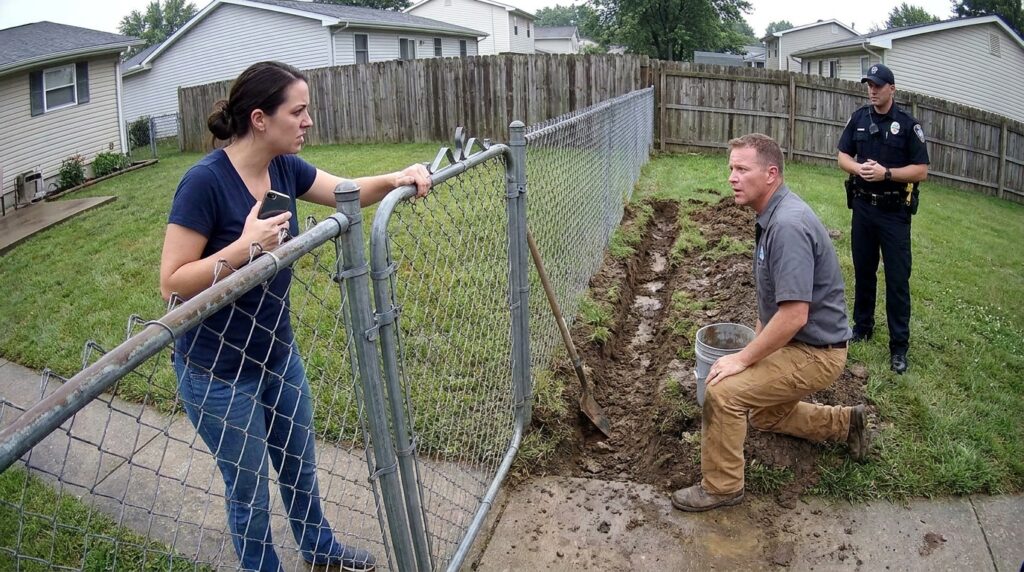
CHAPTER 6: THE STALEMATE ON THE STRUCTURAL PERIMETER
The hum of the air conditioning unit cut out with a dull, heavy click from the interior panel, dropping the lounge into a sudden, pressurized silence. Through the high, unwashed glass of the south windows, the mid-afternoon glare flattened every surface, draining the green of the holiday totes and leaving only the chalky gray of the concrete slab beneath us.
Louisa did not lower her arm. Her knuckles were white, frozen around the edge of her phone casing, but the device was dead-weight now. The screen was black, her battery drained by the continuous background pings of forty million active connections tracking her silhouette across the state line. Her stare was not fixed on me, or on Mr. Schmidt, but down at the exact point where the floor met the baseboard—where the line of structural failure had been buried in the sand six years ago.
“The county registry cleared the structural certificates in the first development cycle,” she said, her voice dropping into a dry, breathless monotone, the defensive cadence worn down to raw bone. “A third-party decorator cannot retroactively invalidate a municipal occupancy seal. The Vance name is off the primary ledger.”
“The name doesn’t change the concrete, Louisa,” Mr. Schmidt said. He didn’t pick up the iron washer. He left it sitting on the glass table, a small, dark ring of corrosion marking the tempered pane like a stamp on a deed. He leaned his weight forward, his thick forearms spreading across the table structure until the glass groaned against its metal support pegs. “The county didn’t inspect the interior casing when the tension rods sheared. My son signed the haulage logs for the extra epoxy loads that went into this floor. He kept the receipts because he knew the ballast walls weren’t anchored into the bedrock.”
I stood quiet, the heavy aluminum edge of my clipboard resting against my thigh. The weight of the corporate contract beneath the clip felt immense, a single block of unyielding paper in a room built on crumbling dust. With my free hand, I turned my smartphone toward the long, exposed crack running from the broken door header all the way down to the subfloor transition strip. On the live screen, the comment ticker had stopped jumping; the neighborhood feed had gone entirely still, a frozen wall of text as the residents outside realized why their garage doors wouldn’t track straight after a heavy rain.
“Nothing was edited,” I said, my voice cutting through the stagnant indoor air, hard and level. “Next time we expect support. The work order is logged, the materials are on the floor, and the structural invoice is staying behind the clipboard.”
She didn’t reach for her bag. She didn’t drop her stance. She stood pinned between the mahogany table and the shifting metal strip on the floor, her white V-neck shirt cast in sharp, desaturated shadows by the overhead tubes. Her short gray hair looked dull under the fluorescent light, the sharp pixie cut no longer resembling an official uniform but a brittle frame for a face that had run out of administrative counter-moves.
Outside, the roadside witness in the turquoise top didn’t look through the glass anymore. She had stepped off the walkway, her boots crunching through the parched grass as she walked back toward her vehicle, her phone lowered to her waist, her posture heavy with the realization that the entire plat’s valuation was shifting under her feet.
Mr. Schmidt took his hand off the table. The iron washer didn’t move, its rust-flaked edge clinging to the smooth glass pane with the stubborn friction of old mechanics. He looked across the empty lounge, past the rows of mahogany tables, toward the back office where the master circuit breakers were housed.
“The code inspector is at the gatehouse, Louisa,” Schmidt said, his voice flat, rhythmic as a spade hitting hard clay. “He’s not checking the pine branches. He’s bringing the ultrasonic transducer for the foundation anchors. You can stay and watch the screen, or you can get your car off the service road.”
She didn’t move toward the door. She simply turned her head toward the high windows, her sunglasses reflecting the long line of my work truck idling by the curb. The diesel exhaust wavered in the heat, a grey plume rising above the clean, manicured hedges of the subdivision, completely unbothered by the quiet collapse of the authority that had built them.
I reached down, lifted the first bundle of green garland from the tote, and laid it across the table frame, the metal wire center scraping the glass with a long, unyielding screech that marked the beginning of the actual contract.