
Chapter 6: The Boundary
Several weeks later, the landscaping between the two houses looked different.
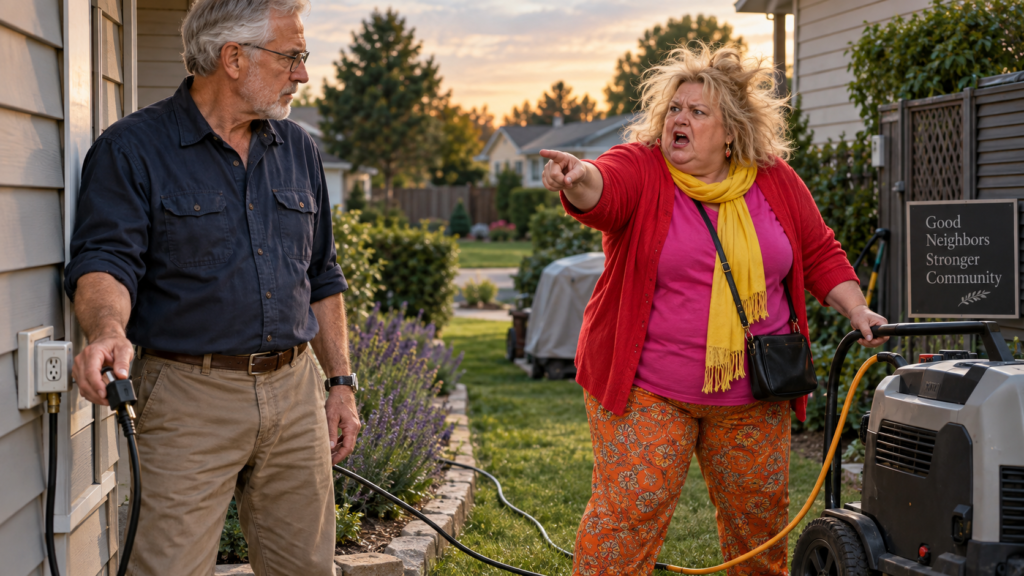
The portable appliance was gone.
The extension cord was gone.
The second cable was gone.
The narrow strip of lavender remained.
Daniel had added a simple row of low decorative stones along the edge of his property.
They weren’t aggressive.
They weren’t a fence.
They were simply a visible reminder of where one property ended and another began.
Karen saw him installing them.
For once, she didn’t complain.
She stood on her side of the yard for a moment.
Then she looked at the stones.
Then at Daniel.
Neither spoke.
Finally, Karen walked back toward her house.
Daniel continued working.
That evening, Emily and her children came over for dinner.
The grandchildren played in the backyard while Daniel grilled on the patio.
The house felt peaceful again.
Later, after everyone had gone inside, Daniel sat alone beneath the porch light.
He thought about the day Karen had been shocked by the cord connection.
He remembered the sudden recoil, the anger, the accusations, and then the discovery of the second cable.
What had seemed like a ridiculous neighborhood confrontation had revealed something more important.
A home wasn’t merely walls, furniture, and a deed.
It was the place where people expected to feel safe.
It was where memories lived.
It was where a widower could keep his wife’s lavender alive for fourteen years.
And protecting that space didn’t make someone selfish.
It made boundaries meaningful.
Daniel looked across the property line.
Karen’s house was quiet.
For the first time in months, there were no machines humming.
No cables crossed the landscaping.
No one was standing on his side of the line.
Daniel switched off the porch light and went inside.
The conflict had never really been about electricity.
It had been about entitlement, boundaries, and the assumption that another person’s patience could be mistaken for permission.
And in the end, Daniel didn’t need to shout louder than Karen.
He didn’t need to embarrass her.
He didn’t need revenge.
He simply stood his ground, documented what happened, and let the facts speak for themselves.
Sometimes justice in a neighborhood doesn’t arrive with a dramatic confrontation.
Sometimes it arrives quietly—
when everyone finally understands where the line is.








