
Chapter 7: What the Flowers Were Really Protecting
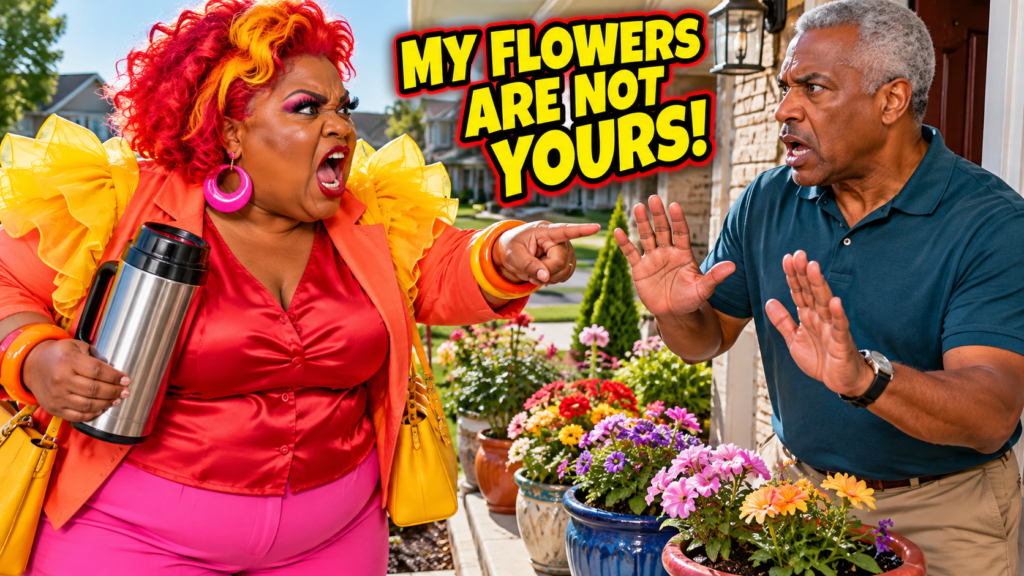
Several months later, the six flowerpots were still lined neatly along David’s porch.
They had grown fuller.
Brighter.
The small rose bush had finally bloomed.
The neighborhood had settled into a different rhythm.
The HOA meetings were quieter.
Complaints were fewer.
People still disagreed.
But now they checked the facts before declaring someone guilty.
David never saw the thermos again.
He never learned exactly what Karen had intended to do with it.
Perhaps she had planned to make a point.
Perhaps she had convinced herself that she was doing something harmless.
Either way, the sealed thermos had become a strange symbol of the entire episode.
Nothing had been poured.
Nothing had been destroyed.
Yet one neighborhood had come dangerously close to losing something far more difficult to replace than a flowerpot.
Trust.
One Sunday afternoon, David was watering the flowers when Karen appeared at the sidewalk.
She stopped several feet away.
“Those still there?”
David looked at the flowers.
“They are.”
Karen nodded.
“They look better.”
It was not an apology.
Not exactly.
But it was the closest thing she had offered.
David handed her the watering can.
Karen looked surprised.
“You want to water them?”
She hesitated.
Then she took it.
She carefully watered the soil without touching the petals.
For a moment, neither of them spoke.
The scene was almost ordinary.
And that was what made it meaningful.
The conflict had never truly been about six flowerpots.
It had been about the invisible line between concern and control.
Between protecting a neighborhood and controlling the people inside it.
Between believing a rule mattered and believing that gave you the right to enforce it yourself.
David looked toward the street.
The orange survey flags were gone.
The property marker had been restored.
The anonymous notices had stopped.
And the porch, once the center of a neighborhood dispute, had become a place where people sat together again.
David thought of Elaine.
She had always said that a home was more than four walls.
It was the feeling that you were safe enough to leave your door open.
That afternoon, David left the porch light on.
The flowers moved gently in the warm breeze.
And for the first time in months, no one was standing there trying to decide who belonged.
The boundary remained exactly where it had always been.
But now everyone finally understood that respecting it meant more than knowing where one person’s property ended.
It meant knowing where one person’s authority ended, too.








