
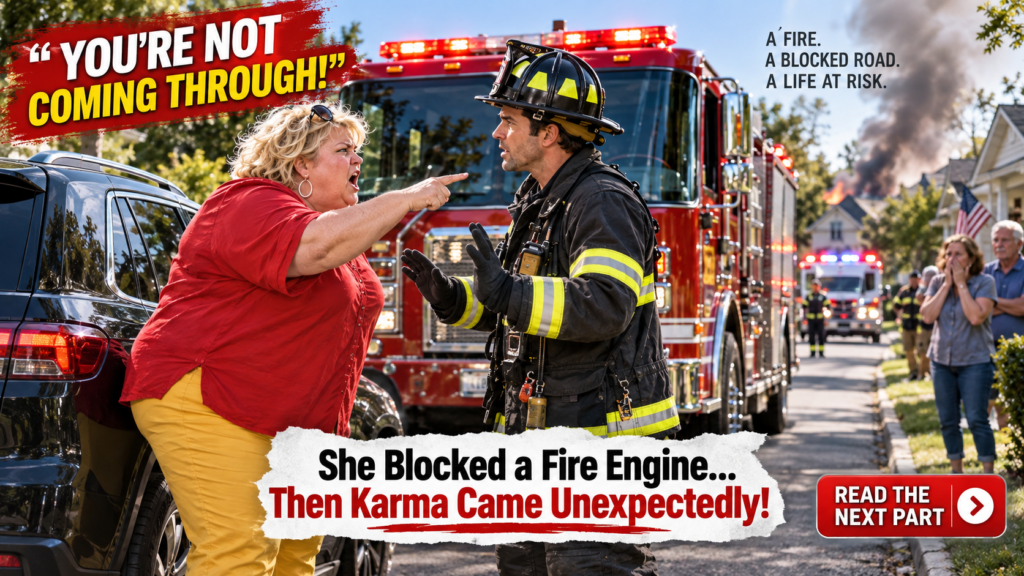
Chapter 2: The House at the End of the Street
The fire had started in the kitchen.
By the time the first crew reached the house, smoke had already filled the lower level. Flames were pushing through the rear windows, and the heat had begun climbing rapidly toward the second floor.
Inside was seventy-eight-year-old Harold Bennett.
His wife, Evelyn, had died eighteen months earlier.
Since then, Harold had lived quietly in the same house where he and Evelyn had raised their children. He was a retired high-school principal, a widower, a grandfather, and the sort of man who still kept handwritten Christmas cards in a drawer because throwing them away felt disrespectful.
That afternoon, Harold had been making coffee.
Then something went wrong.
The smoke alarm sounded.
Harold tried to reach the front door, but smoke overwhelmed him.
A neighbor called 911.
The first firefighters arrived within minutes.
Except the truck couldn’t reach the house.
Daniel had to make a decision.
He ordered the crew to move equipment forward on foot.
The delay was short.
But in a fire, short delays could become long consequences.
Two firefighters carried a hose line around Karen’s SUV while Daniel and another firefighter moved toward the house.
The ambulance crew followed on foot.
Karen stood beside her vehicle, watching.
She no longer shouted.
She seemed to understand that the situation had moved beyond an argument about parking.
Still, she didn’t move the SUV.
Daniel didn’t have time to deal with her.
His crew entered through the front door.
Inside, visibility was nearly zero.
The heat pressed down from the ceiling.
Harold was eventually found in a hallway near the back of the house, conscious but weak.
The firefighters brought him out.
The ambulance crew immediately began treatment.
He was alive.
Barely.
As Harold was loaded into the ambulance, Daniel noticed something unusual.
Harold’s daughter was standing across the street.
Her name was Rebecca.
She looked at Karen.
Then at the SUV.
Then back at her father’s house.
Her face showed no anger.
It showed recognition.
Karen noticed it too.
Rebecca approached slowly.
“You knew him,” she said.
Karen frowned.
“I don’t know what you’re talking about.”
Rebecca stopped several feet away.
“You knew my father.”
Karen folded her arms.
“I’ve lived here for twelve years. I know everybody.”
Rebecca looked at the black SUV.
Then at the house.
“My father asked you three times last month not to block the curb.”
Karen’s face tightened.
“That was different.”
“No,” Rebecca said quietly. “It wasn’t.”
Before Karen could answer, the ambulance pulled away.
Rebecca watched it disappear.
Then she turned toward the firefighters.
Daniel was standing near the engine, breathing heavily through the aftermath of the call.
Rebecca approached him.
“Is he going to make it?”
Daniel didn’t offer false comfort.
“They got him to the hospital quickly. That’s the important thing.”
Rebecca nodded.
Then she looked at Karen again.
“You should move your car.”
Karen scoffed.
“I’ll move it when I’m ready.”
Rebecca said nothing.
She simply walked away.
For the first time that afternoon, Karen looked smaller than she had a few minutes earlier.
Not physically.
Something else had changed.
The street no longer looked like her territory.
It looked like a place where other people lived.








