
CHAPTER 6: The Public Reversal and the Collapse of Manufactured Authority
The final echo of Deputy Briggs’s cruiser engine faded down Callaway Ridge Road, leaving behind an unnatural, heavy quiet that settled over Pembroke Court. The delivery truck’s air brakes hissed as the driver shifted into position by the gravel shoulder, but the sound felt distant, muted by the sudden deflation of the entire neighborhood’s collective tension.
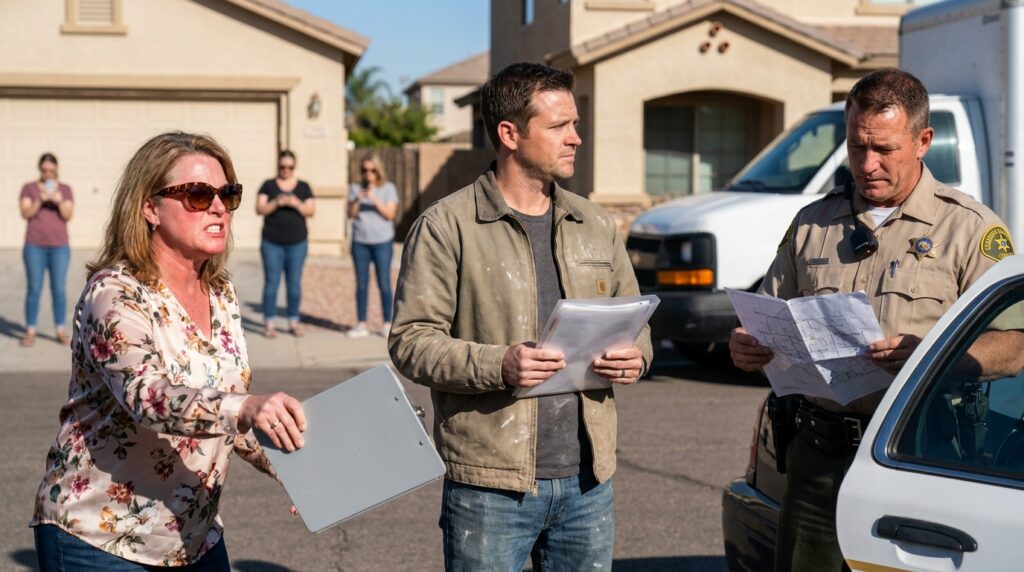
Brenda Vance stood frozen on the asphalt strip, her fingers still clenched around the grey plastic clipboard as if it were a spar from a sinking ship. Montgomery Stubbs had already retreated, his head down, his footsteps clicking rapidly against the pavement as he hurried back toward Alderton Court without a backward glance. Across the street, Winifred Fairweather closed her front door with a soft, decisive click, the black marble notebook safely resting on her mahogany sideboard as permanent testimony.
Marcus did not gloat. He did not step forward to rub victory into the wound. He simply watched with the cold, calculated neutrality of an auditor observing a corporate subsidiary enter total liquidation.
“Let’s get the boxes unloaded,” Marcus said quietly to the delivery driver, his voice cutting cleanly through the thick afternoon air.
The driver nodded, releasing the cargo latch with a loud metallic clatter. The heavy oak shelving components slid down the ramp, piece by heavy piece, their solid timber weight striking the earth with an undeniable physical reality. Every thud felt like a structural nail driven straight into the coffin of Brenda’s fabricated empire.
By late afternoon, the emergency session of the Pembroke Commons board was convened at the Alderton Court clubhouse—not by Brenda’s schedule, but by a formal petition signed by sixteen long-term residents who had read Evander Cross’s emergency injunction packet delivered via certified courier an hour after the deputies left.
When Marcus walked into the clubhouse meeting room, carrying the black oilcloth ledger and the county right-of-way plats under his arm, the air smelled of stale coffee and panicked silence. Brenda sat at the head of the mahogany conference table, her floral blouse looking suddenly crumpled, her eyes hollowed out by the realization that her ghost ledgers, unrecorded cash drawers, and tax-delinquent ridge lots were now sitting square in the center of a district attorney’s preliminary fraud review.
She didn’t speak. She didn’t raise her clipboard. When the temporary acting chair moved to suspend her architectural powers indefinitely and bar her from holding any neighborhood leadership role for five years, Brenda didn’t even contest the vote. She stood up, her jaw tight, left her grey plastic clipboard on the edge of the table, and walked out through the side exit without looking at anyone.
By dusk, the heavy lifting was done.
Marcus stood alone in his living room, the last of the flat cardboard boxes finally broken down and stacked against the baseboard. The scent of fresh cedar sawdust from the newly assembled workshop shelving filled the space, sharp and grounding. He walked over to the front door, gripped the brass handle, and pulled it shut against the evening chill. The deadbolt slid home with a solid, absolute click, locking the outside world securely behind a boundary that no one would ever cross without permission again.








