
CHAPTER 2: THE BLUEPRINTS OF THE GRID
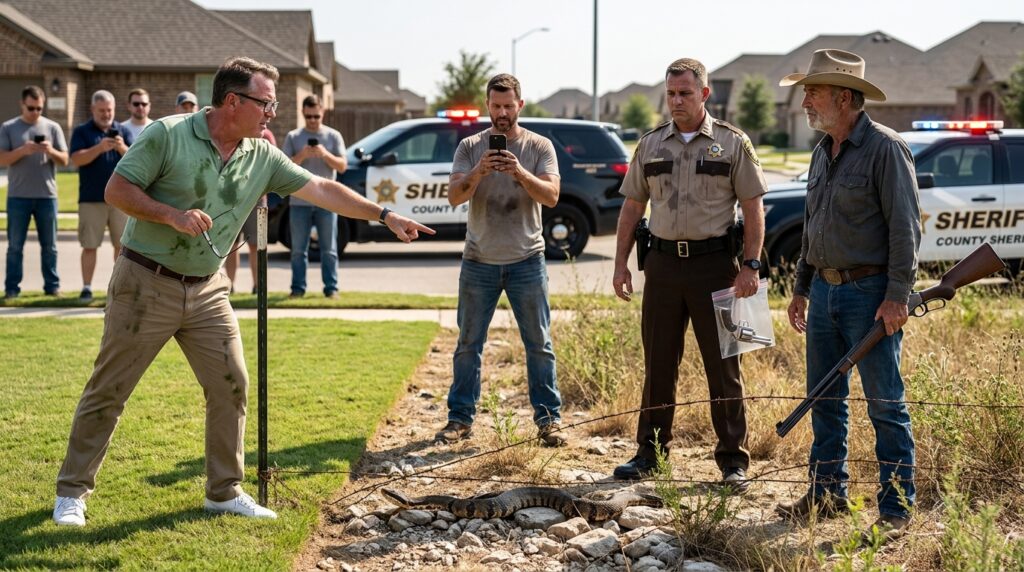
“The county has rules for a reason, Garett,” Deputy Marcus Briggs said, his heavy leather duty belt creaking as he shifted his weight on the porch. He didn’t look like a man trying to make an arrest; he looked like a man who had spent too many hours behind the wheel of a Tahoe, his uniform shirt showing dark rings of sweat under the ballistic vest. He held a thin, carbon-copy sheet of a county incident report, the paper fluttering slightly in the hot breeze that swept up from the creek bed. “Vance called it in three separate times between noon and dusk. Said you were riding the wire with a long gun, tracking people’s kids.”
Garett didn’t answer right away. He reached into his shirt pocket, pulled out a small piece of emery cloth, and continued rubbing the oil into the stock of the Henry rifle resting across his knees. The metal of the receiver was cool now, shaded by the deep cedar overhang of the porch, but the smell of the Hoppe’s No. 9 cleaner was sharp, cutting through the dry scent of the cedar trees.
“Sheldon Vance wouldn’t know a long gun from a surveyor’s rod if both were driven into his lawn, Marcus,” Garett said, his thumb tracking the clean grain of the walnut stock. “He was thirty feet inside my easement, standing over the old south-fourteen marker. He’s got it into his head that because the county put a playground there, the fence line belongs to the homeowners’ association.”
Briggs let out a dry, rattling breath, his boots scraping against the grey-painted wood of the porch floor. He looked out across the yard toward the equipment shed, where the faded orange paint of Garett’s old diesel tractor was peeling under the sun. “He filed it as a public safety hazard. Said the suppressor makes it an illegal weapon under the new county ordnance. I told him the state allows for agricultural predator control, but he’s calling the commissioner’s office tomorrow morning. The guy isn’t just neurotic, Garett. He’s building a paper trail.”
Garett stopped rubbing the wood. He set the emery cloth down on the small wicker table between their chairs, his gaze shifting to the far corner of the property where the red brick chimneys of the subdivision peeked through the scrub oaks like broken teeth. “A paper trail for what? A three-foot water moccasin?”
“For the county zoning board,” Briggs said, lowering his voice, his eyes dropping to the report sheet. “He brought a copy of the new plat map to the station. Not the old county grant you’ve got framed in the hall. A fresh one, stamped by the regional development council three months ago. It shows your south line running twenty feet north of the creek, right through the middle of your stock tank.”
Garett’s jaw tightened, the old scar along his left cheekbone growing pale against his weathered skin. As a surveyor who had spent thirty years setting transits in the limestone hills, he knew the errors of a single degree could ruin a square mile. He stood up, the rifle balanced easily in his right hand, and kicked open the heavy screen door behind him. The interior of the house was dark, smelling of stale chicory coffee and the old wool blankets his wife had woven before the winter of the fever.
He didn’t invite the deputy inside. He walked to the long oak table in the center of the kitchen where his old leather field cases were stacked. He pulled a long, metal tube from the bottom shelf, its zinc cap scratched and grey with age. When he slid the heavy linen map out onto the table, the paper made a dry, scraping sound like a snake moving through leaves.
Briggs followed him in, his boots thudding heavily against the linoleum. He stood at the edge of the table, his hand resting on the butt of his sidearm out of habit, his eyes scanning the intricate, hand-inked lines of the 1974 county survey.
“Look here,” Garett said, his calloused forefinger dropping onto a small circle marked with a three-pronged arrow. “That’s the iron stake Sheldon was standing next to this afternoon. It’s a three-quarter-inch cold-rolled rod driven four feet into the limestone. I set it myself when the state re-routed the farm road back in eighty-two. That stake doesn’t move unless someone brings a backhoe out here.”
“Garett, look at the margin,” Briggs murmured, leaning closer, his breath smelling of the peppermint lozenges he used to stop smoking. He pointed to the bottom edge of the linen where a faint, blue pencil mark had been drawn over the original ink. It wasn’t the signature of the county clerk. It was a grid coordinate label from the Apex Regional Land Trust, the company that had financed the infrastructure for the Whispering Oaks subdivision. “That’s not a standard reference number. That’s an overlay.”
Garett leaned down, his eyes narrowing as the low light from the kitchen window caught the faint, indenting texture of the paper. Someone hadn’t just copied the map; they had used a stylus to press a new coordinate system into the original grant lines, a deliberate shadow grid that shifted the entire four-acre border into the development’s common property area. The fresh notch he had seen on the iron stake that afternoon wasn’t a scraper mark from a shoe. It was a new center point, freshly cut with a cold chisel to validate a false reference line.
“He didn’t do this because he’s afraid of horses, Marcus,” Garett said, his voice dropping into the deep, hard register of a man who recognized a fraudulent deed before the ink was dry. “He’s using the children in that park as an excuse to clear the easement. If that tank goes into their plat, my water rights for the lower pasture are severed by default.”
Briggs didn’t answer immediately. He reached out, his thick fingers tracing the blue pencil line until it met the border of the creek bed. “If Sheldon thinks this is the official map, he isn’t going to stop with a phone call, Garett. He thinks he’s defending his people from a squatter. And the regional board isn’t going to check the old grant unless someone forces a court injunction.”
“I don’t need an injunction to fix a fence post,” Garett said, his hand dropping back onto the cold receiver of the rifle. He looked at the report sheet in the deputy’s hand. “Leave the copy, Marcus. I’m going to go see what kind of ink Sheldon Vance uses on his own porch.”








