
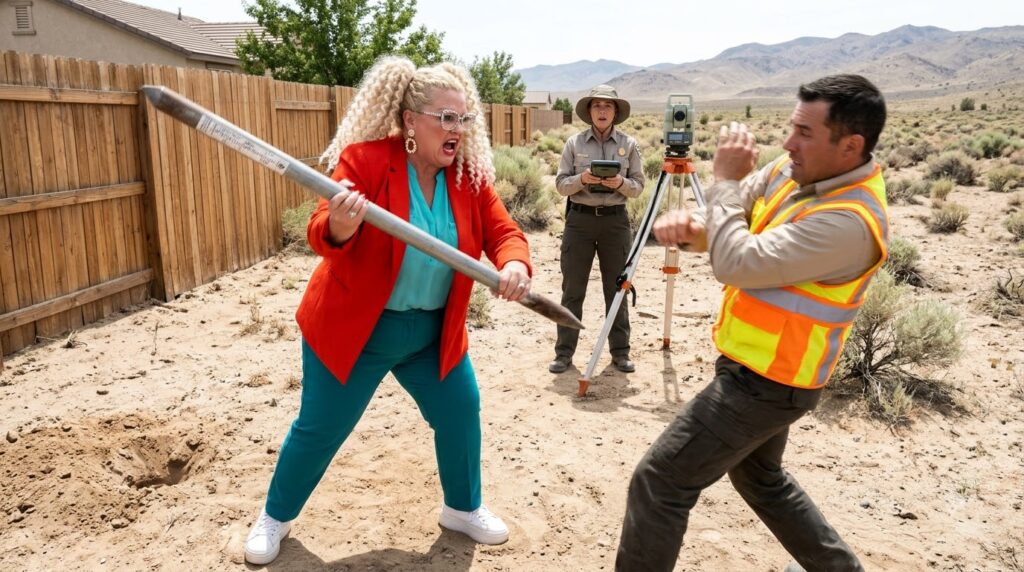
Chapter 3: The Meeting That Never Happened
Frank arrived at Evelyn’s house the following morning carrying a folder thick with HOA paperwork.
He had served on the Silver Ridge board for two years, mostly because no one else wanted the responsibility.
He had believed that his presence might provide a little common sense.
Now he wondered how many decisions had been made without him.
The supposed special meeting had taken place on October 22.
Frank checked his calendar.
On that date, he had been in Flagstaff visiting his daughter and grandson.
He had photographs, gas receipts, and a hotel confirmation.
Yet the minutes listed him as present and voting in favor of the Scenic Garden contract.
The document also included a typed certification bearing his name.
Frank felt a familiar anger rising.
It was the same feeling he had experienced years earlier when a supervisor tried to blame a junior mechanic for a maintenance mistake.
Someone was counting on people being too tired or too frightened to challenge the official record.
Evelyn suggested they begin with the other board members.
They contacted Margaret Ellis, a sixty-four-year-old retired accountant who had resigned from the board the previous spring.
Margaret had spent months arguing with Patricia over access to financial records.
She had eventually left after Patricia repeatedly accused her of obstructing progress.
When Evelyn described the boundary incident, Margaret was not surprised.
But when Frank showed her the meeting minutes, she became deeply concerned.
She explained that Patricia had gradually centralized control over the HOA’s administrative records.
The management company handled routine payments, but Patricia personally directed major projects and controlled much of the board’s communication.
The treasurer had recently moved out of state.
A replacement had not been elected.
Patricia had continued approving expenditures under an emergency authorization provision.
Margaret believed that provision had been stretched far beyond its intended purpose.
Together, the three residents reviewed the records they already possessed.
They found a series of payments connected to the Scenic Garden.
The first was for design services.
The second was for site preparation.
The third was a large advance for materials that had not yet arrived.
The payments totaled $86,400.
For a community with 112 homes, that was a considerable amount of money.
The residents had been told the project would cost approximately $95,000.
There was almost nothing left in the approved budget for actual construction.
Margaret cautioned them against assuming theft.
Poor management, misleading invoices, and unauthorized decisions were different problems, and each required evidence.
But the discrepancies justified further investigation.
Frank agreed.
He did not want revenge.
He wanted an accurate accounting of money collected from neighbors who had spent decades saving for retirement.
That afternoon, Patricia circulated another email.
This one was more aggressive.
She accused unnamed residents of spreading defamatory claims about the board.
She warned that distributing misleading security footage could violate community privacy rules.
She also announced an emergency assessment of $750 per household to cover legal and administrative expenses arising from the federal boundary dispute.
Evelyn stared at the amount.
For some homeowners, $750 was inconvenient.
For others, it meant choosing between household repairs, medical bills, or helping a grandchild.
Patricia had turned her own confrontation into a financial burden for the entire neighborhood.
Within hours, residents began calling Evelyn.
Some had heard she possessed the recording.
Others wanted to know whether the assessment was legitimate.
A few were frightened.
One woman said she could not afford another fine.
Another feared Patricia would interfere with approval for a wheelchair ramp.
Evelyn listened to each person.
She had never considered herself a community organizer.
But the calls revealed how isolated many neighbors had become.
They were not indifferent.
They simply believed they were the only ones having trouble.
Frank requested a copy of the Scenic Garden contract from the management company.
The response arrived that evening.
The company said the contract had been executed under board authorization and that certain supporting records were held by the HOA president.
Frank then requested the attendance records for the October 22 meeting.
The company could not provide them.
Instead, it forwarded an email Patricia had sent approving the minutes.
The message contained one revealing sentence:
The remaining signatures can be completed after the project begins.
Margaret read it carefully.
A missing signature did not automatically invalidate every decision, but it raised serious questions about whether the documented approval had occurred.
The three residents agreed to request a formal records inspection under the association’s governing documents and applicable Nevada law.
They would also ask an independent attorney to review the assessment.
That night, Frank received a phone call from an unfamiliar number.
The caller identified himself as Thomas Vale, owner of Desert Crown Landscaping.
He said he had heard Frank was questioning the project.
His tone was uneasy.
He wanted to meet privately.
And he claimed there was something important about the garden contract that the homeowners needed to know.








