Chapter 3: The Cost of Being Right
The fellowship room slowly emptied.
Denise remained near the doorway until Margaret was alone.
Father Michael was gathering the memorial programs when Denise finally approached.
“I owe you an apology,” Denise said.
Margaret looked at her.
Denise’s voice was quieter than it had been that morning.
“I was wrong.”
Margaret did not immediately answer.
Denise glanced toward the church.
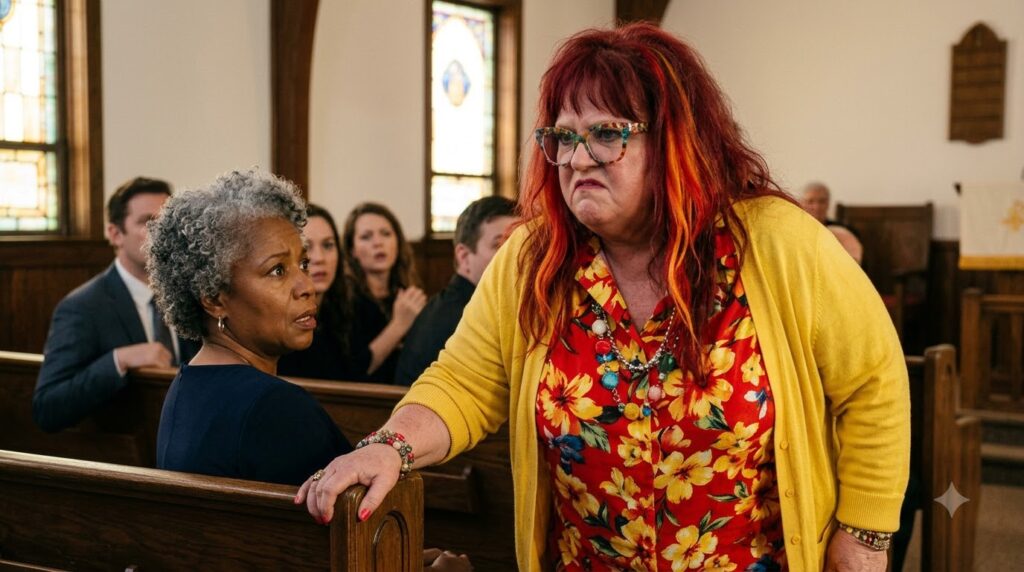
“I kept thinking about getting there first. I was so determined to prove that I had a right to that seat that I forgot why everyone else was there.”
Margaret’s face remained tired.
“You hurt me.”
“I know.”
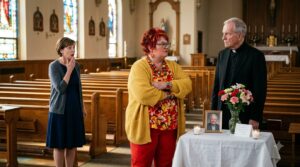
“You made me stand up beside my husband’s picture and explain why I belonged there.”
Denise lowered her eyes.
“I know.”
There was no excuse left that could make her behavior reasonable.
She could talk about needing to see.
She could talk about arriving first.
She could complain that she had not understood the seating arrangement.
None of those things changed the fact that Margaret had been grieving.
“I am sorry,” Denise said.
Margaret took a slow breath.
“I believe you mean that.”
Denise looked surprised.
“But I’m not ready to pretend it didn’t happen.”
“I wouldn’t ask you to.”
That answer mattered.
Denise had expected either forgiveness or rejection.
Instead, Margaret gave her something more honest.
A boundary.
An apology could be accepted without erasing the injury.
Father Michael approached them.
“The service is over,” he said gently. “But what happened today does not have to define what happens next.”
Denise nodded.
“I understand.”
Margaret looked toward the front pew.
The chair beside her was still empty.
Denise followed her gaze.
“I won’t sit there again,” she said.
Margaret shook her head.
“That isn’t the point.”
“I know.”
This time, Denise really did.
She had spent years believing that fairness meant making sure no one got something she had been denied.
But fairness was not always about equal treatment.
Sometimes it meant recognizing that two people did not stand in the same place.
Margaret had lost her husband.
Denise had wanted a better seat.
Those things were never equal.
Denise took a step back.
“I’ll give you some space.”
Margaret nodded.
Denise started toward the door.
Then Margaret called her name.
Denise turned.
“Thank you for coming back to apologize.”
Denise’s eyes tightened.
“I almost didn’t.”
“I know.”
Denise left the church quietly.
The argument was over.
But the consequence remained: she had to live with the knowledge that she had made another person’s grief harder because she could not accept being inconvenienced.
And for Denise, that knowledge was more difficult than being told she was wrong.