
Chapter 3: What the Neighbors Had Seen
The next morning, the fire department received three separate accounts from residents.
None involved damaged property.
None involved threats.
But all described the same pattern.
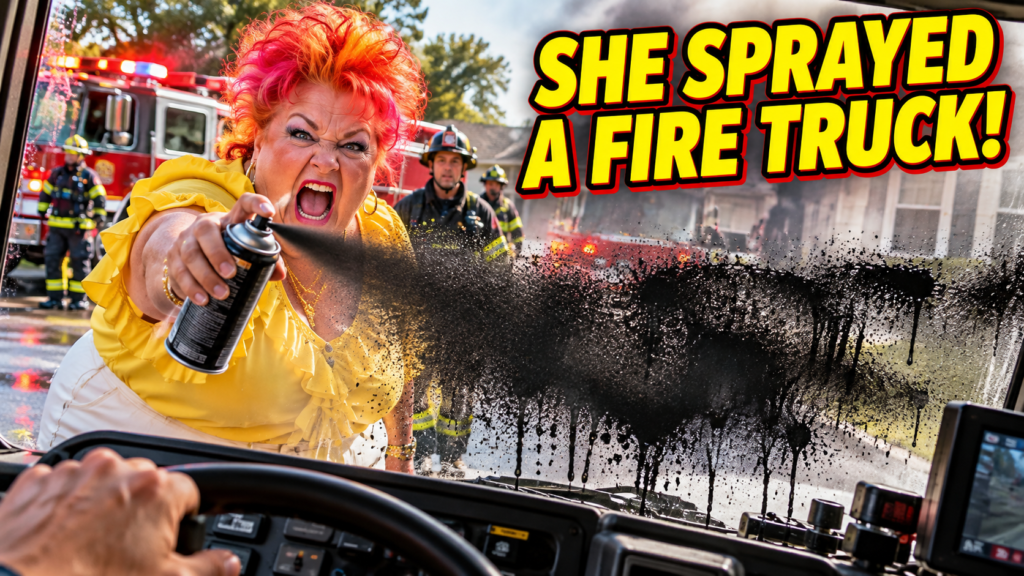
Marlene had repeatedly confronted delivery drivers, utility workers, contractors, and emergency crews when vehicles stopped along the curb near her home.
Sometimes she complained about access.
Sometimes she demanded that people move.
And sometimes, according to neighbors, she simply stood outside until they left.
Diane finally admitted why she had never challenged Marlene directly.
“She doesn’t stop when you explain,” she told the firefighter. “She keeps arguing until the other person gives up.”
That detail changed the picture.
The windshield incident wasn’t simply about parking.
It was about control.
Marlene had found a moment when a fire truck couldn’t simply drive away because people needed it there.
She had taken advantage of that.
Later that afternoon, the firefighter saw her outside her house again.
This time she wasn’t carrying the spray can.
She was holding her phone.
“You’ve been talking about me,” she said.
“No.”
“You’ve been telling people what happened.”
“I documented what happened.”
“That video makes me look terrible.”
The firefighter remained calm.
“You sprayed a temporary mark on an emergency vehicle.”
“I told you it washed off.”
“That doesn’t change what happened.”
Marlene stepped closer.
“You don’t understand. That truck was sitting there like my property didn’t matter.”
The firefighter looked toward the house where the response had taken place.
“Your property wasn’t being ignored. We were protecting it.”
That answer silenced her.
Only briefly.
Then she said something he hadn’t expected.
“My husband died two years ago.”
The firefighter’s expression softened.
Marlene continued.
“After that, nobody asked me anything. Contractors came. Utility people came. Everyone decided what was best for my house.”
For the first time, the anger sounded less like outrage and more like exhaustion.
But the firefighter didn’t excuse what she had done.
He simply said, “I understand wanting people to respect your home.”
Marlene looked away.
“But you can’t make an emergency about you.”
Her face hardened again.
She walked back toward her house.
The firefighter thought the conversation was finished.
Then he noticed something on the curb.
A temporary emergency notice had been placed near Marlene’s driveway.
She had torn it down.








