
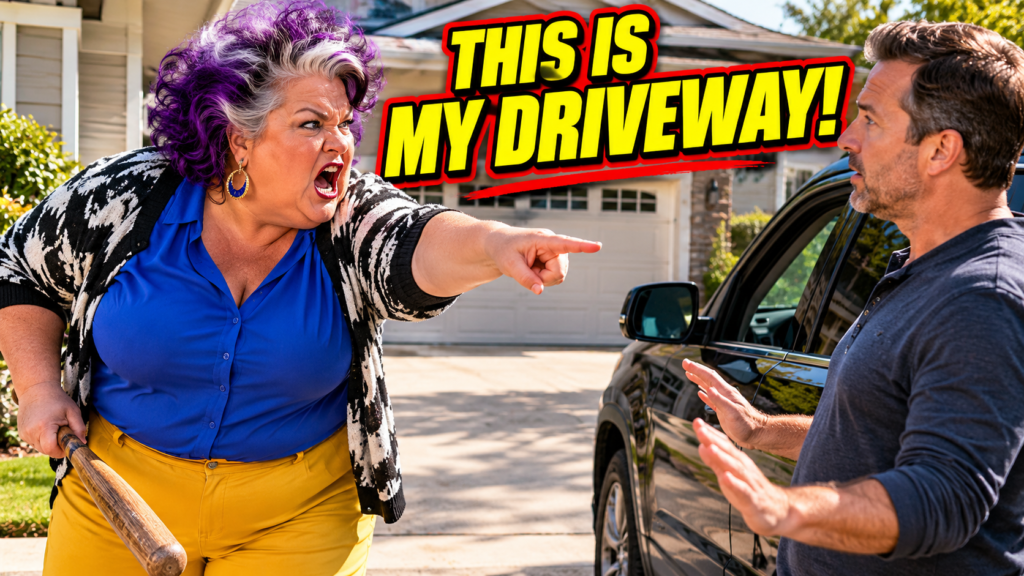
Chapter 5: The Driveway
A few days later, Daniel parked the SUV in the same driveway.
The woman saw him from across the street.
For a moment, Daniel expected another confrontation.
Instead, she walked toward him without her phone and without the baseball bat.
She stopped at the edge of the pavement.
“I still don’t like it.”
Daniel nodded.
“You don’t have to.”
She looked at the SUV.
Then at the house.
“I was wrong about having the right to tell you to move.”
Daniel accepted the statement with a quiet nod.
That was enough.
The dispute had started with a demand backed by anger.
It ended with something much less dramatic: a boundary being recognized.
Daniel got into the SUV.
The woman turned and walked back toward her house.
Neither had won an argument.
The driveway simply belonged to the person who actually had the right to use it.
And sometimes, in a quiet neighborhood, that simple fact is enough to put an entire confrontation back where it belongs—on the pavement, instead of in people’s lives.








