
Chapter 2: The Story Karen Told
The ambulance arrived before Harold’s daughter, Emily, could get there.
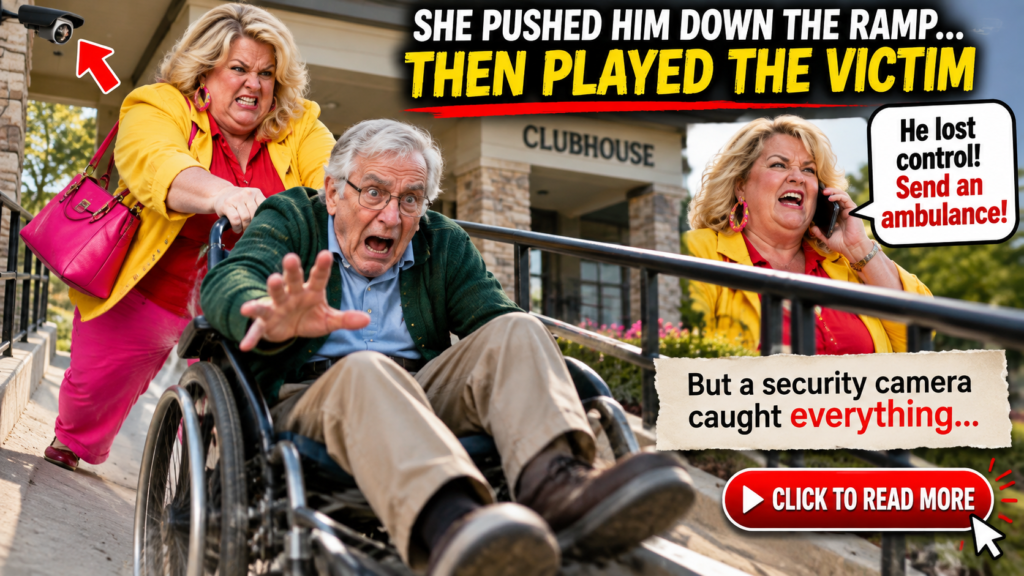
By then, Karen had already transformed herself from the woman who had pushed the wheelchair into the woman who had supposedly discovered an accident.
She stood beside the paramedics, speaking quickly.
“He was coming down too fast,” she said. “I tried to help him, but he lost control.”
Harold tried to interrupt.
“She pushed—”
“Sir, save your energy,” one paramedic said gently. “We’re going to check you first.”
Harold closed his eyes.
That sentence frightened him more than the fall.
Not because he doubted the paramedic.
Because Karen’s version was already moving faster than the truth.
At the hospital, doctors found bruising and a strained shoulder. Nothing was broken. Harold was fortunate.
Emily arrived just before dinner.
Her father sat on the edge of the hospital bed, still wearing the forest-green cardigan he had worn that afternoon.
“I know what happened,” he told her.
Emily sat beside him.
“I believe you.”
Harold looked toward the floor.
“But what if nobody else does?”
Emily took his hand.
“We’ll deal with that when we have to.”
Outside the hospital, Karen was already telling neighbors that she had saved Harold’s life.
By the next morning, the story had changed again.
According to Karen, Harold had ignored warnings about the ramp.
Then he had supposedly forgotten to lock his wheelchair.
Then, according to another version, Karen had been standing several feet away when the accident happened.
Each version was slightly different.
The community manager, Linda Morales, noticed.
She also noticed something else.
Karen had filed an incident report before Harold had even been discharged from the hospital.
Linda read it twice.
The report described an accident.
It did not mention Karen’s hands being on the wheelchair.
It did not mention Harold yelling her name.
And it certainly did not explain why Karen had called emergency services immediately after releasing the chair.
Linda looked at the clubhouse security monitor.
The ramp camera was still there.
She opened the recording system.
The footage from that afternoon had not been overwritten.
Linda stared at the timestamp.
Then she reached for the phone.
She called Emily.
“I think your father was right,” she said.








