
Chapter 7: What Was Worth Protecting
The photograph changed everything for the Neighbor.
He had known Karen’s father.
Not well.
But well enough to remember him.
His late wife had volunteered with the community conservation group that helped preserve the forest before it became officially protected.
For years, he had thought of the area simply as part of the neighborhood’s history.
Now he understood why Karen had fought so hard to recover the case.
The photograph connected two families who had lived through the same community changes from different sides.
The investigation into the smoke continued.
The county also reviewed the unauthorized access to the maintenance office.
The facts remained separate.
There was no proof that Karen had caused the emergency.
There was no proof that the contractor had caused it either.
But the missing records and unauthorized access were documented, and officials continued examining who had entered the restricted area and why.
For Karen, the outcome was more personal.
She received her father’s belongings.
She kept the letters in a protective box at home.
The photograph went into a simple frame on her living-room wall.
She did not hide it.
She placed it where her family could see it every day.
The brass key remained beside the frame.
It no longer represented suspicion.
It represented a piece of history she had almost lost.
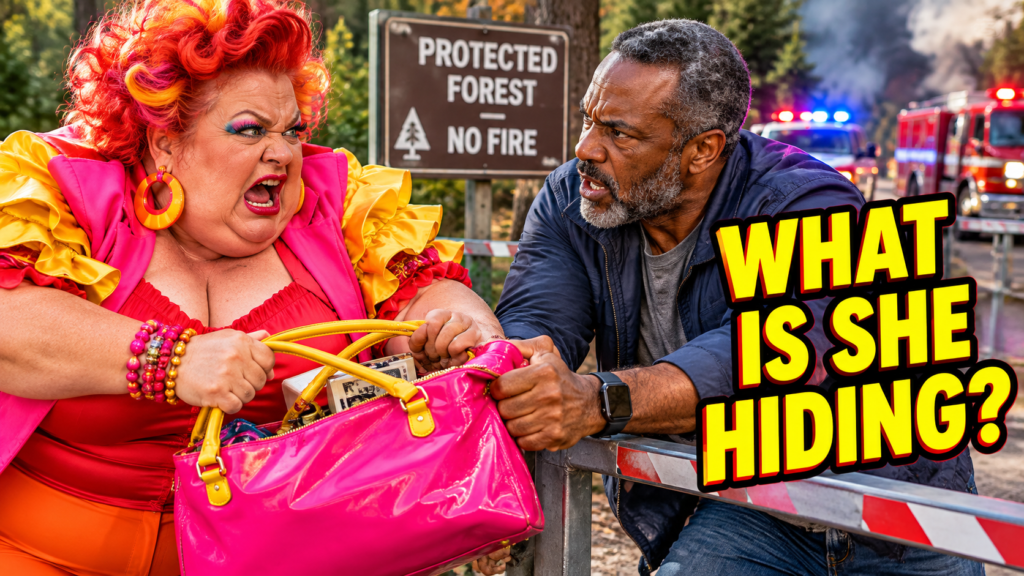
Weeks later, Karen and the Neighbor stood together at the edge of the forest.
The temporary barrier had been replaced with a permanent gate and a clearer sign explaining the protected area and authorized access procedures.
Karen looked at the gate.
“I suppose this is what they call a compromise.”
The Neighbor smiled.
“It’s what they call a gate.”
She laughed despite herself.
It was the first time they had laughed together.
The community also changed.
Instead of relying on rumors, residents began attending county meetings about the forest.
People asked questions about access.
They requested clearer records.
They discussed privacy, emergency procedures, and how to protect the area without treating every neighbor as a suspect.
Karen never became friends with everyone.
She didn’t need to.
What mattered was that she no longer felt that her dignity depended on staying silent.
She had learned something harder than simply proving herself right.
Sometimes fairness meant admitting where you had been wrong.
Sometimes protecting your privacy meant explaining just enough for people to understand.
And sometimes justice was not a dramatic punishment.
Sometimes it was getting the truth into the open and making sure the same confusion could not happen again.
One evening, Karen stood in her living room and looked at the photograph of her father beside the forest gate.
She touched the frame.
Her father had written that people came after us.
He had been right.
The people who came after them would inherit the land, the records, the memories, and the responsibility to treat one another with care.
Karen had gone to the forest that day believing she was fighting for an old metal case.
In the end, she recovered something larger.
A piece of her family’s history.
A repaired relationship with a neighbor.
And the quiet certainty that being treated with dignity did not require her to surrender her voice.
Outside her window, the neighborhood settled into evening.
The forest stood beyond the houses, dark and peaceful.
The gate was closed.
This time, everyone knew why.








