
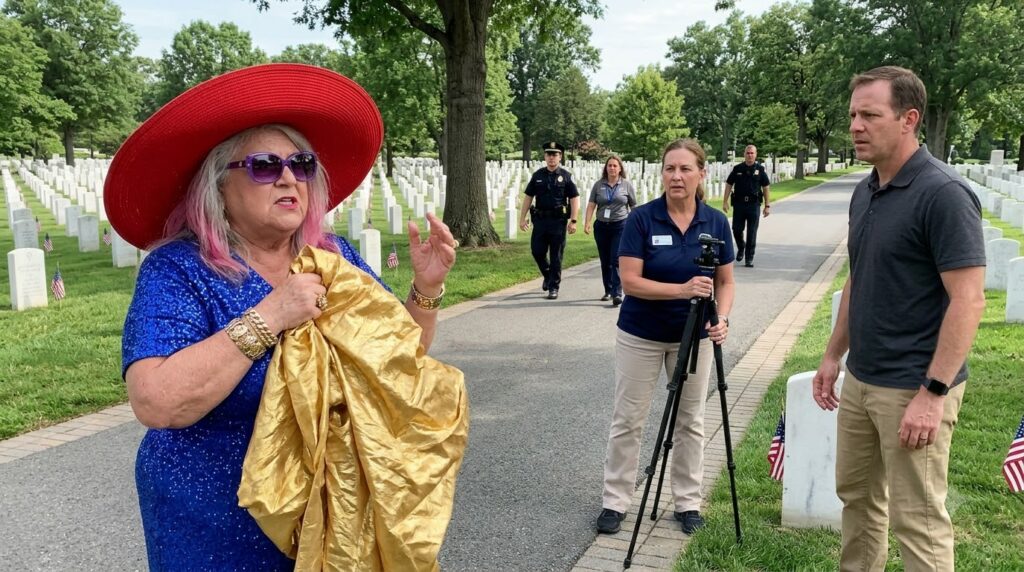
Chapter 5: The Fundraiser Nobody Approved
The Commonwealth Heritage Circle was a small private organization that hosted historical lectures, seasonal luncheons, and charitable fundraising events in Northern Virginia.
Most of its members were retired professionals.
Several were veterans.
Others were widows or adult children of military families.
The organization had a respectable history, but it was not affiliated with the Department of Veterans Affairs.
Patricia Caldwell had joined its event committee earlier that year.
She quickly appointed herself the driving force behind an upcoming benefit called A Salute to Service.
The original proposal was simple.
Members would gather at a community hall, listen to a veteran speaker, and raise money for transportation assistance for older military families.
Patricia found the plan dull.
She wanted a formal photographic campaign.
She wanted gold decorations, elaborate gowns, a reception, and a large collection of portraits displayed during the fundraiser.
Most importantly, she wanted to be credited as the event’s creative director.
She had promised photographs that would capture the solemn beauty of military remembrance.
But she had not secured a suitable location.
Instead of admitting the difficulty, Patricia told the committee that arrangements were progressing.
She spoke confidently about connections.
She referred vaguely to permissions.
She suggested that officials were enthusiastic.
No one asked for documents until the controversy began.
The committee chair, a retired Navy captain named Samuel Whitaker, learned about the cemetery incident from a member who had seen a photograph circulating among local acquaintances.
Samuel was seventy-two, with a calm manner and little patience for theatrical behavior.
He had known Patricia socially for years.
He had also learned to distinguish her confidence from actual authority.
He contacted Thomas Reed to verify whether the organization had permission to hold a photography event at the cemetery.
Thomas confirmed that no such authorization had been issued for the proposed activity.
Samuel called an emergency committee meeting.
Patricia arrived wearing a cream-colored jacket with gold buttons and carrying a thick folder.
She appeared unconcerned.
When Samuel asked about the cemetery, she insisted the matter had been exaggerated.
She claimed the fabric had been placed over the headstone only briefly.
She said no one had been harmed.
She argued that the photographs would honor veterans by bringing attention to the cemetery.
Samuel asked whether the families had consented.
Patricia changed the subject.
He asked whether the cemetery had approved commercial photography involving graves.
She spoke about her years of charitable service.
He asked whether she had accepted deposits on behalf of the project.
Patricia said the money was merely an expression of interest.
Samuel opened a folder containing copies of the advertisements Vanessa had supplied.
The committee members studied them in silence.
Several looked visibly uncomfortable.
One member, a retired Army nurse named Helen Parker, asked why a cemetery headstone would ever need to be covered with decorative fabric.
Patricia dismissed the question as a misunderstanding of artistic presentation.
That answer settled something for Helen.
She had spent thirty years caring for service members and their families.
She understood the difference between honoring sacrifice and using sacrifice as decoration.
Samuel announced that the committee would suspend Patricia’s role pending review.
He also instructed the organization’s treasurer to determine whether any donations or deposits had been received in the organization’s name.
Patricia stood abruptly.
Her chair scraped against the floor.
She accused the committee of humiliating her.
Then she gathered her folder and left.
The meeting continued without her.
Within an hour, Samuel discovered another problem.
Patricia had sent invitations to a private preview reception scheduled for the following Saturday.
The invitations suggested that guests would see exclusive photographs from the national cemetery.
They also advertised a special donation opportunity.
Several invitees had already confirmed attendance.
The organization had never approved the reception.
Samuel realized that canceling Patricia’s committee role would not automatically stop her.
He contacted Vanessa and Thomas.
Together, they began identifying the people who had received invitations.
Meanwhile, Daniel visited Margaret Ellis.
She lived in a small brick house with blue shutters and a carefully maintained rose garden.
On her living room mantel stood a photograph of William Ellis in his Marine Corps dress uniform.
Margaret served coffee in delicate porcelain cups.
She told Daniel she did not want revenge.
She wanted to visit her husband’s grave without feeling that she had to ask permission from strangers.
Daniel understood.
As he prepared to leave, Margaret showed him another item.
It was a copy of the invitation to Patricia’s private reception.
A neighbor had forwarded it to her.
Across the bottom, in elegant gold lettering, was a promise:
An unforgettable celebration of America’s honored heroes.
Margaret looked at Daniel.
The words sounded beautiful.
But she could not forget the folding chair blocking William’s headstone.
Daniel took a copy of the invitation.
He was beginning to understand that Patricia’s greatest weapon was not her temper.
It was her ability to make disrespect look respectable from a distance.








