Chapter 2: The Man Behind the Ambulance Doors
The patient was seventy-eight-year-old Walter Ellis, a widower who lived three houses down.
He had been walking home from his mailbox when his legs suddenly gave way.
A neighbor had called 911.
By the time the paramedics arrived, Walter was conscious but struggling badly. His daughter, Emily, lived in another state and had been trying unsuccessfully to reach him that morning.
The ambulance crew had been moving quickly because every minute mattered.
Karen knew Walter.
Not well.
But enough.
She had seen him every morning for years.
He was the man who shoveled the sidewalk after winter storms. The man who collected stray packages from neighbors’ porches when they were away. The man who once carried Karen’s groceries inside after she returned from the supermarket with a torn bag.
She had complained about his hedge twice.
She had never asked his name.
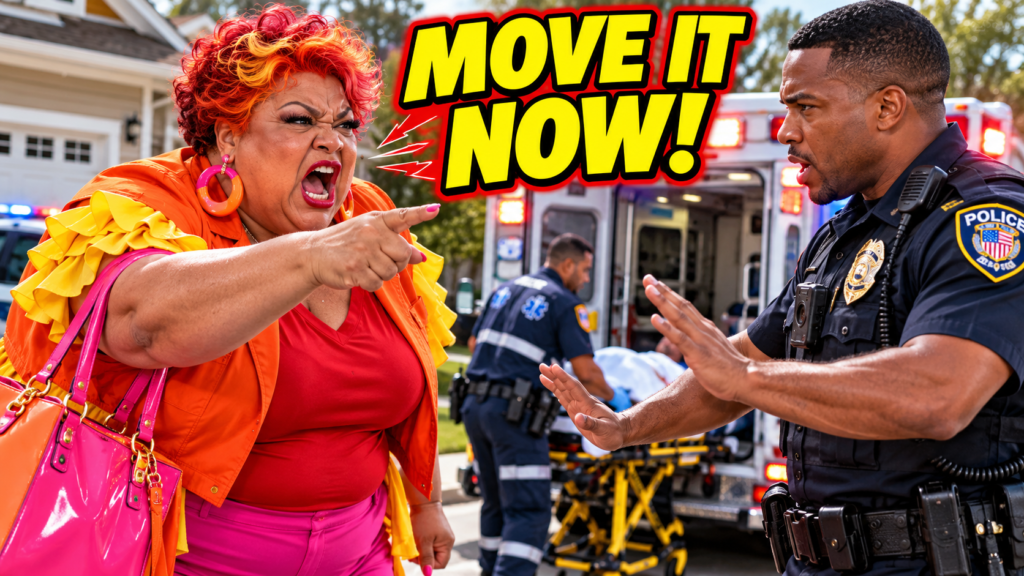
Now she stood behind the police line watching his feet disappear inside the ambulance.
Officer Brooks remained nearby.
Karen pointed toward the vehicle.
“How long are they going to be there?”
“As long as they need to be.”
She looked irritated.
Then her expression changed.
“Is that Walter?”
Brooks nodded.
Karen’s arms slowly fell to her sides.
For several seconds, she said nothing.
Then she looked toward the house across the street.
“I thought he was just out walking.”
“He collapsed,” Brooks said.
Karen swallowed.
The ambulance doors finally closed.
As it pulled away, the street became strangely quiet.
Karen expected everyone to leave.
Instead, Officer Brooks remained.
He approached her with a small notepad.
“There is something else we need to discuss.”
Karen frowned.
“What?”
“The paramedic reported that you stepped into the emergency access area several times after being told to stay back.”
“I wasn’t touching anything.”
“That isn’t the point.”
Karen’s face hardened again.
Brooks explained that the officers would document the incident because emergency personnel had been working in a restricted area.
Karen immediately reached for her phone.
“Fine. Then I’m calling the HOA.”
Brooks looked at her.
“You can.”
Karen turned toward her house.
She believed the matter was over.
It wasn’t.
The next morning, a letter from the homeowners association arrived at her door.
And this time, it wasn’t about a complaint.
It was about a rule Karen had been using against everyone else.