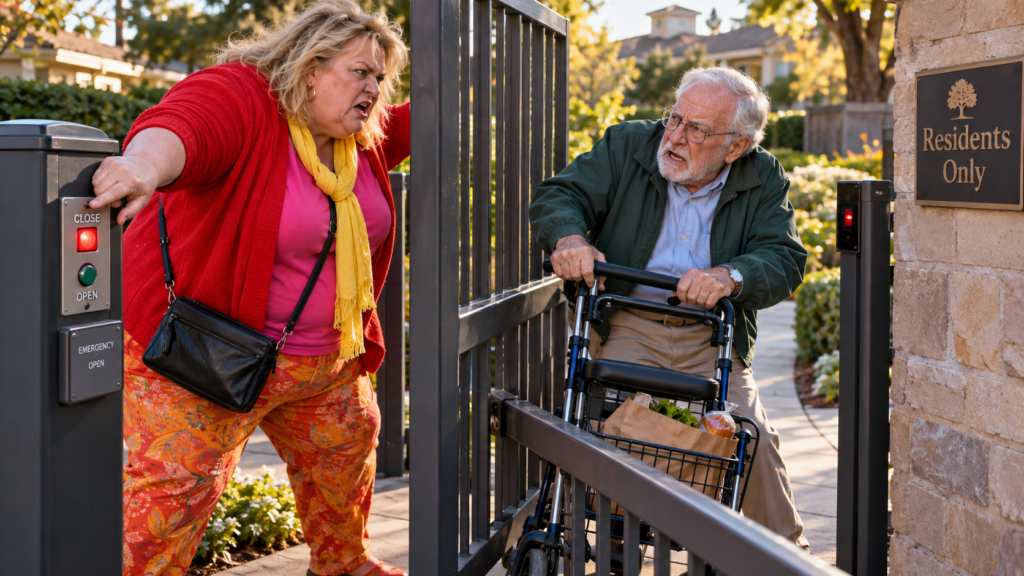
Chapter 8: What the Gate Was Really Protecting
Months passed.
The story became one of those community incidents people eventually stopped discussing.
But the changes remained.
The accessibility rules were clearer.
The gate system was maintained properly.
Residents were reminded that shared spaces belonged to everyone.
Karen stopped attending board meetings.
She rarely spoke to Walter.
There was no dramatic reconciliation.
No perfect ending.
Some wounds don’t close because someone says the right sentence.
But Walter no longer felt watched whenever he approached the gate.
One afternoon, he stopped beside it and noticed an elderly couple struggling with several grocery bags.
He opened the gate for them.
The husband thanked him.
Walter simply held it until they passed.
He thought about how easily a shared entrance could become something else.
A barrier.
A weapon.
A symbol of who was considered welcome and who wasn’t.
The gate itself had never been the real problem.
The problem was the belief that one person could decide who deserved access.
Walter rolled toward home as the late-afternoon sun settled over the neighborhood.
He had learned something he wished he had understood years earlier:
Sometimes standing up for yourself isn’t about winning a fight.
Sometimes it’s about making sure the next person doesn’t have to fight the same one.
And the next time the community gate opened, it opened for everyone.