
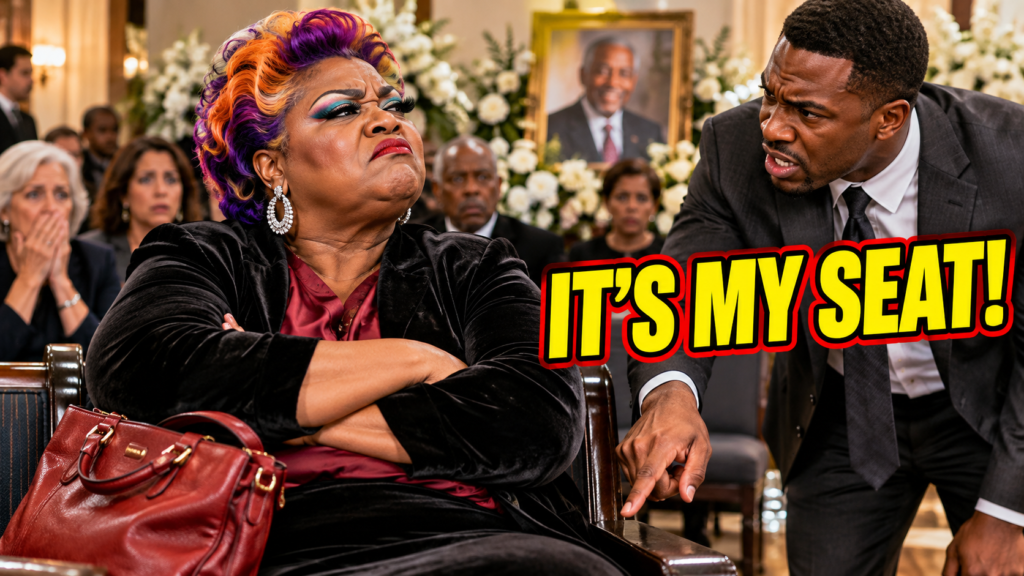
Chapter 6: What Belonging Really Meant
Three days later, Daniel visited his mother.
The house was quiet.
Robert’s coat still hung beside the back door.
His shoes remained beneath the bench.
Grief had changed the rooms.
Everything looked familiar, but nothing felt quite the same.
Daniel placed the crumpled reservation card on the kitchen table.
Linda studied it.
“You kept that?”
“I didn’t know what to do with it.”
She touched the wrinkles with one finger.
“Throw it away.”
Daniel looked surprised.
“That’s it?”
“Yes.”
She smiled faintly.
“Your father would have hated turning a piece of paper into a monument.”
Daniel laughed softly.
His mother was right.
The card had served its purpose.
It had protected a practical boundary during a difficult morning.
But it did not need to become part of the family’s grief.
Daniel threw it into the trash.
Then he took out the repaired photograph.
The crack remained visible.
His mother looked at it.
“Leave it like that.”
“Are you sure?”
“Yes.”
She touched the edge of the frame.
“Your father wasn’t perfect. Neither are we. I don’t want his memory polished until it looks unreal.”
Daniel nodded.
The following weekend, Emily organized a small gathering at the lake house.
It was not another memorial.
It was simply family.
There were sandwiches on the kitchen counter. Old photographs on the dining table. Robert’s favorite chair near the window.
Then someone knocked.
Daniel opened the door.
Karen stood outside.
She carried a small box.
“I almost didn’t come.”
Daniel stepped aside.
“You’re here now.”
Inside the box was a photograph of Robert standing beside Karen years earlier at the community center.
On the back, Robert had written:
“Everyone deserves a seat somewhere.”
Karen handed it to Daniel.
“I thought your family should have this.”
He studied the photograph.
The phrase suddenly made sense.
Not every seat was the same.
Some belonged to family during a funeral.
Some belonged to guests.
Some belonged to strangers who needed help.
And some had to be offered freely.
Daniel looked toward the kitchen.
Emily was laughing with their mother.
He turned back to Karen.
“You can come in.”
Karen stepped across the threshold.
She did not ask where she should sit.
She waited.
Daniel pointed toward the kitchen table.
“There are sandwiches.”
Karen smiled.
“Thank you.”
She sat at the table with everyone else.
No special chair.
No argument.
No entitlement.
Just a place.
Months later, the Harper family would still remember the funeral morning.
They would remember the anger.
They would remember the embarrassment.
They would remember the broken photograph.
But they would also remember what happened afterward.
Daniel began volunteering with the community program his father had supported.
Emily helped organize a small fund for families facing temporary housing emergencies.
And once a month, the lake house kitchen became a place where neighbors could sit together, talk, and eat without asking what they could offer in return.
The front-row chair at the funeral was eventually forgotten.
The lesson was not.
Respect was not about deciding who deserved more.
It was about understanding that other people had boundaries, histories, grief, and dignity of their own.
And sometimes, the most meaningful seat in the room was not the one at the front.
It was the one someone offered you after you finally learned how to ask.








