
Chapter 4: The Story Karen Never Told
Daniel called the number.
It was disconnected.
He searched through Robert’s old papers until he found a community center receipt with the same name.
Karen Mills had volunteered there years earlier.
Margaret helped confirm what she knew.
“Your father used to organize winter assistance programs,” she said. “Food deliveries. Heating repairs. Transportation for older residents.”
Daniel remembered.
He had been too busy with his own family back then to pay attention.
Margaret continued.
“Karen was involved with one of those programs.”
That evening, Daniel drove to his mother’s house with the letters and photograph.
His mother, Linda, sat at the kitchen table.
When he mentioned Karen, Linda became quiet.
“You know her?”
Linda nodded.
“Not well. But your father helped her during a difficult year.”
“What happened?”
Linda looked toward the window.
“She lost her home.”
Daniel listened.
Karen had been caring for an elderly relative while working two jobs. After a financial crisis, she fell behind on rent. Robert had helped connect her with a local housing organization.
“He never told me that,” Daniel said.
“He didn’t tell people when he helped them.”
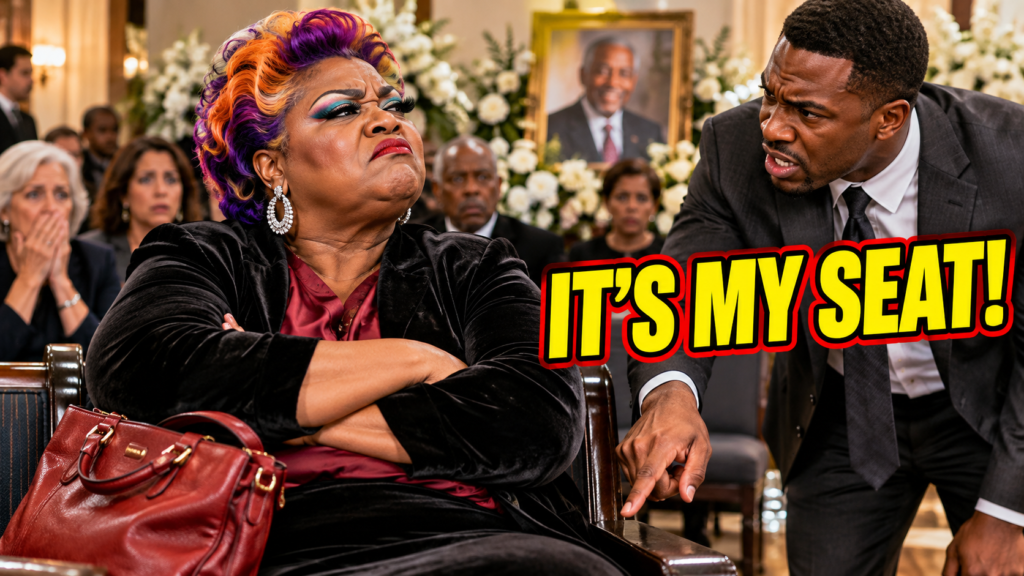
Daniel thought about the woman sitting defiantly in the front row.
None of this excused what she had done.
But it explained why she had insisted that she belonged there.
The next morning, Daniel returned to the funeral home to collect the remaining photographs.
Karen was there.
She stood alone near the chapel entrance.
Daniel approached.
“My father helped you once.”
Karen’s expression changed.
“Then you know why I came.”
“I know part of it.”
She looked away.
“He treated me like I mattered when nobody else did.”
Her voice was quieter now.
Daniel waited.
Karen finally explained.
When she had been struggling years earlier, Robert had never asked her to prove that she deserved help. He had simply listened.
“He gave me a place at the table,” she said.
Daniel understood the symbolism.
But understanding did not erase the harm.
“You still took my mother’s seat.”
Karen’s face tightened.
“I thought the family would have plenty of places.”
“That wasn’t your decision to make.”
She looked toward the empty chapel.
For the first time, she seemed uncomfortable.
“I thought if I sat up front, I wouldn’t feel like I was being pushed out again.”
Daniel had no easy answer.
The two stood quietly.
Then Karen reached into her handbag.
She pulled out the crumpled reservation card.
Daniel stared.
“You kept it?”
“I don’t know why.”
The card was still wrinkled.
Karen smoothed it against her palm.
“I was angry.”
Daniel nodded.
“You were.”
She looked at him.
“I know.”
It was the closest thing to an apology she had offered.
But before Daniel could respond, Margaret entered carrying a document.
“There is one more thing,” she said.
Robert had left written instructions for the funeral home.
Daniel read them.
His father had requested that after the formal service, everyone who had been helped by him should be invited to share one memory.
No reserved seats.
No special status.
Just people.
Daniel looked at Karen.
The rule his father had left behind was not about who belonged in the front row.
It was about making sure nobody was forgotten.
And suddenly, Daniel knew what had to happen next.








