Chapter 3: The Version of the Story
The complaint arrived the next morning.
Mark read it at his desk.
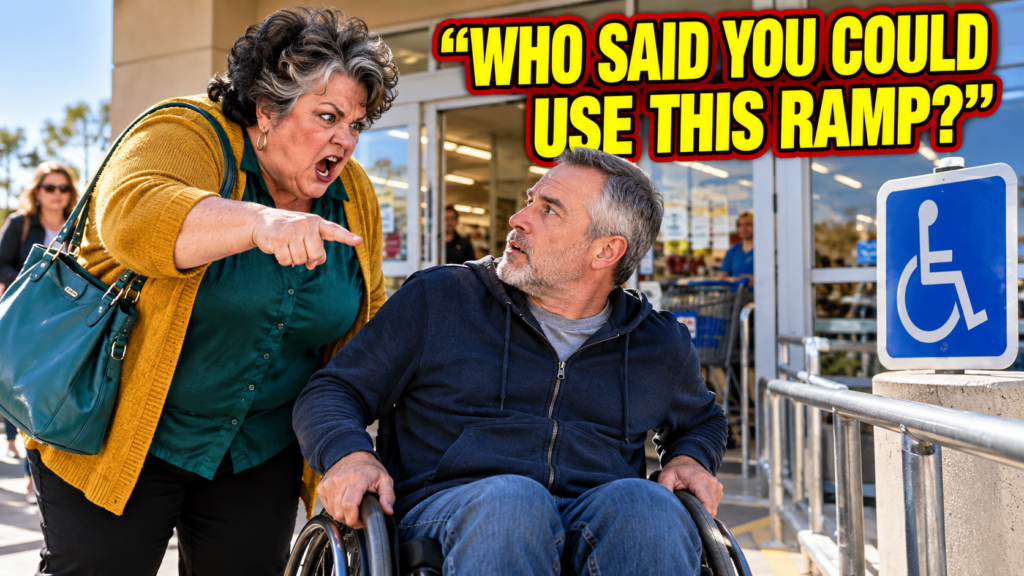
The woman claimed that Daniel had demanded priority and that employees had humiliated her after she questioned his use of the entrance. She described the incident as though she had merely been asking for consideration and had somehow become the one being mistreated.
The photograph of the accessibility sign was attached.
Mark looked at it for a long moment.
The picture showed exactly where the woman had been standing.
It also showed the open ramp.
He called Daniel.
Daniel returned to the store later that day.
Mark told him about the complaint and showed him the security footage from the entrance.
The video was straightforward.
The woman stepped toward Daniel and raised her hand.
Daniel stopped.
He asked her to move.
She argued.
He told her she did not own the ramp.
Then, after an employee intervened, she moved aside.
There was no physical confrontation.
Daniel had never touched her.
She had never touched his wheelchair.
The path had remained physically passable.
But the footage captured something the complaint had left out: she had acted as though Daniel needed her approval to use an accessible entrance.
Daniel watched silently.
“What happens now?” he asked.
“We respond with the facts,” Mark said.
Daniel nodded.
That was enough for him.
He didn’t want revenge. He didn’t want the woman embarrassed. He wanted the record to be accurate.
The store responded to her complaint by explaining that the accessible entrance had to remain available and that employees had instructed her not to interfere with another customer’s access.
No insults.
No personal accusations.
Just the facts.
Daniel thought the matter would end there.
But a few days later, the woman came back to the store.
She wasn’t alone.