
CHAPTER 1: THE ORANGE INK ON THE POST
The heat came off the asphalt in visible, oily waves, distorting the neat lines of the opposite lawns until the colonial-style facades looked waterlogged. Sarah didn’t look at the houses across the street. Her focus was entirely on the mailbox post at the edge of her gravel driveway, where the wood had split along the grain from three seasons of unshaded July sun.
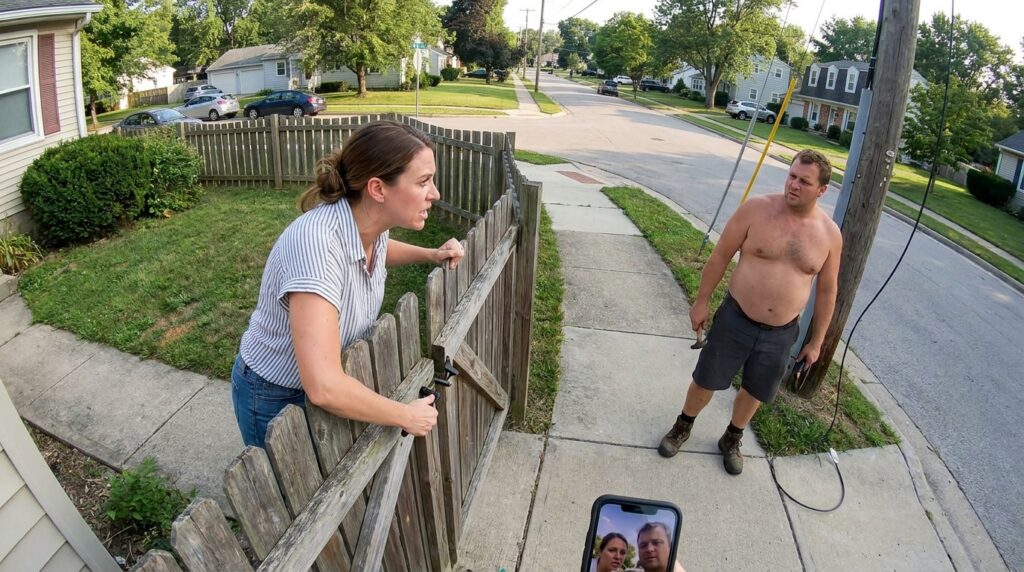
Brenda was already there. She didn’t look up when Sarah’s boots crunched against the dry transition where the yard met the public right-of-way. The older woman’s broad silhouette was framed against the desaturated gray of the neighbor’s retaining wall, her bright floral blouse a loud, artificial smear against the dusty weeds thriving along the curb. She held a thick plastic clipboard tucked against her ribs like a shield, her thumb pressing down on a stack of yellow carbon-copy sheets that rustled in the dry, hot breeze.
“You’re outside the municipal buffer, Brenda,” Sarah said. Her voice didn’t carry the weight of anger; it carried the dry, flat cadence of someone who had spent three weeks reading county tax codes in a room that smelled of old binders and damp toner.
Brenda adjusted her oversized tortoise-shell sunglasses, the lenses reflecting two tiny, warped versions of Sarah standing in the sun. She didn’t drop her hand from the mailbox post. Between her manicured fingers, a bright orange square of heavy cardstock was already pinned to the cedar, the staple gun still gripped in her left hand like a small iron jaw.
“The association code is very clear about unapproved property markers, Sarah,” Brenda said, her tone dripping with the performed, administrative pity she used for residents who didn’t attend the monthly board meetings. She tapped the clipboard with the nose of her ballpoint pen. “Section four, paragraph two. Any infrastructure adjustments visible from the primary access road must be vetted by the architectural committee. You know this. I left the preliminary notice last Tuesday.”
Sarah looked down at the orange card. The ink was fresh, bleeding slightly into the porous wood of her post. It wasn’t an official citation. It was a typed, unnumbered warning with the neighborhood association’s logo photocopied crookedly at the header. Beneath it, someone had written IMMEDIATE COMPLIANCE REQUIRED in thick, black permanent marker.
“Last Tuesday was a courtesy letter from an address that doesn’t exist on the county register,” Sarah said. She reached out, her fingers catching the corner of the orange cardstock. The paper was stiff, hot from the sun. She didn’t rip it; she pulled it slowly, letting the staple groan as it tore through the fiber until the notice came away in her hand.
Brenda’s posture stiffened, her shoulders squaring under the floral fabric. The clipboard shifted, the metal clip catching the glare of the noon sun and throwing a sharp blade of light across Sarah’s jeans. “That is corporate property you are defacing, Sarah. Everything from the curb to the five-foot setback line falls under our jurisdiction for aesthetic maintenance. If you refuse to clear the line before the utility truck arrives, the board will authorize the removal at your expense.”
Sarah didn’t answer immediately. She folded the orange card into a small, tight square, her thumb pressing the crease until her skin turned white. She felt the heavy weight of the old iron key ring in her pocket, the edges of the obsolete keys biting into her thigh through the denim. She looked past Brenda’s shoulder toward the concrete curb, noticing a small, dark grease stain where a surveyor’s vehicle had parked earlier that morning—a tiny discrepancy in the dust that Brenda’s sunglasses had completely missed.








