The Weight of the Cold Ground Beneath the Harsh Fluorescent Sky

CHAPTER 1: THE RESIDUE OF HARVEST

The warehouse floor smelled of dry pine pallets, heavy plastic shrink-wrap, and the sharp, chemical tang of new compressor oil. It was a desaturated world beneath the high-bay metal halide lamps—everything coated in a thin, microscopic grit that rose from the constant scraping of forklifts against the gray concrete. Arthur Pendelton moved through Aisle Seven with a slow, mechanical deliberation, his boots leaving faint, dull prints in the high-traffic dust.

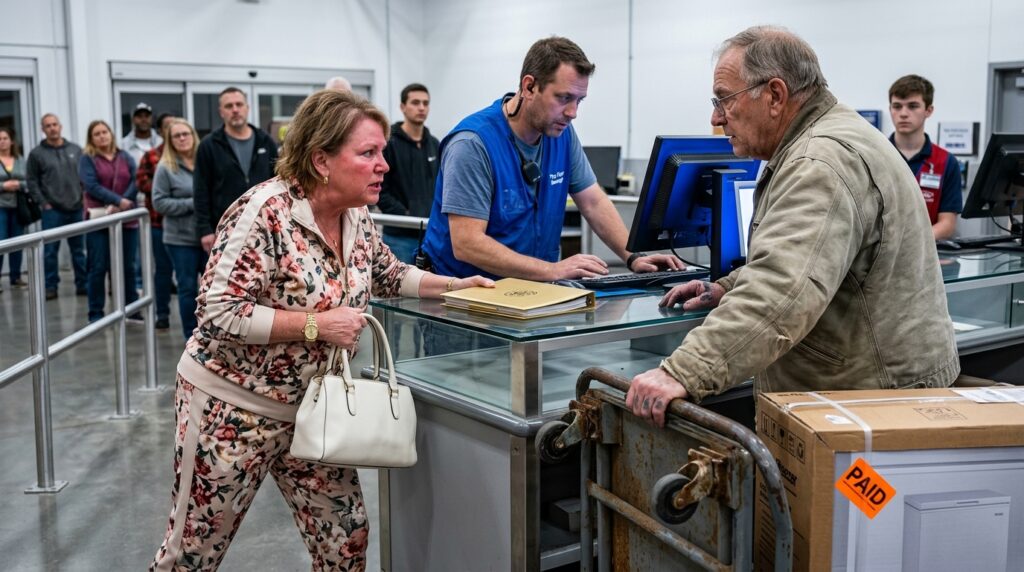
His fingers, permanently stained with the dark ink of a manual draftsman, traced the rough edge of a cardboard box. This was the final unit—a low-profile, commercial-grade chest freezer, marked down with a handwritten red marker on the inventory tag. To anyone else, it was an oversized metal bin meant for cheap frozen bulk goods. To Arthur, it was a vault. His wife’s community garden plot across the county line was still heavy with late-summer heirloom tomatoes, Swiss chard, and standard root crops that would rot within three weeks if he couldn’t drop the temperature of his pantry. The silver band on his left hand felt loose against his skin, a small, cold circle of metal that slipped whenever his hands dried out from the store’s air conditioning.

He gripped the rusted wire handle of the flatbed cart, his shoulder muscles tightening as he heaved the dead weight of the appliance onto the steel frame. The heavy casters shrieked against the concrete, a raw, iron-on-stone sound that didn’t even make him blink. He didn’t have the energy for small annoyances anymore. Since the funeral in April, his world had shrunk to a series of maintenance tasks—checking the oil in the tractor, clearing the gutters, and ensuring the residue of her final planting didn’t go to waste in the dirt.

At Register Four, the transaction was transactional and silent. The cashier, a teenager with oil-stained knuckles and a faded blue vest, scanned the clearance barcode without looking up. Arthur slid his card through the plastic terminal, watched the small green light flicker to life, and waited for the slow, mechanical chatter of the thermal printer.

“Sticker’s on the side, sir,” the boy muttered, sliding a bright, high-visibility orange slip across the counter. It was sticky, smelling of industrial adhesive. Arthur took the paper and pressed it directly over the main cardboard seam of the freezer box, his rough palm flattening the edges until the glue took hold. He didn’t fold the receipt; he placed it precisely into his breast pocket, right behind the crinkled envelope containing the layout map of the garden beds.

The front end of the store was a bottleneck of mid-day noise—the constant beep of laser scanners, the heavy thud of timber loading outside, and the low, thick murmur of families arguing over the price of drywall screws. Arthur pushed the cart toward the customer service desk to secure his loading dock gate pass, his movements unhurried, his eyes fixed on the silver railing that marked the exit line.

He had just reached the counter when the air behind him shifted, thick with the heavy, artificial scent of aggressive floral perfume and the rapid, sharp click of hard-soled shoes against the concrete floor. A shadow fell across the orange sticker on his box—large, solid, and smelling of money and clean leather.

“That’s my unit,” a voice cut through the register static. It wasn’t loud yet, but it carried the heavy, flat edge of an order. Arthur didn’t turn around immediately. He kept his hands on the cart handle, his eyes watching the customer service clerk slowly reach for the gate stamp.


CHAPTER 2: THE PERIMETER OF ACCESS

“I said, take your hands off my cart.”

Brenda Vance’s voice didn’t rise to a shout immediately, but it had the hard, unyielding resonance of a dropped iron bar. She didn’t wait for Arthur to adjust his stance. She stepped into the narrow clearance between the service counter and the flatbed, her heavy leather handbag swinging forward like a pendulum until it struck the steel frame with a dull, meaty thud. The gold-plated buckles on the straps rattled against the wire mesh.

Arthur didn’t pull his hands back. His thumbs remained hooked over the cold, grease-filmed iron pipe of the cart handle, his knuckles white against the grey grain of his skin. Through the canvas of his jacket sleeve, he could feel the faint, rhythmic vibration of the store’s main compressor units under the concrete floor. He took a slow breath, the dry, cardboard-scented air cooling his throat.

“This isn’t your cart, ma’am,” Arthur said. His voice was too quiet for the register lines ten feet away, but it carried the flat, unhurried cadence of a man who spent his life measuring tolerances on blue paper. “I paid for the unit. The slip is under your purse.”

“Marcus!” Brenda didn’t look at Arthur. She didn’t look at the orange sticker glowing beneath the harsh fluorescent lights. Her eyes were fixed on the customer service glass, her manicured finger tapping a rapid, impatient tattoo against the laminated surface of a corporate loyalty folder she had produced from her coat. “Marcus, get out here. I’ve been waiting forty-five minutes in the loading lane for Aisle Seven to clear, and your floor people just allowed this man to wheel my allocation out of the staging bay.”

The young clerk behind the counter, whose nametag read Eli, froze with the heavy rubber gate stamp held three inches above Arthur’s loading voucher. His eyes darted between the massive orange “PAID” label on the box and the gold-embossed lettering on Brenda’s folder. He looked small beneath the high, grey steel rafters of the warehouse ceiling.

“Ma’am,” Eli stammered, his fingers slick against the wooden handle of the stamp. “The system showed the floor model was cleared at register four. The ticket—”

“The ticket is a duplicate error,” Brenda interrupted, her arm snapping straight as she thrust the laminated folder into the space between Arthur’s shoulder and the glass counter. “Look at the account classification. Level Three Commercial Priority. This unit was flagged for my property management account on Thursday. If your inventory system didn’t lock the floor tag, that’s an internal deficit, not my concern.”

Arthur looked down at the folder. The plastic was thick, clear, and unblemished by the general warehouse dust. In the lower-left corner, just beneath the corporate barcode, there was a tiny, faint ink mark—two green initials, T.C., written with a fine-point felt pen. The ink had a slight metallic sheen under the high-bay lamps, a tiny discrepancy that didn’t match the standard machine-printed look of the official corporate documents. His thumb moved inside his jacket pocket, tracing the dry, crisp corner of his wife’s seed packet. He knew every commercial development layout in the north district; he knew the corporate accounts didn’t issue floor vouchers for individual clearance items unless the regional office had cleared an exchange.

The heavy swinging doors behind the counter groaned open, and Marcus Thorne stepped into the alcove. His blue vest was pulled tight across his shoulders, the wire of his radio earpiece coiled down his neck like a black snake. His face had the grey, drawn look of a floor manager who had spent five hours managing a concrete delivery delay in the rear yard.

“Brenda,” Marcus said, his hands coming up in a quick, defensive gesture before he even reached the counter. “Let’s bring the volume down. We’ve got forty people in the queue line at register six.”

“We can talk about volume when your security staff processes a theft,” Brenda said, her body shifting until her shoulder pressed against the canvas of Arthur’s coat, a deliberate attempt to use her physical mass to crowd him off the cart’s brake pedal. “This man went into the staging perimeter behind Aisle Seven. He pulled the hold tag off my freezer and walked it to register four while the department head was in the back office. It’s on my loyalty ledger right here. Level Three priority allocation.”

Marcus looked at the folder, his brow furrowing as he recognized the high-tier gold account status. He shifted his gaze to Arthur, taking in the faded canvas jacket, the dust-grey work boots, and the quiet, unblinking eyes behind the thick lenses of Arthur’s spectacles. To a manager in the middle of a Saturday rush, Arthur looked like an old holdout—someone who didn’t understand how the digital inventory tiers had rewritten the store’s rules.

“Sir,” Marcus said, his voice dropping into the smooth, professional tone used to minimize corporate liability. “Do you have the original floor tag that was attached to the box?”

“The tag was clear when I loaded it,” Arthur said. He didn’t point to the receipt. He kept his eyes on Marcus’s earpiece, listening to the faint, scratchy static of the stockroom radios leaking into the space between them. “The cashier scanned the barcode on the carton. The system accepted the paper.”

“It accepted it because the clerk at register four is nineteen years old and doesn’t verify account holds,” Brenda snapped. She lifted her phone, the screen dark but held at a hard angle that caught the reflection of the overhead dome camera. “I have the digital timestamp on my app from Thursday night. Marcus, clear this cart out of the exit lane so my driver can load. We’re losing temperature on the logistics truck.”

Marcus reached out, his hand hovering over the flatbed handle near Arthur’s fingers. “Sir, let’s do this. Let’s step over to the side desk for a moment so I can check the priority log on the main terminal. If there’s an account overlap, we’ll have to return the item to stock until the regional system refreshes.”

Arthur didn’t move his boots. The weight of his heels was pressed firmly against the small iron lever of the caster brake. He felt the cold iron of the floor beneath him, the heavy structure of the building holding his ground. He knew what happened when an item went back to the stockroom behind the grey plastic curtains; it disappeared into the corporate inventory balance, reallocated to the loudest voice with the highest tier account.

“The item isn’t in stock, Marcus,” Arthur said, his voice dropping into that low, level tone that used to quiet the junior draftsmen when a foundation measurement was off by a quarter-inch. “It’s paid for. Check the register four log from 11:22. The money is already in your machine.”

Brenda let out a short, sharp breath, her heavy leather handbag sliding six inches down the glass as she leaned her full weight toward Arthur’s face. “The money doesn’t matter when the contract priority overrides the floor sale, old man. You’re holding up a commercial logistics line for a piece of clearance metal you probably don’t even have a warranty for.”

Arthur didn’t look at her. He kept his eyes on the small green initials in the corner of her folder, the tiny ink line catching the white light of Aisle Eight like a piece of glass in the mud.

CHAPTER 3: THE ACCOUNT COGNIZANCE

“Let me see the folder, Brenda,” Marcus said. His hand extended across the scratched laminate surface, his fingers tapping an uneven rhythm against the edge of the terminal housing. He didn’t look at Arthur. His attention was pinned entirely to the golden emblem stamped into the clear plastic cover of the loyalty binder.

Brenda didn’t release her grip immediately. Her manicured nails pressed into the thick seam, leaving dull, white crescent marks in the vinyl before she slid it across the counter. “It’s all verified by the commercial division, Marcus. Account tier triple-zero. If your desk crew had the training to cross-reference unallocated floor stock before accepting a standard retail terminal clearance swipe, we wouldn’t be standing here wasting logistics hours.”

The flatbed cart shivered slightly under Arthur’s boots as a forklift rumbled past the mouth of the customer service alcove, its rear wheels lifting slightly as it hit a expansion joint in the concrete floor. The smell of burning propane exhaust drifted into the corner, dry and sour, mixing with the stale, heavy perfume that clung to Brenda’s tracksuit. Arthur’s eyes stayed low, fixed on the metal foot brake beneath his heel. He didn’t reach for the receipt in his breast pocket yet. In his line of work, you never revealed the final blueprint until the contractor finished making his claims on the rough foundation.

Marcus pulled the folder behind the glass partition, his thumb smoothing down the corner where the tiny, fine-point green T.C. initials sat near the barcode. He didn’t call the name over his radio. Instead, he dropped his left hand onto the mechanical keyboard overlay, his knuckles cracking as he began typing a long numerical sequence into the store’s central mainframe. The screen, visible only as a pale blue wash against the front of his wrinkled vest, flickered three times as the legacy system parsed the data.

“Eli,” Marcus muttered under his breath, his eyes never leaving the monitor. “Pull up the regional allocation log for the Thursday delivery cycle. Look under the commercial hold category for property management returns.”

The young clerk stepped back from the counter, his sneakers squeaking against the coarse grit of the concrete floor. He hit two buttons on the auxiliary terminal, his shoulder blades shifting beneath his blue vest as he leaned in close to the small monochrome tube display. “It’s not showing an active ticket number for this layout code, Marcus. The only thing listed under clearance tier three is a broken-seal inventory transfer from the city warehouse.”

“Check the backup ledger,” Brenda commanded, her voice dropping into a low, metallic vibration that vibrated through the silver divider bars. She stepped forward until her heavy gold watch clicked against the glass counter. “The regional manager cleared the priority replacement voucher himself. It’s a commercial line account, not an individual floor tag. The system doesn’t require a manual stock room hold when the tier code is active on the sales floor.”

Arthur watched the manager’s expression change. The fine lines around Marcus’s eyes tightened, the grey hue of his skin deepening under the yellow tint of the service lamps. Marcus wasn’t looking at the video feeds yet; he was staring at the line items on the corporate database. He saw the validation stamp, the matching item classification code, and the priority tier label that appeared to give Brenda the authority to override a standard point-of-sale clearance voucher.

“Sir,” Marcus said, turning his face toward Arthur for the first time since the dispute had moved past the registers. His tone had lost its casual customer-service lilt; it was flat, heavy with the institutional pragmatism of a corporate outlet that couldn’t risk a litigation hold on a high-tier commercial account. “There’s a priority flag on this inventory number from forty-eight hours ago. The database shows a tier-three voucher was issued to this account for a replacement floor model in this district.”

“The paper in my pocket has the registration stamp from five minutes ago,” Arthur said. His hand remained inside his canvas jacket, his thumb flat against the coarse grain of his wife’s seed packet. “The box was marked for the floor. The clerk took the payment.”

“The clerk didn’t check the ledger override,” Brenda said, her phone lifting again, its dark lens catching the white flare of the halide lamps above the aisle. “He accepted a raw card swipe on a flagged item. That’s an internal policy breach, Marcus. The transaction is invalid until the account priority is cleared manually.”

Marcus leaned his elbows on the counter, his eyes dropping to the printed register slip that Arthur had left on the glass. The orange ink was still bright, the text crisp, but beneath the register number, the corporate mainframe had printed a small, three-digit warning code—an inventory discrepancy marker that usually signaled an unverified account hold on the retail floor.

“We have an account overlap here, Arthur,” Marcus said, his voice dropping into a stern whisper that barely carried over the steady beep of the front-end registers. “If the commercial tier holds the priority allocation from Thursday, the store has to honor the corporate voucher first. We’ll have to reverse the register four credit and process an exchange voucher for a future delivery from the main hub.”

Arthur didn’t pull his boots off the brake. He felt the cold iron of the frame shifting beneath his weight, the heavy mass of the chest freezer sitting immovably on the wire flatbed. He looked at the tiny green initials on the folder, then at the small sequence of expiration codes blinking on the side of Marcus’s terminal monitor. The decoy was holding—the golden emblem and the commercial ledger were doing exactly what Brenda had engineered them to do—but the true nature of the paper in her hand was already beginning to leave its mark in the system log.

CHAPTER 4: THE DIGITAL OVERRIDE

Marcus Thorne’s finger remained frozen above the terminal’s return key. The pale blue light from the monitor caught the sweat pooling in the deep grooves of his forehead, turning his skin a desaturated, mechanical gray. On the screen, the warning marker flashed with rhythmic, uncaring precision: LEDGER EXCEPTION – REVERT TO STOCK.

“Arthur, I’m going to have to pull the flatbed back behind the partition,” Marcus said. His voice was lower now, stripped of its managerial authority and replaced by the flat, procedural coldness of a corporate network that didn’t recognize sentiment. “The priority ledger has completely locked the transaction history on register four. Until the area manager resets the sales floor cache on Monday morning, this specific serial number technically doesn’t exist on the active retail market. It’s an unverified hold.”

Brenda let out a short, nasal hum, her manicured fingers twisting the heavy gold watch on her wrist until the metal links clicked sharply against her skin. “I told you, Marcus. Commercial tier three doesn’t negotiate with standard card swipes. You can handle his refund through the auxiliary drawer, but I want that box moved to loading bay two before the delivery truck’s logging clock runs out.”

Arthur didn’t release his grip on the rusted iron pipe of the cart handle. He felt the cold vibration of the building through his soles—the distant, rhythmic thud of the main warehouse compressor trying to keep the massive space cool against the July heat. His thumb pressed harder against the seed packet in his breast pocket, the sharp corner of the paper digging into his skin through his canvas jacket. If he let the cart slip past the glass partition now, the machinery of the company would absorb it. The heirloom crop waiting in the dry earth of his late wife’s plot would be left to spoil, turning to sour rot before the bureaucratic system finished refreshing its data logs.

“Look at the timestamp under the loyalty barcode, Marcus,” Arthur said. He didn’t raise his voice. He kept his eyes leveled at the small black housing of the terminal monitor, his spectacles reflecting the flickering numbers. “The database isn’t showing an override. It’s showing a repetition.”

Marcus paused, his shoulder blades tensing beneath his wrinkled blue vest. He leaned closer to the silver frame of the monitor, his thumb tracking the raw lines of data that cut across the local inventory log. Below the bold commercial tier emblem that Brenda had presented, a thin string of system text was bleeding into the lower margin—a secondary sequence of historical numbers that had been buried beneath the active account profile.

“What are you talking about?” Brenda snapped, her voice tightening as she took a half-step closer to the counter, her white leather bag sliding across the scratched laminate until it hit Eli’s stamp pad. “The ledger is clear. It’s a certified corporate replacement voucher.”

“It’s an old cycle,” Arthur said smoothly. His voice carried the slow, unhurried cadence of a man who had spent forty years looking for the tiny, hidden flaws in engineering blueprints that others skipped in a rush. “The system classification code says Thursday, but the transaction number in the background has a terminal indicator from the city outlet. That voucher wasn’t cleared for this location. It was processed forty-eight hours ago at the regional hub.”

Marcus’s hand dropped from the keyboard overlay. His fingers wrapped around the plastic frame of the screen, tilting the monitor ten degrees to the left so the overhead halide lamps stopped reflecting off the glass. He hit three keys in rapid succession, bypassing the standard customer service interface to access the store’s deep administrative ledger.

“Eli,” Marcus whispered, the wire of his earpiece rustling against his collar as he leaned down. “Pull up the regional duplicate log for the entire north district. Look for the commercial transaction history on account series triple-zero.”

The young clerk didn’t answer. His fingers flew across the secondary terminal, the high-pitched click of the plastic keys filling the narrow space behind the desk. On the main monitor, the blue data lines began to shift, scrolling backward through dozens of unallocated stock orders until a single line of text turned a solid, flashing red.

Brenda’s phone lowered by three inches, the dark camera lens finally tilting away from Arthur’s face. The tight, practiced smile she had maintained throughout the confrontation began to stiffen, her lips thinning into a hard, defensive line as she noticed Marcus’s eyes locking onto the center of the display.

“This voucher is a stale printout,” Marcus said, his voice dropping into a stern, gravelly register that made the waiting customers in the front register queue stop talking. He looked up from the screen, his gaze moving past Brenda’s gold watch to fix on the green initials in the corner of her plastic folder. “The tier-three allocation for this unit was already filled at the warehouse depot on Thursday afternoon. This isn’t an active hold. It’s a duplicate copy of a cleared invoice from another store.”

“That’s an administrative lie,” Brenda hissed, her gold bracelets clinking with a frantic, metallic rattle as she reached for the folder. “The regional manager handed me that authorization herself. If your local system didn’t process the warehouse return correctly—”

“The regional manager didn’t sign this, Brenda,” Marcus interrupted, his hand remaining flat on top of the clear vinyl binder, pinning it firmly to the service desk. “These initials belong to Tom Caldwell over at the county zoning office. He doesn’t handle store stock, and he certainly doesn’t have the security clearance to issue commercial priority overrides for our clearance inventory.”

A sudden, deep silence fell over the immediate perimeter of the service desk. The steady beep of the barcode scanners at register four seemed to fade into the background, replaced by the low, heavy hum of the overhead dome camera that looked directly down into the alcove. The crowd of weekend shoppers who had gathered along the silver railings shifted their weight, their eyes turning from Arthur’s faded canvas jacket to focus entirely on the tight, red face of the woman in the designer tracksuit.

Arthur took his hand out of his jacket pocket. He reached down, clicked the small iron lever on the flatbed caster, and felt the iron frame unlock with a heavy, metallic snap. He didn’t look at Brenda. He looked at the manager, his hand waiting for the stamped pass that would let him move his cargo past the gate.

CHAPTER 5: THE SOVEREIGN BOUNDARY

The silence behind the customer service counter didn’t dissipate; it thickened, settling into the open seams of the concrete warehouse floor like cold dust. Brenda’s hand dropped away from the vinyl folder, her long, manicured nails scratching a dry, desperate track across the glass partition before her fingers balled into a tight fist. Her heavy gold watch caught the low reflection of the terminal tube, casting a pale, trembling patch of light onto Marcus’s wrinkled blue vest.

“The log is absolute, Brenda,” Marcus said. His voice didn’t carry the high, accommodating tone of the early-shift rush. It had turned flat, heavy with the institutional finality of an audited ledger. He pulled the laminated binder completely behind the security glass, dropping it into the metal slot of the auxiliary register drawer with a heavy, hollow thud. “The transaction ID was executed and closed forty-eight hours ago at the city branch. This paper is an unverified duplicate copy. Eli, cancel the floor hold flag on terminal two.”

“Marcus, you are making a structural error,” Brenda whispered, her body rigid inside the floral tracksuit, her chest rising and falling beneath the synthetic fabric with a rapid, uneven friction. She didn’t look at the crowd flanking the silver exit railings. Her eyes were fixed entirely on the orange clearance sticker on Arthur’s box. “That unit belongs to my corporate logistics pool. If you release that cart to a standard retail account, I will file a regional service grievance before the loading bay gates close for the evening shift.”

Arthur didn’t answer her. He kept his boots planted firm on the rough concrete, his shoulder muscles locked against the cold iron crossbar of the flatbed cart. His hand moved slowly to his breast pocket, his fingers pressing against the crinkled envelope that held his wife’s hand-drawn garden map. The small, paper container of heirloom seeds felt warm through his canvas coat—a tiny, physical weight that out-balanced the immense, noisy pressure of the warehouse floor. He didn’t need to check the data logs or argue the corporate policy. He had paid his cash at register four; the receipt was stamped, and the boundary was drawn.

From the edge of the security podium, a heavy pair of rubber-soled boots began to crunch across the floor. The store guard, a broad man named Patterson with gray hair cropped close to his skull and a heavy tactical belt that clinked with every slow step, moved into the center of the alcove. He didn’t unclip his radio, but his thick forearms crossed over his gray shirt emblem, his shadow falling directly between Brenda’s shoulder and the flatbed frame.

“Ma’am,” the guard said, his voice a low, gravelly vibration that left no room for the fluid shifting of corporate terminology. “You need to lift your purse off the counter, step away from this gentleman’s cart, and follow me to the administrative annex. We’re logging this account number for an intentional retail ledger manipulation and third-degree property tampering.”

“This is an administrative conspiracy,” Brenda said, her voice finally breaking, rising into a thin, sharp squeal that echoed off the high corrugated iron roof. She snatched her white leather handbag off the laminate counter, the heavy gold hardware clipping the wood edge with a raw splintering sound. “You’re protecting a line-cutter because your system is too archaic to process a commercial priority tier. I am leaving this facility immediately.”

“You’ll leave after we log your identification for the corporate trespass record, Brenda,” Patterson corrected. He didn’t reach for her arm, but his bulk shifted two inches to the left, blocking the main exit corridor and redirecting her path toward the rear office door.

The checkout crowd didn’t remain passive. The dense wall of Saturday afternoon shoppers leaned over the silver railings, their faces lit by the small, square screens of their raised phones. A teenage boy balancing a box of galvanized nails on his hip laughed openly, his camera lens tracking the sharp, erratic twitch of Brenda’s sunglasses as she shuffled backward away from the cart. Faint murmurs of derision rippled through the register lines—the dry, cutting judgment of working people who recognized an old bully when her leverage finally failed.

Arthur stood perfectly still, watching the gray fabric of Brenda’s tracksuit shrink into the shadow of the rear corridor. He didn’t feel the sudden rush of triumph or the heat of anger leaving his blood; he felt only the steady, cold restoration of his maintenance schedule. The store around him returned to its mechanical hum—the rhythmic beep of laser glass, the heavy clatter of lumber carts, and the distant, dry rumble of forklifts in the deep bays.

Marcus turned back to the counter, his hand holding the heavy rubber pass stamp. With one deliberate motion, he brought it down onto Arthur’s loading voucher, the wet purple ink biting into the paper with a clean, unblemished seal. He handed the document back across the glass, his eyes meeting Arthur’s behind the thick lenses of the older man’s spectacles.

“You’re clear for the north loading bay, sir,” Marcus said quietly. “My apologies for the logistical delay.”

Arthur took the paper, folded it twice with his thumb, and placed it into his jacket next to the seeds. “Thank you, son,” he said. “The weather’s turning dry outside. I need to get this compressor into the ground before the evening dew sets.”

He leaned his weight into the flatbed cart handle. The heavy iron casters ground against the concrete, screeching once before finding their momentum. Arthur pushed the massive cardboard box past the silver exit rail, his boots tracing a steady, unhurried line through the high glass doors and out into the vast, blinding glare of the sun-baked asphalt lot. The heat hit him like a physical hand, smelling of hot tar, dry weeds, and the immense, open horizon of the county fields. He rolled the cart toward his old truck, his mind already calculating the depth of the trench he would have to dig beneath the shed floor to hold the weight of the cold ground.

Similar Posts

Leave a Reply

Your email address will not be published. Required fields are marked *