
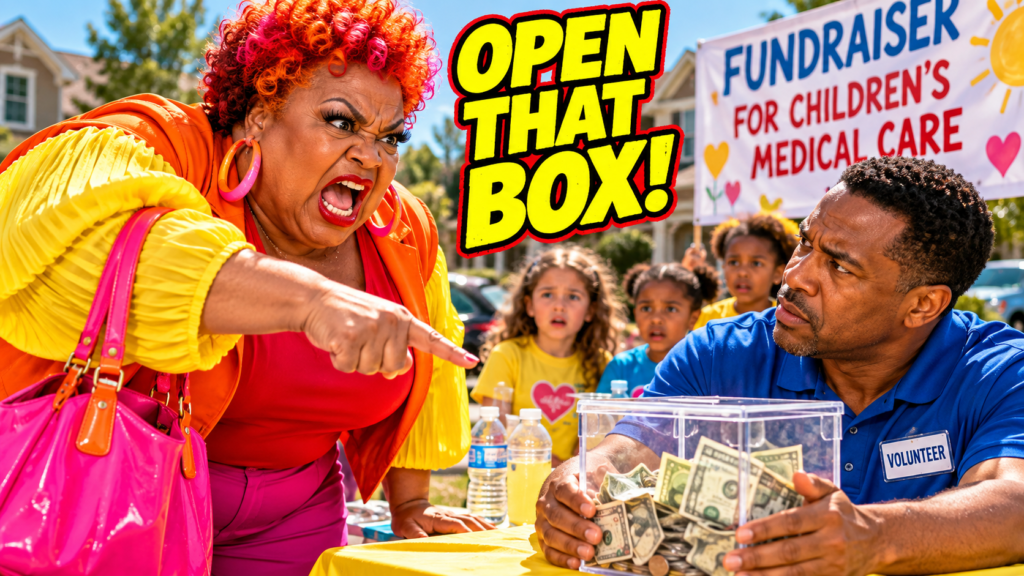
Chapter 7: The Box Stayed Closed
The fundraiser ended two weeks later.
The final donation count was conducted openly with the organizers, volunteers, and several residents present.
The money was transferred to the nonprofit.
A receipt was posted publicly.
The parents kept private donor information private.
The children received thank-you letters from families who had benefited from similar assistance.
One Saturday morning, David found the children gathered around the same folding table.
They were no longer selling lemonade.
They were making thank-you cards.
The little girl who had stopped volunteering earlier was there again.
She held up a card covered in crooked hearts.
“I want them to know we helped,” she said.
David smiled.
“You did.”
Across the street, Karen watched from her porch.
She no longer looked like the woman who had stood over the donation box demanding proof.
She watched for a few moments.
Then she walked toward the group.
She stopped beside the table.
“Need another volunteer?”
The children looked at David.
He nodded.
Karen sat down.
No speeches.
No demands.
No inspection.
Just work.
She helped fold the cards.
Later, David noticed the original donation box sitting empty on the table.
He picked it up.
The scratches on the plastic were still visible from the weeks of use.
The box had become an unlikely symbol of the whole dispute.
At first, Karen had believed that protecting people meant taking control.
David had learned that protecting people sometimes meant setting boundaries.
And the children had learned something neither adult had intended to teach them:
Trust does not mean allowing everyone access to everything.
Sometimes trust is built through clear rules, honest records, respectful questions, and the courage to say no.
Before leaving, Karen looked at the empty box.
“I really wanted to open that thing,” she admitted.
David smiled.
“I know.”
She shook her head.
“I thought if I could see inside, I’d finally feel safe.”
“And now?”
Karen looked toward the children making their cards.
“I think I was looking in the wrong place.”
David didn’t answer.
He didn’t need to.
The donation box remained closed.
Not because there was anything to hide.
Because some boundaries exist precisely because people deserve dignity.
And in that quiet suburban neighborhood, the fundraiser left behind more than money.
It left behind a community that had learned the difference between asking for accountability and claiming authority that was never yours.
For David, that distinction became the most valuable donation of all.








