Chapter 7: An Apology Without Excuses
The apology came two weeks later.
It was not dramatic.
There was no crowd.
No speech.
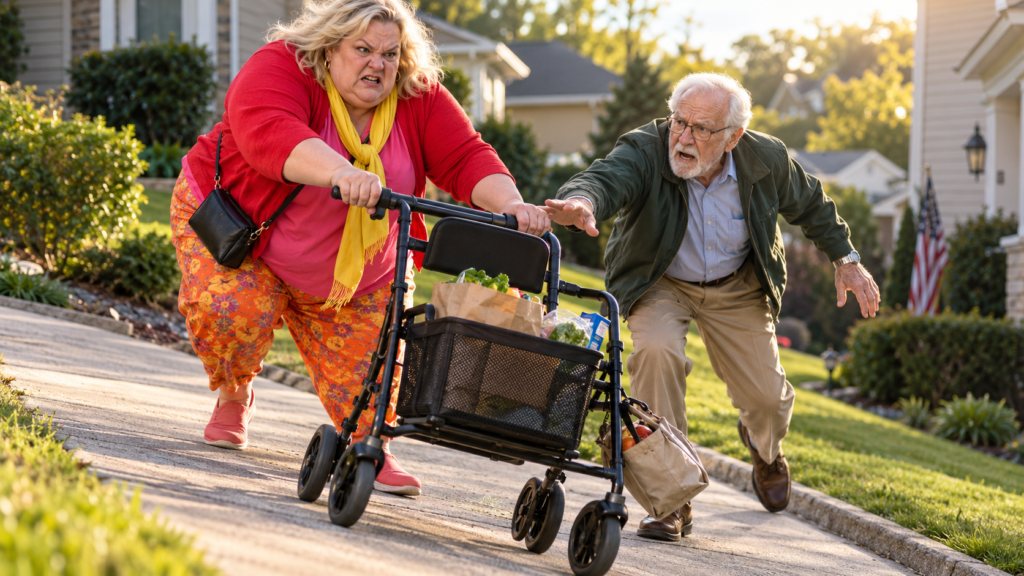
Karen simply knocked on Bob’s door one afternoon.
When he opened it, she stood several feet back.
Her arms were no longer crossed.
“I owe you an apology,” she said.
Bob waited.
Karen looked uncomfortable.
“I shouldn’t have moved your cart.”
Bob said nothing.
“I shouldn’t have taken your bag.”
Still, he waited.
She swallowed.
“And I shouldn’t have called you helpless.”
Those words seemed harder for her to say than the others.
Bob finally opened the door wider.
“You hurt my dignity more than you hurt anything else.”
Karen looked down.
“I know.”
Bob studied her face.
“Why?”
Karen hesitated.
For once, there was no quick answer.
She admitted that she had become obsessed with keeping the path looking a certain way.
She said the cart bothered her.
She said she thought she was helping.
But she also admitted that she had allowed irritation to become something uglier.
Bob did not accept every explanation as an excuse.
Helping someone does not mean taking control of their property.
Keeping a neighborhood orderly does not mean deciding who belongs in the shared spaces.
And concern does not give anyone permission to humiliate another person.
Karen nodded.
“I understand.”
Bob looked at her for a long moment.
“Good.”
She turned to leave.
Then Bob stopped her.
“You don’t have to like my cart.”
Karen looked back.
“But you do have to respect that it’s mine.”
She nodded.
“I will.”
She walked away.
Bob closed the door.
There was no celebration.
No triumphant feeling.
Just relief.
Some conflicts do not end with someone winning.
They end when someone finally understands where the line was.
That evening, Bob took his cart outside.
The path was clear.
The late-afternoon light stretched across the lawns.
He walked slowly.
Not because he was ashamed of being slow.
Because he no longer felt the need to hurry for anyone.